APH
APH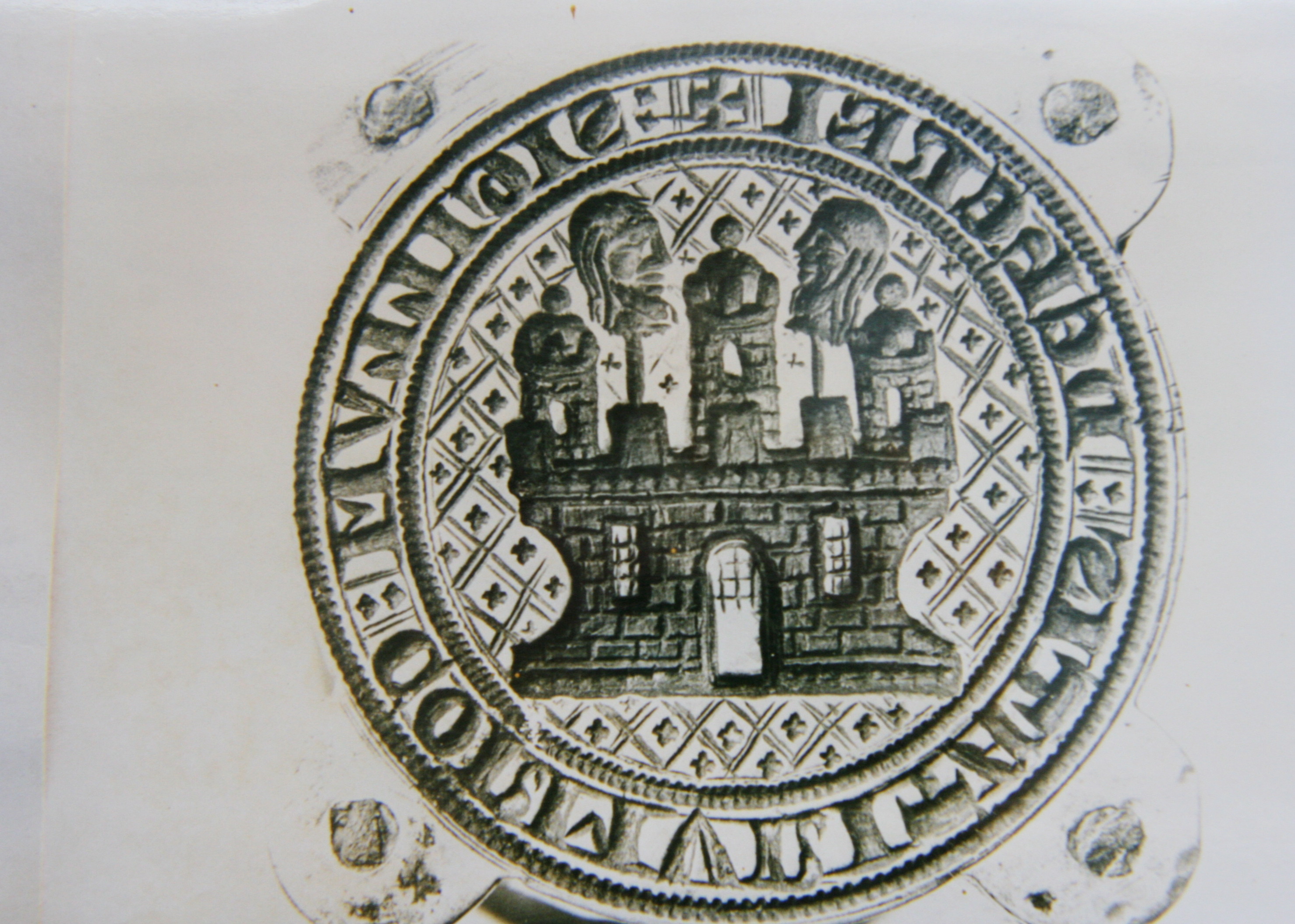
By Professor Etienne Rynne
Source; Booklet (1999)

The corporate insignia, a gavel like brass mace and a heavy brass seal, were first brought to notice in 1875 when the two objects were exhibited by the Rev. James Graves, the noted antiquary, at the Royal Society of Antiquities of Ireland, in Dublin. At the time they were “in the keeping of John Blakeney, Esq., of Abbert, Co Galway, whose family were formerly the patrons of the borough (of Athenry)” and were lent for display through the good offices of Mr. W. F. Wakeman, the well-known artist and antiquary, and the Rev. Mark Perrin, Rector of Athenry, Wakeman’s father-in-law. Both were briefly described in the Society’s Journal for that year, and the seal was illustrated.
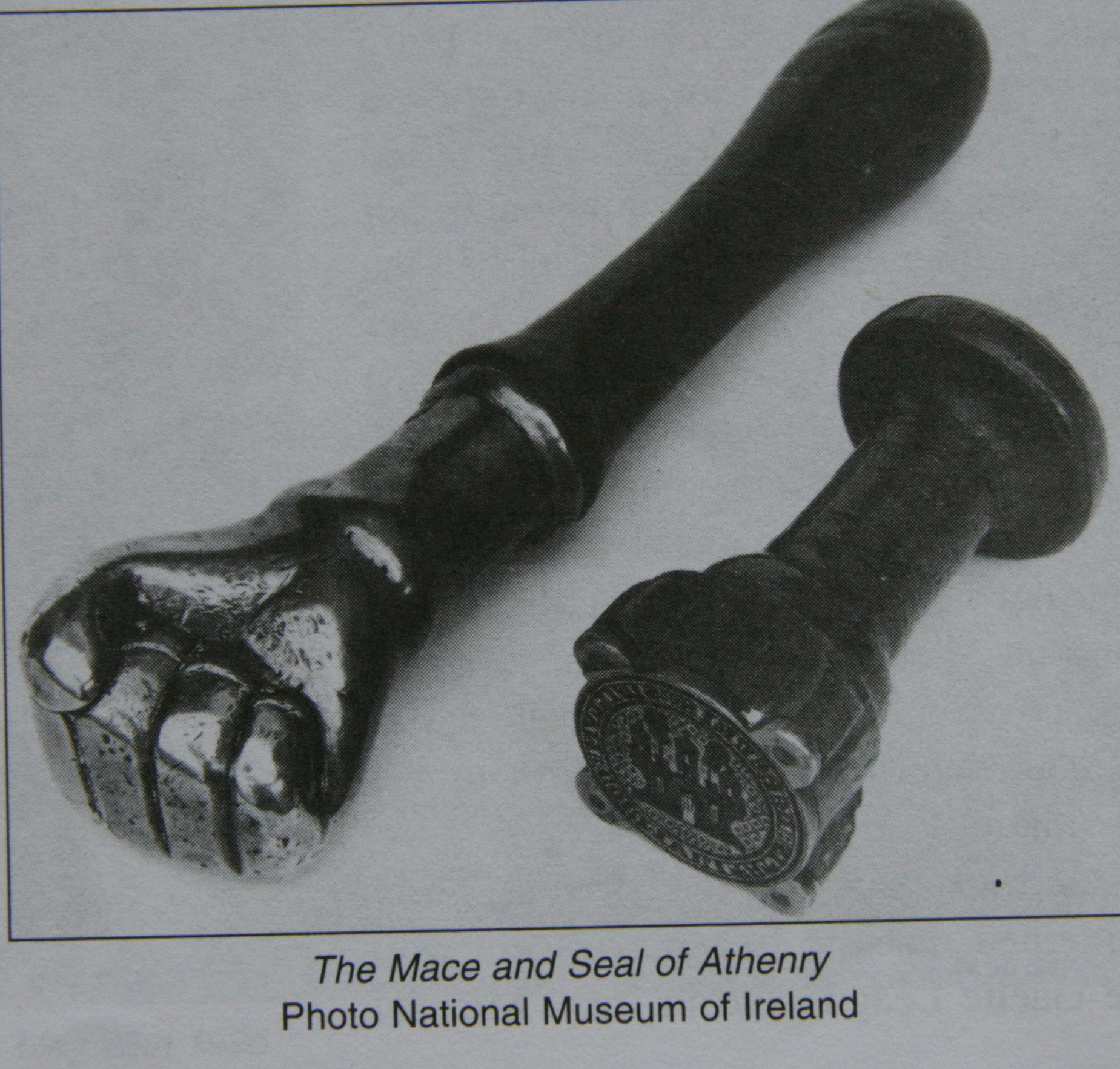 Insignia Disappeared In 1899 W. F. Wakeman described and illustrated “The Mace of the Ancient Corporation of Athenry, CountyGalway” in the same Society’s Journal. After that the Athenry insignia seem to have disappeared from public knowledge until June 1963 they were brought into the National Museum of Ireland, for examining, recording and apparently also with a view to offering them for sale to the Museum, by the then owner, Mr. H. C. A. Blishen, M.B.E., then living in his home called ‘Athenry’, on the Isle of Wight. They were recorded and photographed in the Museum, but not purchased. Involved in the recording was Etienne Rynne, at the time Assistant-Keeper in the Irish Antiquities Division there.
Professor Rynne and his search for the Athenry Insignia Some years later Mr. Rynne was appointed Lecturer in Celtic Archaeology at University College Galway, and after a year living in GalwayCity moved to Athenry. Taking a great, if predictable, interest in the medieval remains in the town, he soon began to lecture on Athenry to archaeological, historical and other learned societies, and also to lead such societies and others around the medieval walled town. After mentioning the ancient mace and seal, which he had handled several years earlier, he was pressed to try and recover them for the town, but hesitated to do so until Athenry had a secure, suitable place in which to exhibit them. In September 1993, with Athenry’s fine castle restored by the Office of Public Works, such a place seemed at last available. A letter was sent to Mr. Blishen recounting Athenry’s interest and hopes, but was returned unopened; Mr. Blishen was no longer resident, if alive, at the Isle of Wight address, and not otherwise traceable.
Tom Bermingham joins the search There matters rested for three years, until in August 1996 Professor Rynne’s letter, illustrated with a NationalMuseum photograph of the mace and seal, was published in volume 2, no. 2 of The Athenry Journal. The annual Festival was on, and the publication aroused much interest. One of the visitors to the festival was Tom Bermingham, an expert on the history of the Berminghams, founders of the town of Athenry in 1235, and he promised Professor Rynne that he would endeavour, on his return to England where he lived, to find out about the Blishens and present whereabouts of the Athenry corporate insignia. Tom Bermingham was as good as his word, and first of all chasing up a few unproductive leads he contacted the Chancery of St. James in BuckinghamPalace where he learned that Captain Henry Charles Adolphus Blishen was made MBE on the 15th of December 1944 and died on the 29th of January 1980. Other enquiries were envisaged, e.g. to the Public Records Office in Kew, but deciding that Blishen was an uncommon name he decided instead to telephone any Blishens he could find in the various directories housed in the local library. It was not long after a few efforts that contact was made with Mr. Anthony O. Blishen, resident in Richmond, London, who had the mace and seal in his possession.
Keepers of the Mace and Seal down the years The mace and seal had passed through the Blakeney family from 1840 when Athenry Corporation had been dissolved, a John Blakeney of Abbert apparently being the last portreeve, until Henry William Blakeney, “Gentleman of Abbert, Co. Galway” who “was a notable eccentric who absented himself for years at a time and took part in the Yukon Gold Rush”, died in the 1920s. The mace and seal passed to his daughter Joan Cecile Blakeney who married Captain H. C. A. Blishen, from whom they passed to the present owner.
Mr. and Mrs. Anthony Blishen ‘heretidary keepers,’ Fortunately for the people of Athenry, Mr. and Mrs. Anthony Blishen consider themselves more as ‘heretidary keepers,’ in the old Irish tradition of sacred reliquaries, rather than ‘owners’, of the Athenry insignia, and are more than willing to return the treasures to Athenry “if they are assured of a good home; that is not locked away in a chest”. Due to various circumstances placing them in the large, but empty, castle was deemed unsuitable, but setting-up of a fine Heritage Centre in the former Church of Ireland church (where William Frederick Wakeman and Frances Alice Perrin were married) seemed eminently suitable, and negotiations were put in train. In April 1998, Professor and Mrs. Rynne travelled to London, met and were entertained to dinner by the Blishens, and arranged that the mace and seal would be ceremonially handed over to the people of Athenry by Mr. and Mrs. Blishen when the Heritage Centre was finally ready to receive them.
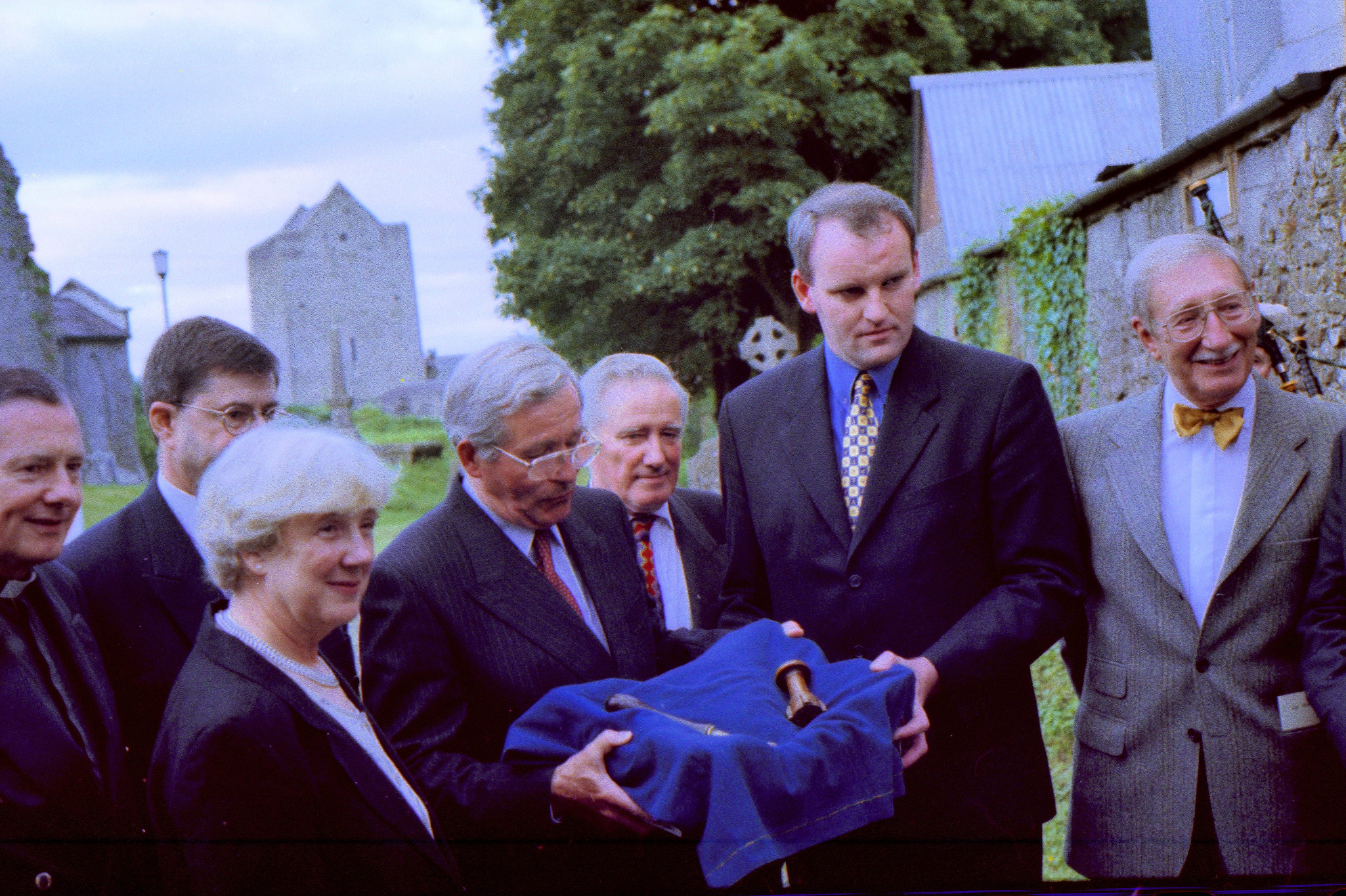
Return of Athenry’s Mace and Seal 1999
L-R: Rev. McCarthy , Mr. Eamon O Cuiv T.D., Mrs. Anthony Blishens, Mr. Anthony Blishens, Professor Etienne Rynne, Mr. Gerry Burke, Chairperson of Athenry Community Council, Mr. Tom Bermingham. Photo: Gerry Ahern

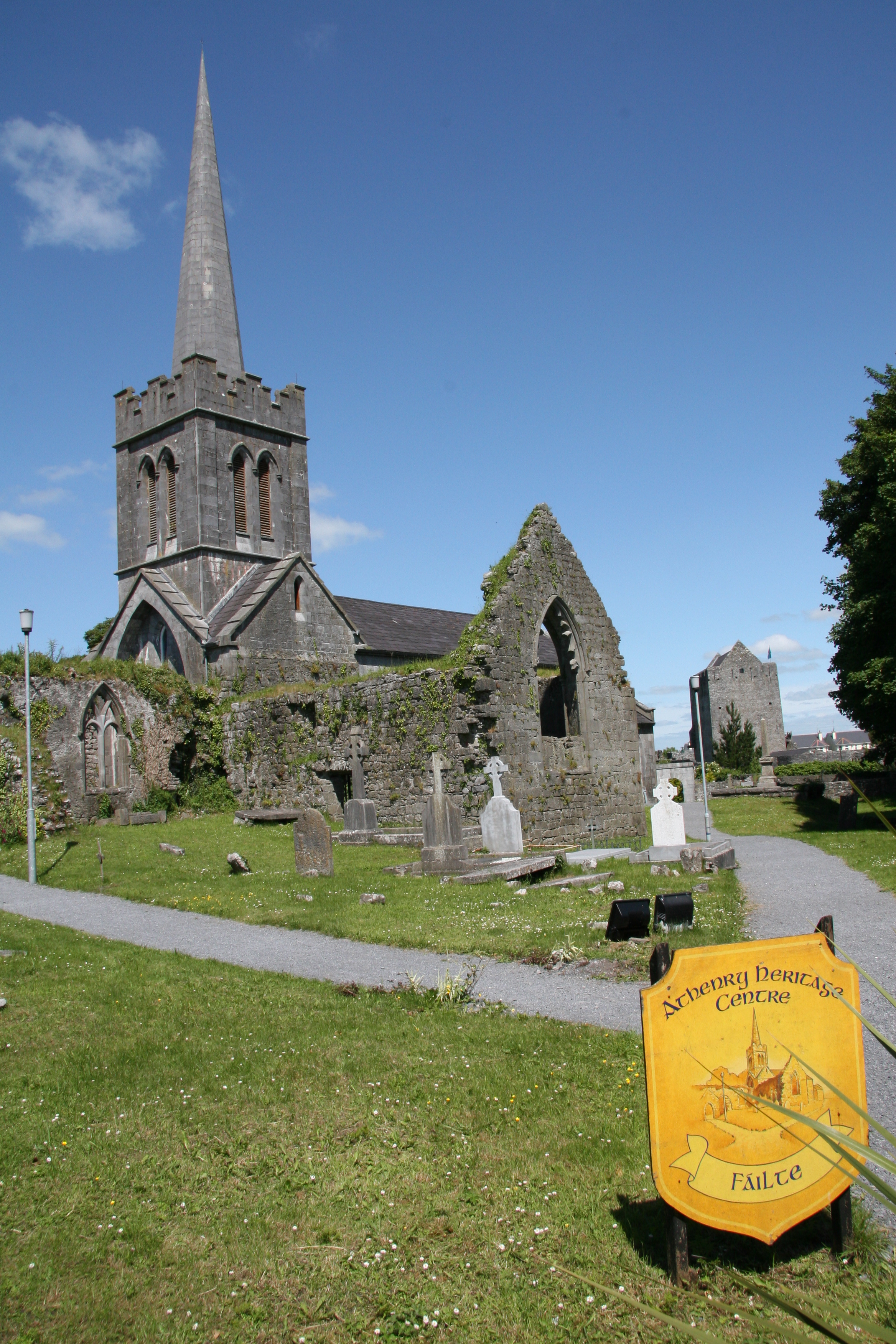
Athenry Arts and Heritage Centre. Photo: Gerry Ahern
The Athenry Arts and Heritage Centre was officially opened by An Taoiseach, Bertie Ahern, on Friday the 7th of May this year 1999, and on Saturday the 24th of July Mr. and Mrs Blishen returned to the people of Athenry their corporate insignia, the Mace and Seal, at a public ceremony in the Square, Athenry. The Mace and Seal are now on Exhibition in Athenry’s Arts and Heritage Centre.
The Mace The mace (left) is in the form of a clenched fist with a short forearm, mounted on a long, polished handle (relatively modern). It measures about 11 inches in total length and weighs 1lb 14 ¼ oz. Gavel-like, as Wakeman points out “it was not intended to be used as a toy, or to grace a civic procession. It was a weapon which, when required, might prove highly persuasive in the hand of a ‘pretty’ man who preferred action to verbal argument.
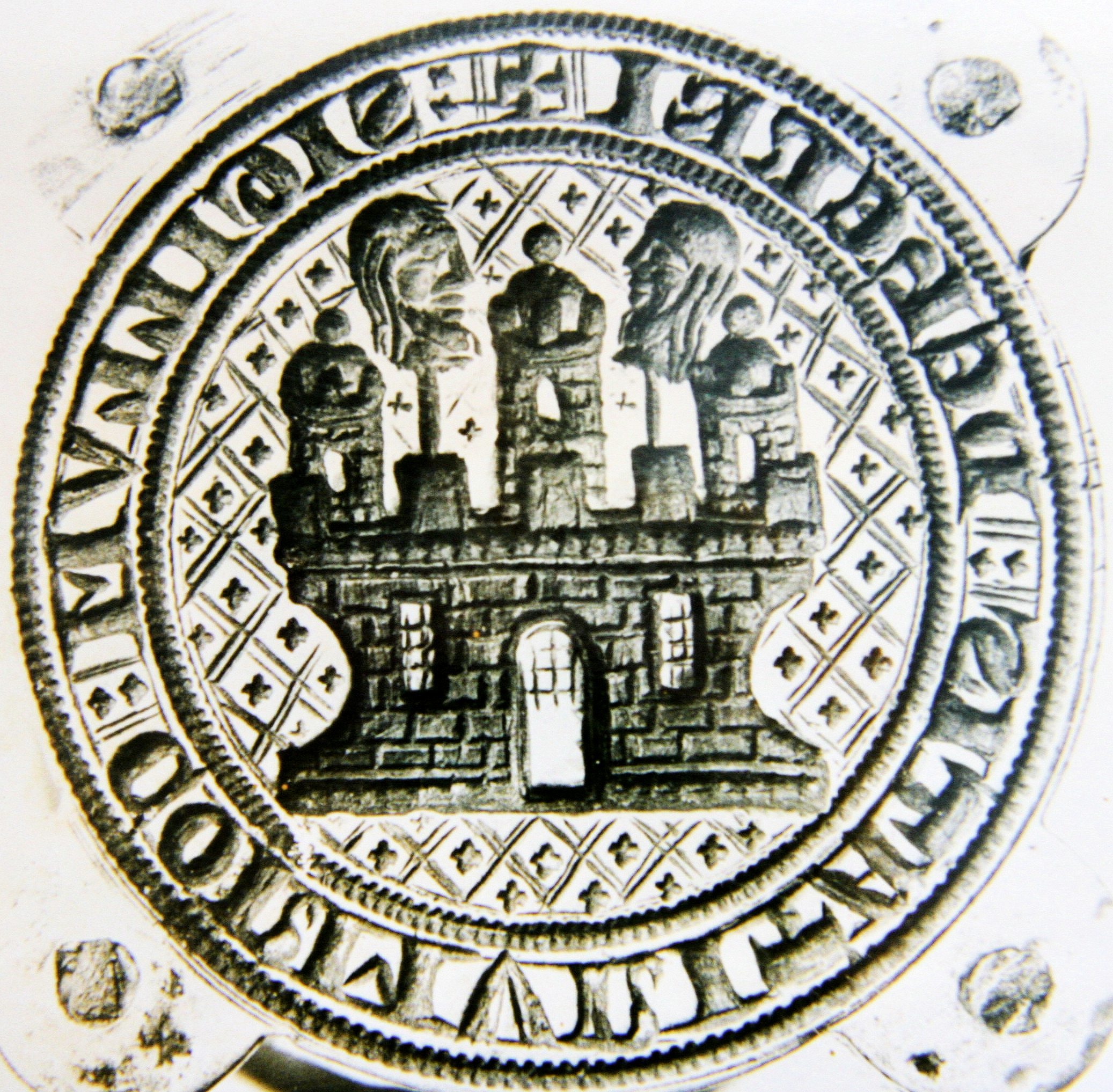
The Seal The Seal is circular in outline, attached to a (relatively modern) wooden handle by four rivets through four semi- circular perforated projections evenly spaced around it. It bears an engraved design of a castle or town-gate surmounted by turrets and two bearded human heads fixed on spikes, thought perhaps to represent those of Phelim O’Connor, King of Connacht, and Teige O’Kelly, King of Ui Maine, both of which, along with many other Irish Chieftains, were slain at the battle of Athenry in 1316. It is inscribed + SIGILLUM : CONMUNITATIS : DEHENRI and it measures 4 ¼ inches in total length, the brass seal being 1 ¾ inches in diameter and 1/3 rd of an inch in thickness. A 14th-century date is generally accepted for both objects, making the mace the oldest in these islands.