

 APH
APH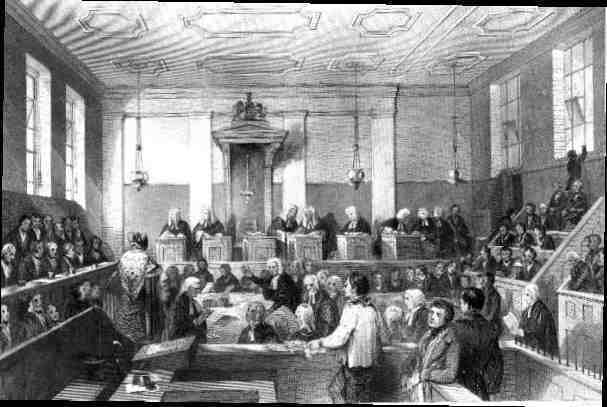
SOURCE: CONTACT MAGAZINE 1980
Athenry Parish has given many famous people to Church and State. In the fields of Literary Achievements, Scholarship, Drama and Sport they have won National and International acclaim but for reasons completely different to any of those, the fame of one man from this parish echoed around the entire world – the name – Peter Barrett of Castlelambert. The year 1869 Barrett was the central figure in one of the most famous and controversial trials of Irish History. He was charged with the attempted assassination of Lambert, the Landlord of Castlelambert Mansion. If found guilty he faced certain death by hanging, the punishment suffered by Anthony Daly of Seafinn some years before.
Eviction
The parents of Barrett lived on a small holding on the Lambert Estate; at a place now know as “Barrett Hill”. They were evicted by the “Tyrant” and left on the roadside. Peter, their son then working in a London Post Office, hearing his parents’ plight set out on his journey of revenge, and armed with a revolver, headed straight for Castlelambert House. Athenry was his nearest ‘stop’ but he continued to Oranmore where he might escape recognition, and on foot went through Glanascaul and Lisheenkyle. However as he crossed a stile he was observed by two boys playing pitch and toss and at Frenchfort called at Murrays house for a drink. Mrs Murray gave him a mug of milk and bread. Barrett was so thankful that he gave each of her children a piece of silver. She told others about the “generous caller”. Later the Police heard the story and summoned her to identify the man. Those three people played vital parts at the trial that followed.
The Shooting
On reaching the private grounds of Castlelambert House, Barrett hid in a Lime Tree opposite the great door. It provided a view and cover. A house party was in full swing. He waited, then came his chance, more favourable than he had anticipated, the door opened and Lambert emerged alone. After the wining and dining he needed fresh air and a stroll down the avenue. Barrett tailed him, waited for his return, and fired at close range – aiming straight for his heart. Lambert slumped, and Barrett leaving him for dead made a quick get away. By a twist of fate the gold watch in Lambert’s breast pocket stopped the bullet. He was unconscious for some time, but recovered, and crawled to the Big House where he told his story. The Hull-a-Bull-Loo was on.
Meanwhile, Barrett who was a first class athlete, standing six foot two, and as fleet footed as a deer made the cross country run to Athenry. He knew every mass-path ditch and gate on his run, and arrived in the “nick of time” to step on the “Night Mail” to Dublin.
Arrest
Lambert in his statement to the Police said “I did not see the man but if Peter Barrett is in the world it was he who fired in retaliation for the eviction”. Barrett was arrested at Dublin and brought back.
Three Trials
Money poured in from America for his defence. Isaac Butt – the defender of the Fenian Leaders – acted as his Senior Counsellor, and McDermott, and equally brilliant lawyer, as his Junior. The case opened at Galway. It was the trial of the century, and attracted worldwide attention.
Barrett stuck firmly to the statement that he was not in the Castlelambert area on the night of the shooting. Large sums of money were offered to witnesses to prove the contrary. No one “gugged”, but one of the pitch-and-toss boys who swore that he definitely identified the man who crossed the stile, near Glanascaul, as Barrett. The other boy with equal conviction swore he was not Barrett. McDermott handed his hostile witness a needle and thread, and requested him to thread it. After several attempts he failed. He handed the same needle and thread____________________
She was a God-fearing, soul-searching woman, carrying her fifth child. She sought a Confessor at Galway (A Dominican). The story told was, that the priest removed his Stole, and said to her “You came to me for advice not confession, because you have no sin to confess. We cannot judge Barrett’s intentions. Only God can do that – but one thing is certain, Barrett took no man’s life, and if you can save his life, it is your duty to do so”. She denied in Court, that the man, who called to her house, was Barrett.
The Jury were in disagreement, and after many months Barrett faced his second trial at Dublin. Again the Jury failed to agree.
After almost twelve months in jail, Barrett was brought to trial for the third time. His innocence or guilt had to be finally decided on one point – twelve minutes had elapsed from the time Lambert’s watch stopped until Barrett stepped on the train at Athenry. Could he have made the run in that time? Was there even the remotest possibility to have done so?
A Free Man
By their handling of the Barrett case, Isaac Butt and McDermott made legal history. Their wizardry and strategy broke down the arguments of the most imminent Crown Counsellors in the British Isles. Those two men were absolutely dedicated to the cause of freeing Barrett. For eloquence and forcefulness Butt’s final speech was described as the greatest Court Oration ever heard in Ireland. Soon afterwards he received a ‘Knighthood’ from Queen Victoria. The day was won, and Barrett walked from the Green Street Court a free man.
Ballads were composed, and sung around the Irish Hearth Stones. As a child (long long ago), I remember one something like this:
“Hurrah! For Peter Barrett the Castlelambert Giant
Some twelve long months he served in Jail to break the Landlord’s might
Now all ye sons of Erin wherever you may be give three loud cheers for Barrett and his Great Court Vic-to-ry.
God was Doubly Good to him
After the trial Barrett left Ireland for America, where he got a hero’s welcome. He was very successful in the New World. Years afterwards when the Land War was almost won, Barrett visited a life-long friend near Derrydonnell. He spoke freely of the trial and the woman who saved his life. Did he make the run in twelve minutes? “Certainly not” – he said it took him twenty five minutes at least. God was doubly good to him (i) Lambert’s watch withstood the initial shock and continued ticking for ten minutes (ii) The Station Master at Athenry, in order to cover up for some man in Galway logged the time the train should have arrived, when in fact the ‘Mail’ was over six minutes late. The driver made up the time loss before reaching Ballinasloe and the Station Master stuck steadfastly to the time entry.
Gun hidden in a rabbit burrow
What of the revolver? It was the missing link in the murder chain – all the Peelers of Ireland combed every square foot of ground from Castlelambert to Athenry. He hid it in a rabbit burrow on a small sand hill about a quarter mile from the “Big House” and thirty or forty yards off his run, not far from a Sycamore tree. his greatest problem and delay ‘he said’ was searching for the ‘right make’ of warren, knowing that in order to surface in the morning (it was July 11th), the rabbits would keep scraping the sand from below causing the revolver to sink deeper in the ground. It was never found.
“Barrett Hill”
Today “Barrett Hill” is a permanent monument to his memory, but let us remember – and with pride that at Castlelambert in 1869 Peter Barrett struck one brave blow for the Tenant Farmers of Ireland he struck one great blow against the evil and tyranny of Landlordism within our shores.

