APH
APH
Source:
The Story of the Presentation Sisters, Scoil Chroi Naofa and Presentation College, Athenry (1908-2008)
Editor and Compiler: Gerald J. Ahern
From Tuam to New Zealand-1950
Sr. Bridie Heverin’s memories
The first foreign missionary journey from Tuam took place in 1874 when Sr. Aloysius Talbot, a native of Dublin, joined five Dublin Presentation Sisters who were invited to open a school in New York.
It was all of seventy six years before the spirit inspired again the Tuam Community to another missionary venture. This time it was further afield “down under” in New Zealand, and it flourished.
Tuam to Taita-The First Wave 1950
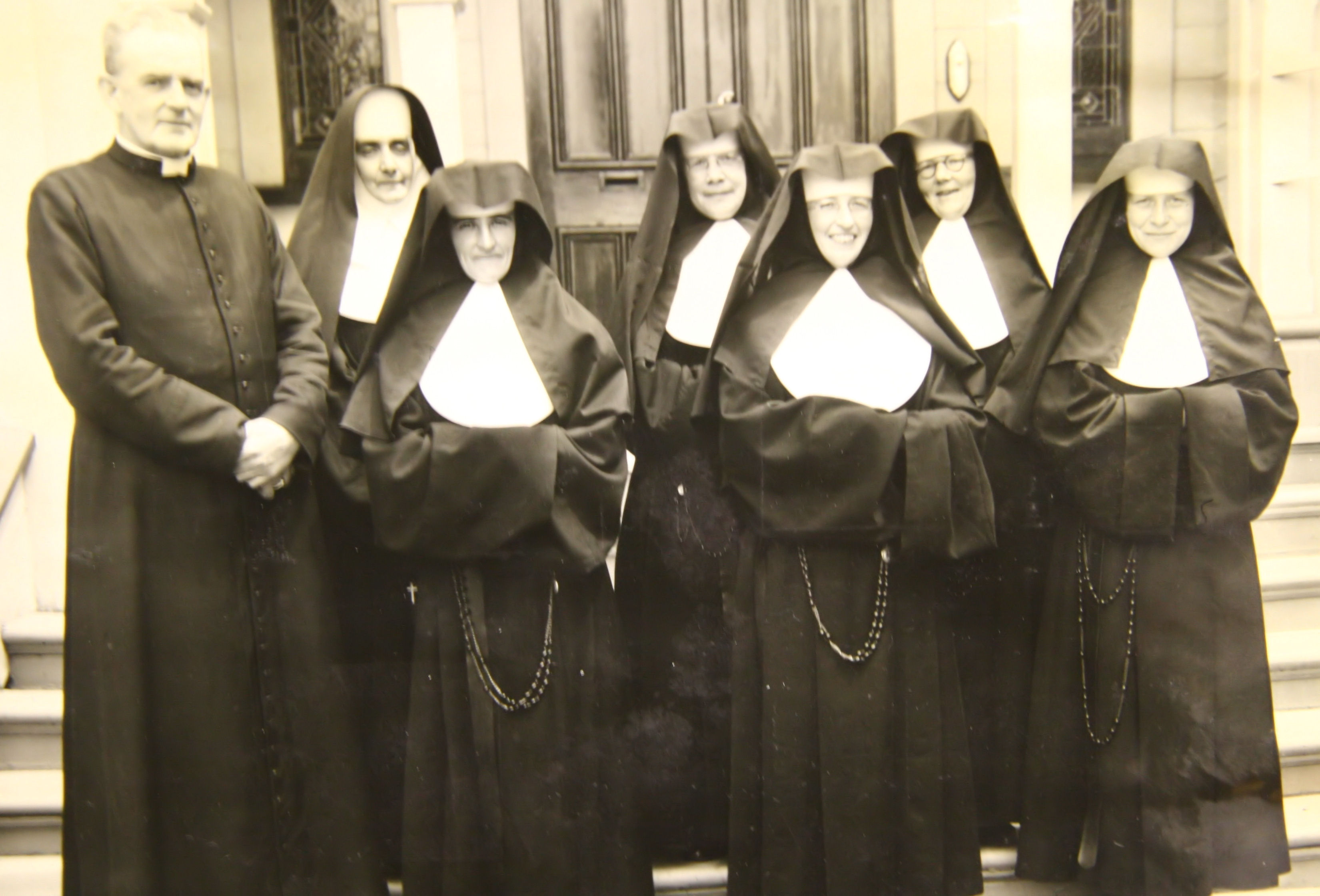
The photograph shows the five Sisters after their arrival in January 1951 at St. Mary’s Convent of Mercy, Gullford Terrace, Wellington.
Front, l-r: Archbishop McKeefry, Srs. Pius Carney, Perpetua Leahy and M. Asicus.
Back, l-r: Mother Natalie Mercy of St. Mary’s Convent of Mercy, Mother Xavier Curran and Sr. Philomena.
 It happened like this: Cardinal McKeefrey, Archbishop of Wellington, met Archbishop Walsh of Tuam in Rome. They invited each other to their respective countries, and on the Cardinal’s visit to Tuam the subject of getting Presentation Sisters for New Zealand was evidently broached. Things grew from there with many ups and downs. Several Sisters volunteered for this missionary work and five were chosen: Sr. Xavier Curran (Superior), Sr. Catherine McHugh, Sr. Asicus Shanagher.
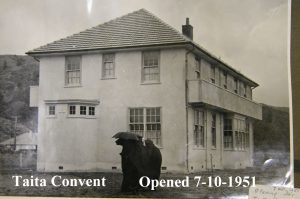
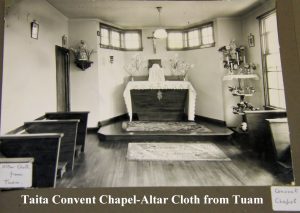 Sr. Pius Carney and Sr. Christine Leahy. Then one dark November morning in 1950, they quietly left Tuam for Dun Laoghaire, then to St. Pancras Station, London and Tilbury Docks to board the ‘Cotranto’ for Sydney and Wellington. Their destination was a newly built-up area on the outskirts of Wellington – Taita. There was nothing to be seen on that January day, 1951 except the foundation of a Convent. The school was carried on in a hall-cum-church-cum school. Until their Convent was built, the Sisters stayed with the Sisters of the Mission at Lower Hutt. The Convent was opened and blessed on October 7th 1951 and the school then had 300 pupils. Two years later the new school was opened.
Because of the 1840 Act, the Sisters received no salary from the New Zealand government, and were financially and materially dependent on the support of their local Catholic community.
Tuam to Taita-Second Wave 1952
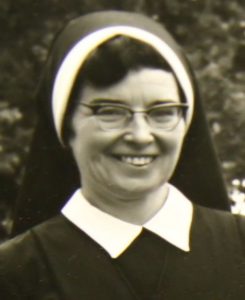 Sr. John Bosco Heverin (left), now known as Sr. Bridie and Sr. Mary John McHale joined the group in Taita in 1952. There wasn’t any big deal about preparation in Tuam before they left. They followed normal procedure of having injections and booking their tickets with Coonahan of Kilcock. They had minimal personal luggage. There weren’t meant to be too many tears or emotional scenes. They were told that their commitment to New Zealand was open ended – Bridie would not come home for fifteen years. They left Dublin on December 3rd and spent six weeks on the sea. His Grace, Archbishop McKeefrey was on Wellington wharf, as well as other high powered missionary delegations to meet the Sisters on arrival. There was no trouble with customs. They just glided through. Once there, the Rule of Enclosure was abandoned on the instruction of Archbishop McKeefrey. The Sisters were free to move and mix within New Zealand society.
Taita to Chile-1979
 Sr. John Bosco (Bridie) became Vice Provincial and led the group into Union in 1976. During her office she engaged in many areas of updating. It is mainly due to her commitment, courage and energy that a new venture into the Third World in Chile came into being in 1979-81.
At eighty five, Bridie (left) faced the realities of ageing, looked at her options and decided to come to Ireland. She received a great welcome from the Sisters in Ireland. Bridie says she doesn’t think challenges, she just throws herself in.The Taita Convent is now sold but if it is used for the people of Taita, Bridie will be happy.
Mission to New Zealand 1955-1971
Diary of Sr. Celestine White’s Journey to New Zealand.
Almost there!
2 December 1955
Got through customs for Sydney alright today, thank God. The official showed no surprise when we modestly announced four wooden boxes each! He told us that he had a communication from Monsignor Thomas and asked no questions. At 5 p.m. we came into Melbourne and we saw Fr. Goodwin’s smiling face as he waved to us. He came on board and we got our handbags for the weekend. Father got us through customs without any questions and we went off to Windsor by taxi. A great céad fáilte here and as it was St. Francis Xavier’s day (or eve) and we were first brought to the Chapel to admire the flowers.
All the furnishings of the Chapel were just lovely – good brass candlesticks, stands, lamps, etc. Our Lady in the background behind the altar seemed very real with the light thrown on her from behind the altar. The flowers were all beautifully arranged – pink carnations, just enough and not too many of them. The Sacred Heart Statue and St. Joseph’s had a lamp each. The boarders’ benches were arranged down the centre of the Chapel and the nuns’ stalls on either side. All doors and windows were open – so there was a great ‘séideán gaoithe’!
Frs. Goodwin and Lynch rang in the morning – the former to tell us to go out to Deepdene by taxi and the latter to wait and he would bring us by car! We saw a lot of Melbourne’s lovely city (right) en route, big wide streets tree-lined on either side and huge buildings and schools and colleges and all sorts. The traffic was dreadful. We could move about a yard at a time.
We got to Fr. Goodwin’s somehow and he gave us a great welcome and showed us his private block – bedroom, bathroom, etc. – all the height of luxury in furnishings. We lunched in royal fashion and he brought us afterwards to Star of the Sea Convent where we had messages for Sr. Basil. All very friendly here too and we had afternoon tea with them. Then we drove round through the principal streets and saw the churches and other buildings. Fr. Lynch discharged us at Windsor and promised to ring in the morning to settle plans for the day. We had singing at Mass (Sr. Francis Xavier’s Day) and the boarders sang all their pieces as rounds. It sounded very nice and their voices were of the sweetest quality. The nuns said all have to sing together whether able or not! The choir did not sound as if there were even one ‘crow’ present. Next morning they answered the Mass all together – it was very devotional. The children of Mary wear their blue cloaks and white veils at Mass. The rest of the boarders wear check (green and white) frocks and white veils.
Fr. Goodwin rang on Sunday morning to be ready for him at 1 o’clock. It was 2.30 p.m. when he arrived as he was held up after Mass. He and his friends, the Markillies, came with the latter’s lovely new car and they took us eighty miles out into the bush country to Heathcote, another Presentation Convent. Here some of the nuns were playing cards and some out walking. There were only seven in all and they very seldom have visitors, so they were agreeably surprised when we arrived. At least they gave that impression!
We had afternoon tea and a look around. We saw their lemon trees laden with fruit and tasted their locuts – like our cherries, only yellow and three stones inside. We returned around 7.30 p.m. and drove round Melbourne to see the lighting effects and Christmas decorations (which cost £½million). The Markillies wanted us to go to their house for tea but it was too late. They invited us to lunch next day then. We said goodbye to Fr. Lawrence and felt a bit sad. He could not have done more for us if he were our own brother instead of someone else’s!
Next morning Fr. Lynch came and took us to his dominion in Flamington. Here we saw a Primary School in action, run by Mercy nuns. They were very nice. We visited many churches and prayed for all our dear ones at home. Then we were driven to the Markillie home where Fr. Lynch and we got a céad fáilte. Such a stylish home I did not see since I went through Florrie Commin’s house long ago!! Everything in and about it was just perfect. Mrs. Markillie is a lovely young woman even though one of the two daughters she has is Leaving Cert. age now. We met her mother and brother later on and there could not be a nicer family in Australia. Such a gorgeous lunch we had too – she was the last word in hospitality and kindness. We departed at 2 o’clock for the wharf and Fr. Lynch delivered us in good time on the ‘Strathaird’ liner.
6 December
Preparing today for Sydney – everyone packing and saying goodbyes. Settled up about luggage for Wanganella. Washed for last time on the ‘Strathaird’ and heard there are eighty electric irons missing after every trip! We did not take any. Looking forward to Sydney in the morning!
7 December
We eased into Sydney’s beautiful harbour at 6 a.m. The bay is studded with headlands and islands and trees and shrubs everywhere to be seen. It’s crowning glory is its bridge. We had tea, lovely homemade cakes and biscuits. Fr. P. Shield collected us and we all went to Mrs. O’Brien’s for lunch. Then we went driving in Fr. Peter’s car (which he won on a 10/- ticket). We picnicked and took snaps in the middle of the bush country. Then we went back to O’Briens for tea and thence to the Josephite Convent where we spent the night. Driving again the next day until 3 p.m . when we had to go on board the ‘Wanganella’. The two priests and Mrs. O’Brien came to see us off. Lots of our old friends returned to throw us streamers. We moved out very slowly and shed copious tears. The band played and only added to our loneliness. Got cable from Taita to ask if we were on board.
The End
A Footnote to History
Sr. Bernadette Joyce
Sr. Celestine came to New Zealand in December 1955 on the ship “Wangonella” in the company of Sr. Borgia. Just the two of them and they both began teaching in St. Michael’s, Taita. Celestine volunteered for six years and stayed for sixteen years. Fran Nicolle remembered them teaching in St. Michael’s School as she was in Standard 2 then. She has very happy memories of Celestine as she went to Irish dancing lessons on a Saturday morning, which she took in the hall at Taita. Celestine has entertained us with her accounts of a very memorable trip to New Zealand. It seems she left off writing before her visit to Melbourne and Sydney where she and Sr. Borgia Courtney would have been highly entertained by Frs. Godwin and Sheil, brothers of Srs. Francis and Alcantara, respectively. The Presentation in Melbourne was another hospitality venue for the pair.
Celestine surely danced a jig for them! Borgia’s beautiful rendering of The Old Bog Road would have caused some nostalgia in the group. The fact that nothing was recorded from Sydney to Wellington is very understandable as sailing through the Tasman Sea leaves even the strongest and healthiest sea legs in a state of collapse! The distance is a mere thirteen hundred miles but it took three days on a very choppy sea. They must have spent their time in bed and when feebly attempting the vertical position, they clung to anything that looked stable! But there was nothing stable here. This is undoubtedly the most difficult part of the journey. Celestine, as she manoeuvred her way from the top bunk, said, “I feel like the drunk who said, will you hold the house steady while I open the door”!
There were seven others waiting for them in Taita. The ship berthed at Wellington Wharf (left) on 7th of December, 1955 to the great excitement of the seven. Much greater relief of Celestine and Borgia as their complexions had changed from a greeny grey to a lily and rose by the time the boat had docked.
The Parish Priest, Fr. Joe Leahy, was there to meet them flanked by Sisters Xavier Curran, Catherine McHugh, Pius Carney, Christine Leahy and Assicus Shanagher, the pioneers in this new land. Srs. Mary John McHale and John Bosco (Bridie) Heverin both joined the community in 1952. Today they were at home keeping the kettle boiling. The Thurles Pressies were there too together with some Irish Priests to give a Céad Míle Fáilte or Here Mai. There was great excitement and chatter all round. Parishionhers working in Customs were instrumental in getting their big wooden boxes of blankets, sheets, etc. off the ship without much difficulty. If those “Treasure chests” could talk, they would recall their humble mode of conveyance from St. Joseph’s in a donkey and cart driven by Tommie Naughton to the train station on the first lap of their journey to New Zealand.
All were out to greet the “new nuns”. Guards of Honour at the school in Maroon and White. There was a presentation of bouquets and speeches of welcome. The Maori Haka was performed by school children with great gusto. The Hongi-Maori nose greeting was also offered to the Sisters.
It was nine years later – 1964 before the next contingent set sail from Southampton for Kiwi land. Same donkey, same cart, same driver delivered their treasures in three massive boxes to the station. Srs. Chanel Canny, Mary Tait and Bernadette Joyce set out on the Northern Star.
Mary Tait, our first New Zealand postulant, spent five and a half years in Ireland to do her Novitiate. Her returning to New Zealand was delayed by Archbishop Walshe. He had seen a plan of the original convent and decided that it wasn’t big enough for three new Sisters, so he ordered that they build an extension before he’d let us go.
Our original date was August 1962 but the Archbishop finally gave permission in January ’64. The Boarders lined the grounds singing, “Go ye Afar, Go Teach All Nations”. Of course we gave way to the “melting mood” but we were quickly ushered in to the hired car that brought us to Dublin. We drove along deep in our own thoughts.
Mary Tait suggested we feast our eyes on the stone walls as we’d possibly never see them again. Those half built and broken down walls weren’t exactly tearing our hearts out at that minute. Mary was going home and was naturally very excited. There were so many things she was looking forward to – being with her Mum and Dad, family and friends and the beautiful New Zealand landscape.
While in Ireland she was bound by enclosure so could only experience a limited view of the country. Archbishop McKeefry in New Zealand, when asked what kind of enclosure they had to observe in his diocese, answered, “The whole two Islands of New Zealand are yours”. He was not just big in stature!
While in Ireland Mary made many “acts of the will” to eat the brown bread but now she was going home where she could have toast and vegemite and other Kiwi favourites. I still see and hear her mother say as she kissed her, “My God she has the brogue”. The Sisters in Ireland didn’t believe that one!
We were the last three to sail to New Zealand; it took us six weeks. Mary and I travelled well but poor Chanel spent most of the time coping with sea sickness. Because of our good appetites and four meals a day for six weeks we grew fat without the frisky bit! The foundation garments bought especially for the trip had to be stretched on the back of a chair in a desperate bid to make them fit!
We felt a great sense of adventure and excitement as we set foot in the different countries. The freedom to experience, even if only a bird’s eye view of life in so many places, was a great privilege. Back in Tuam, even Galway City was out of bounds in those days!
Mail awaited us at every port. Waltzing Matilda was played as the boat pulled out to continue the journey. We made friends with the Cabin Boys and even invited them into our cabin to say the Rosary at night!
Two middle-aged men with hairy chests in shorts invited us to play a game of deck quoits (above) with them. Not wanting to appear spoilsports, we rose to the challenge but felt potentially retarded in our contrasting gear! Only while playing did we notice the photographer!
Our first port of call was Las Palmas where we made an abortive attempt to ride in a pony and trap. In Durban we were collected by the Apostolate of the Sea gentlemen where we went to Mass and attended a black baby’s baptism performed by the late Bishop Hurley (my first baptism ever since my own!|) The Mass was in the Zulu language. The Holy Family Sisters were very good to us there.
Fr. Paddy Toher, a neighbour and cousin of Chanel, excelled himself in Capetown. Dominican Sisters kept us for the couple of days and were so kind. Our Pressies in Melbourne continued the great welcome for each group passing through.
In Sydney, Fr. Peter Shiel and his secretary met us. We were taken to the Zoo where a monkey expressed his disdain by staring at me from a height!. Perhaps he thought we were some rare species trying to invade his territory! Our trust in the animal kingdom was restored when we fell in love with the Koala, the Kangaroo and the Kookaburra and other beautiful Australian animals and birds.
Later they took us to dine at a huge store where there was a fashion show in motion. The secretary asked the attendants to put a screen round us while we ate, as she didn’t think it right for us to view the parade! We weren’t long changing that one!
In the years of plenty New Zealand continued to receive Sisters from Tuam, Thurles and Kerry, but now they are arriving in the matter of a couple of days. The aeroplane had taken over. You’ve heard a little from the “sailors”, maybe the “fliers” will tell us of their experiences!!
New Zealand
1970-2002
Sr. Maureen Geraty
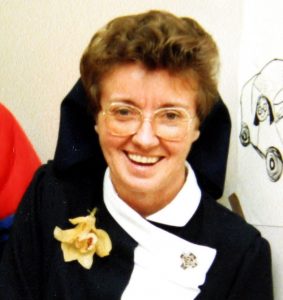 My first recollection of hearing about the ‘foreign missions’ was during my Primary School days when many missionary Sisters came to visit and speak to us about their work. The ‘Black Baby Boxes’ were also a constant reminder to me of needy people abroad. The ‘Far East’ magazine too made it all very real and at an early age I longed to be out there with these missionaries.
Aotearoa – New Zealand – the land of the long white cloud with a population of four and a half million, 12.4% Catholic never featured in my dreams. Tuam had established a foundation there in Taita, Wellington, with five Sisters in 1950 and others had joined them later. During my years as a boarder in Tuam, three Sisters left on that six weeks voyage down under. I felt so sad for them but certainly had no desire to follow them. Some years later in 1965, while in Carysfort Training College. a letter arrived asking for volunteers for New Zealand. I volunteered and consciously or unconsciously forgot all about it until five years later.
My heart was broken
In June 1970 I was happily teaching 3rd and 4th classes in Tiernea, Connemara when Sr. Gabriel, Rev. Mother in Tuam at that time, arrived and asked if I’d be ready to go to New Zealand in August. I had three months to prepare. My heart was broken. I was so happy in Tiernea. It had always been my wish to teach there and I will be forever grateful for those four years. How was I going to break the news to my parents? Being an only girl made it all the more difficult. As far as they knew, I would never leave Ireland. I had never mentioned New Zealand to them. I cannot describe the trauma of those last few months before departure. The children formed a guard of honour as I left Tiernea. I was devastated. Why had I volunteered? Was I making the greatest mistake of my life? Was it too late to turn back?
First time on a plane
On August 12th 1970, my family, together with a number of Sisters, accompanied me to Shannon. I was travelling alone, my first time on a plane and I was terrified. I arrived in Boston during the night and was met by my aunt with whom I stayed for two days and met relatives I had never heard of. Evidently I didn’t have all the necessary documentation permitting me to stay in the U.S., so I had to part with my passport before leaving the airport. On my return two days later, they had mislaid it. Imagine my fear and panic! Eventually I was advised to board the plane and ring when I got to Hawaii. I had never used a phone! I reluctantly boarded. Just as the doors were about to close a hostess came panting down the aisle with passport in hand.
On arrival at Auckland Airport, I was taken to stay with Marist Sisters for a few hours while waiting my flight to Wellington. As we drove along I was excited and comforted to see furze bushes in bloom – home away from home. Finally after twenty seven flying hours, I arrived in Wellington Airport where a number of our Sisters met me. The drive to Taita took about an hour. Wellington Harbour was magnificent but the hills covered with houses all around fascinated me. How on earth did people get up there I wondered?
Multi-cultural New Zealand
New Zealand has a unique cultural identity, decidedly multi-cultural. Modern New Zealand society is a fusion of Polynesian, Asian and European cultures. New Zealanders are recognised globally for their progressive humanitarian stance, liberal politics and world leading social welfare. Maori are the indigenous people of New Zealand. Originally from Polynesia, Maori migrated to New Zealand over one thousand years ago. Today Maori make up 10% of the total population. After a period of assimilation in the early 20th century, much of traditional Maori life was lost. However since the early 70’s, Maori culture, language and customs have enjoyed a profound resurgence. Maori pre-schools are dotted all over the country and each prison has its own Maori culture groups.
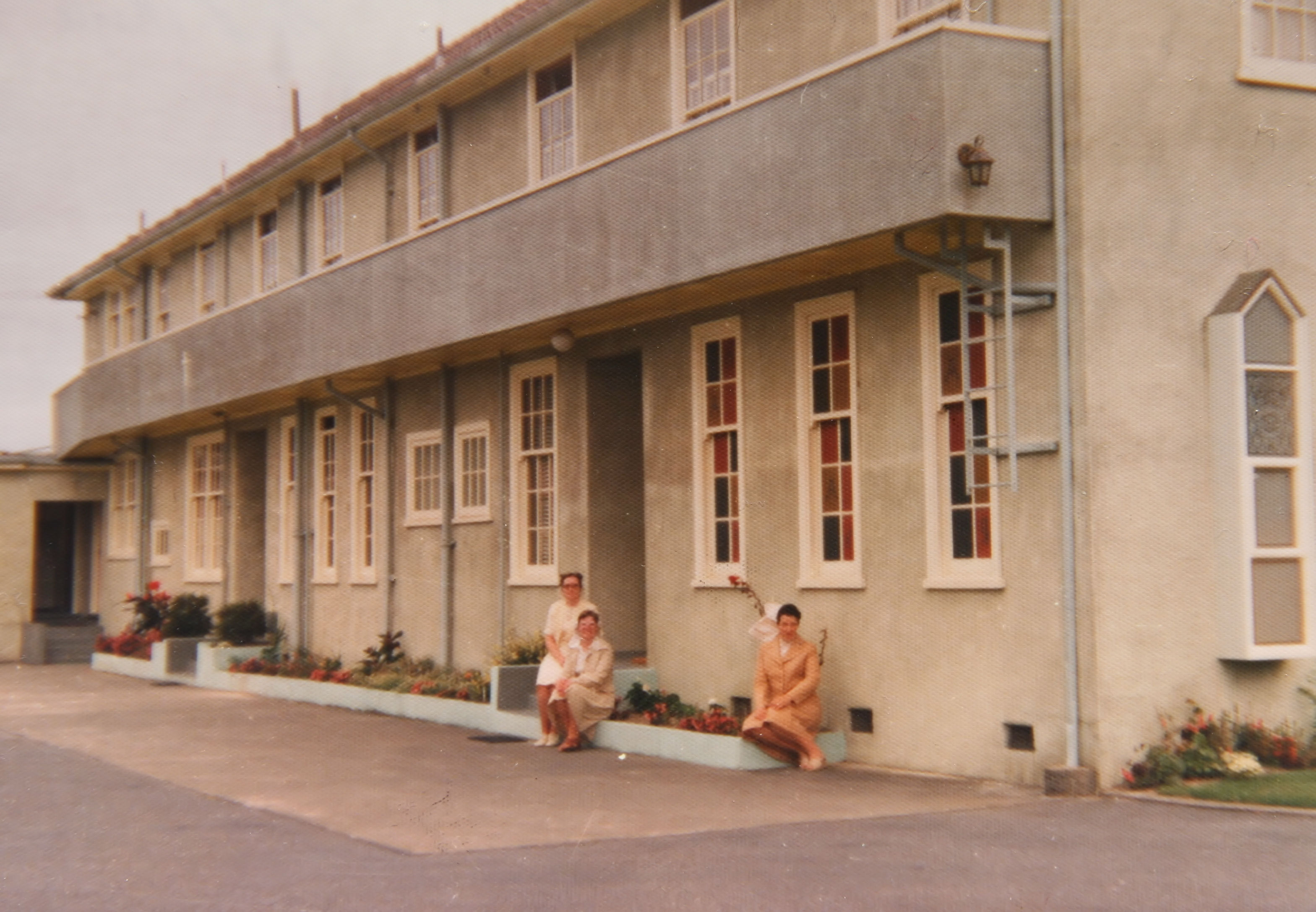
Presentation Convent, Taita.
In the Classroom and getting used to the accents
It was winter when I arrived and school holiday time, so I had a week’s break before starting school in Naenae about two miles from Taita. I had infants and found it difficult adjusting to the English and getting used to the accents. Just a fortnight before the end of the term and summer holidays, a general inspection of the school was announced – my good luck! December – summer holiday at last.
Next term I found myself principal of a three teacher school along with Sr. Mairéad King from Athenry and a lay teacher (married to a Kerry man). I had never expected to be moving so soon. In those days, our appointments were made in Tuam. During the holidays I received a letter appointing Sr. Mairéad and me to Manaia in Taranaki under the shadow of snow-capped Mt. Tarranaki, or Egmont as it was then called – about three hours drive north of Taita.
Not a Step between Us
This was a new foundation for us. The Sisters of St. Joseph of Nazareth needed to withdraw Sisters from one of their schools in order to begin a “motor-mission”, travelling to schools in rural areas to help teachers with the religion programme. We were invited to take over the school. The Sisters walked out of that school and convent and left us everything from the yearly School Scheme to the Petty Cash for the month.
Taranaki is renowned for its dairy farming and we were in the heart of it. The people, I believe, were a bit apprehensive when they heard they were getting two Irish Sisters and had told their children that they would now have to learn Irish dancing. If they only knew we hadn’t a step between us! We were very fortunate to have Mrs. O’Brien on the staff. She had been there for years and took great pride in telling us what we were supposed to be doing. Sport was top of the curriculum – cricket, rugby, tennis, netball and swimming. We competed with other schools in the district – both Catholic and Public. Parents were very involved and did most of the coaching. St. Patrick’s sports day was a very important occasion when we met up with all the Catholic schools for athletics. An old Irish priest always started the day by saying the Grace Before Meals.
Calves and a Bee in a Match Box
The Calf Show was another important event for which we joined with the local Public School. Children from Primers to Form 2 groomed their calves for weeks prior to the show. On the big day they each had to lead their calf around the ring and the most obedient and best groomed calves won the prizes. The children who didn’t have calves brought in their pets. One young fellow came to me very upset because the only pet he had was a bee (his parents were bee-keepers). He brought the bee along in a match box and won 1st prize for the most unusual pet. As this was a fund-raising event, parents had stalls with all sorts of goodies. We did teach in between all these events! The people were extremely good to us, appreciating the fact that we were so far away from our families. We frequently got invited to their homes for meals, which usually included a tour of the milking parlours afterwards.
Home and Away
In 1976 I returned to Ireland intending to stay but God had other plans. For the next two years there was a restlessness within me and I felt a strong call to return to New Zealand. In 1979 I answered that call and returned, much to the disappointment of my family. Five years later I had moved out of teaching, feeling there was nothing left for me to do in New Zealand and was due to return to Ireland when Sr. Bridie, our Vice Provincial, approached me.
Prison Ministry
 “Maureen”, she said, “you were always interested in Prison Ministry. Why don’t you have a look around to see if there are any chaplaincy vacancies?” And so my call and dream were realized. During my novitiate in Tuam I happened to read a book called, ‘God Goes to Murderers’ Row’ – a story of two Sisters who regularly visited Death Row in a top security prison in the United States. It was inspirational. I decided there and then that one day I would work in a prison, God willing. We were enclosed at the time and that dream seemed most unrealistic.
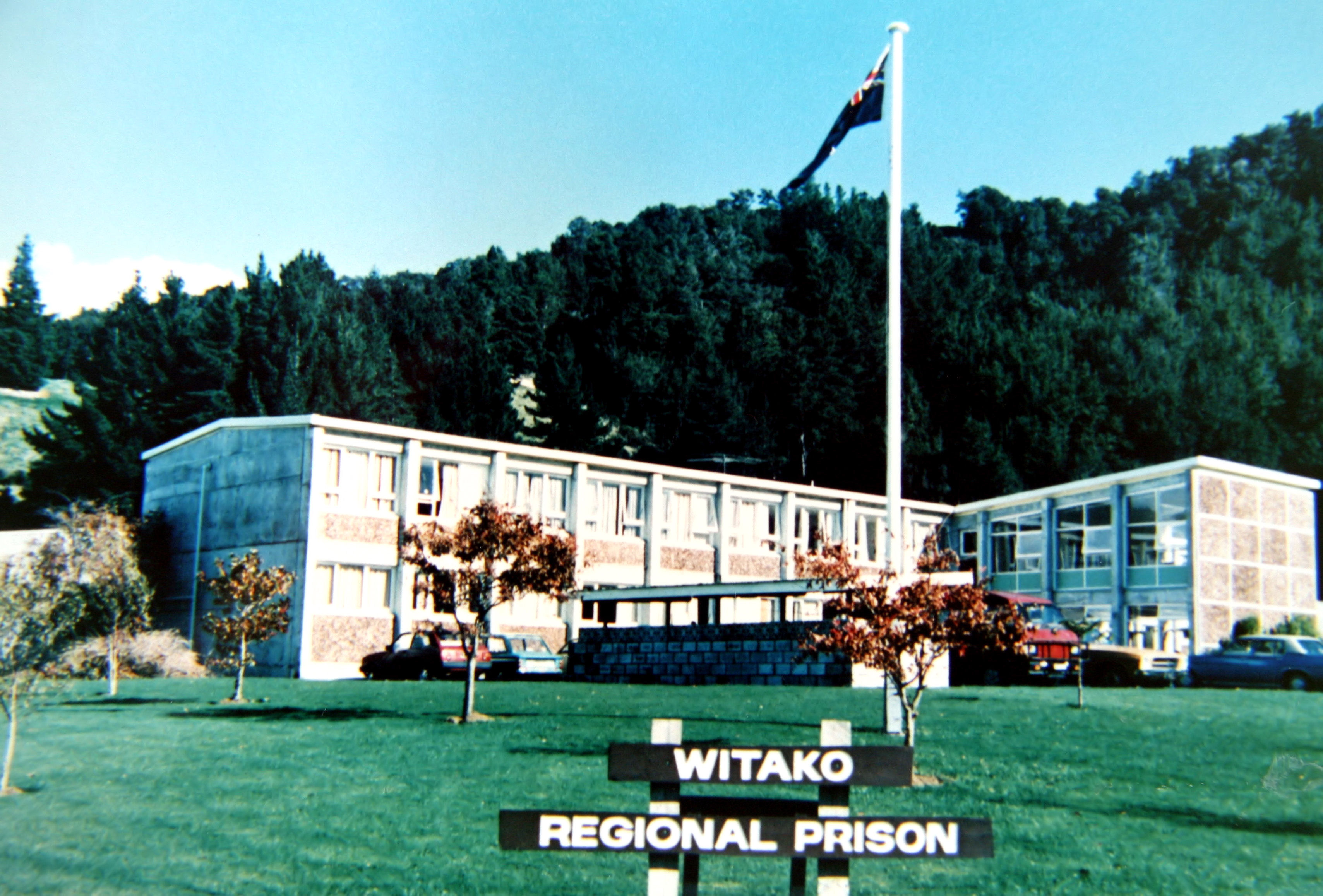
Twenty three years later, in 1984 I walked into Wi-Tako minimum security male prison as its first full-time Catholic Sister Chaplain. Wi-Tako, or Rimutaka (left) as it is now called, is situated close to Upper Hutt City, where I was living at the time. It catered for minimum security offenders and men in their last year of a life sentence. (At that time we had 120. Today there are almost 1000).
I had been writing to three ‘lifers’, as they were called, in different prisons for many years prior to this and visited them, so prison wasn’t totally new to me. In those days I wore a veil and I believe the staff, mostly non-Catholic, were wondering how they were going to cope with this ‘alien’ in their midst.
The manager, who has visited me recently, was a wonderful man and was delighted to have an extra chaplain to help the Church of Christ minister who’d been there for years and nearing retirement. We worked extremely well together though I found him a bit conservative.
The staff members were watching their p’s and q’s in my presence for a while but soon discovered I was quite normal. The officers were most protective of me, which I didn’t always appreciate.
‘Digger’ Orientation
On my first day the Divisional Officer was designated to take me on a tour of the prison and introduce me to any prisoners or officers we met on route. When we arrived at the punishment block or ‘Digger’, he unlocked the huge iron door of the cell and asked me to step inside. As I did, he slammed the door shut, turned the key and walked away. I could hear the steps receding in the distance. There I stood in this freezing, bare grey concrete cell. It didn’t even have a bed. A mattress and blankets were brought in at night. Feelings of worthlessness, shame, rejection, isolation, fear, loneliness raced through my mind. The key turned in the door and I stepped out. “I just wanted you to get a sense of what it feels like for the men when they’re locked in here”, he said. I have never forgotten that experience. My orientation was over!
Because I was employed by the Catholic Church and not the Justice Department, I could plan my own timetable. I started work at 9 a.m. and tried to finish at 5 p.m.but very often it was much later. Each week we, the programme providers, interviewed the new comers. The following week we met as a group with each man and decided on a programme for him whilst in prison.
Gang Culture
Rival gangs contributed greatly to the tension and violence within the prison. It was so sad to see young men, in perhaps for the first time for a minor offence, getting caught up with them. They usually recruited the vulnerable ones who needed protection. A young Maori boy in for just a few months joined a particular gang. On the day of his release other members were waiting for him, took him to a bank and put a gun in his hand. That evening he was back inside, having shot dead a bank tiller. He had never handled a gun before and panicked when he got inside the bank. I was with him in court when he was sentenced to life imprisonment.
Christmas Midnight Mass
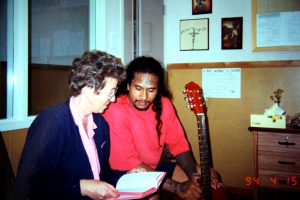 My ministry involved mostly listening, counselling, taking men out to funerals, visits to homes or hospitals, Church services, Baptisms, schools and other groups who occasionally invited us as guest speakers. Coming up to Christmas, my first year there, a Maori man who was coming to the end of his life sentence, asked me if I would take him out to midnight Mass. I thought my chances of getting permission were slim but the Manager didn’t even hesitate. “Of course you can”, he said. I was a little nervous so I brought two more. From then on it became a tradition. We would leave the prison about 10.00 p.m., go to my community house where we would have a party and return to the prison about 1.30 a.m. after Mass. They always got a great welcome from the parishioners.
Friday Night Church Service
 On Friday nights we had our own Church Service in the prison. This could last for anything up to one and a half hours. The men were gifted musically and loved to participate in every way. They always looked forward to Friday night. Prison is a spiritually challenging place; you have got to live the Gospel. You can’t preach it and not be seen to live it. The men often challenged me in Church if I said something they didn’t agree with. I believed in challenging them too and confronting them about their offending, but I loved them and they needed to know that. I always carried the Bible and a packet of ‘smokes’. If one didn’t work the other did!
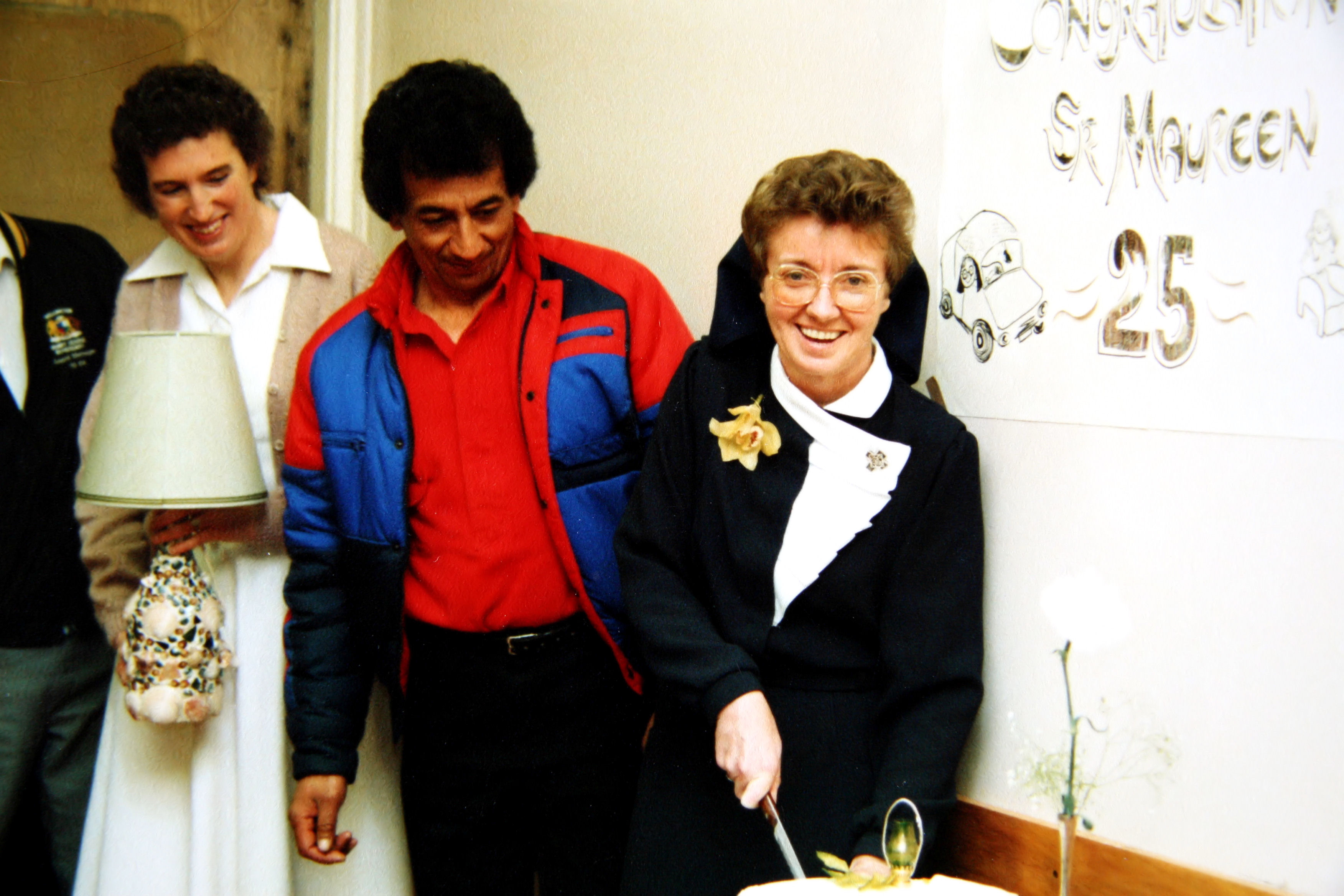
First ever Silver Jubilee celebration allowed in Prison
I celebrated my Silver Jubilee with our own Sisters, prison staff and chaplains in the prison chapel. The men partook fully in the liturgy, readings, offertory procession and of course the music and singing. Afterwards we had a big party with food provided by all who attended.
I was presented with some beautiful gifts made by the men and all symbolizing my life among them. That occasion was the highlight of my life. I felt very privileged to be allowed celebrate the first ever Silver Jubilee in the prison.
Breaking Bad News
There were very many sad occasions too. I often had to break bad news to them and one would have to be incarcerated to know what that is like. Because they feel so helpless at the time, their reaction can be anger or violence so I always had to be prepared. My theme song as I drove to work each morning was –‘Go in my name and because you believe, others will know that I live’. I totally depended on God each day as I walked through those prison gates. One day I had to tell a Maori man that his little baby whom he had never seen, had died. He got extremely angry and instead of comforting his partner on the phone he abused her – blaming her for the death. What was I going to do with him? At that moment another man, whose baby had died during the year, passed by my window. I called him in. He just threw his arms around John and hugged him, and then they sat and shared their grief. Once again God had come to my aid.
Wharenui
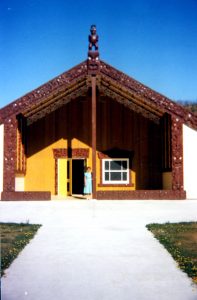 I had to take many funeral services over the years for ex-prisoners who had died by suicide or were murdered. Depending on the situation, I was allowed to take a few men with me to provide the music. Most Maori funerals take place on the Marae. A Marae complex comprises a large meeting house (wharenui) with a sacred courtyard or field in front, where the people gather, and an eating house (whare Kai). The coffin is on the veranda of the meeting house and the relatives sit around on mattresses. As the people arrive they wait in groups outside the gate until they are called. A woman from the host side calls (Karanga) to indicate to the visitors to move forward onto the marae. This is answered by a woman’s response from the visitors, indicating where the group has come from – moving forward as they do to the centre of the marae. Before the welcome can proceed, the visitors must have the ‘tapu’ (or alien element) in them removed by a traditional ritual. All stand in silence for a few moments with heads bowed to remember and acknowledge those who have passed on. After being seated, speakers from either side alternate – the host speaker having the final say inviting the visitors to press noses (hongi) – Maori form of greeting. Then the last speaker – visitor, presents a Koha – a sum of money, placed on the ground, which is used to offset funeral expenses. It is usually received with a chant of gratitude. At this point the hosts and visitors merge as one and become the family (whanau) of the marae for the occasion. When the funeral is over all are invited back for a meal (hangi), which has been cooked underground on hot stones. At one funeral, I was invited by the mother of the dead man to help her fill in the grave because she said, “We were the two best friends he had” – another unforgettable experience.
A Powerful Sacrament of Reconciliation
As the years passed numbers increased and security upgraded. High fences with razor wire were erected and eight new Units built. I refused to carry keys because of their symbolism – locking up, something that was often noted by the men. Most chaplains carried a bunch of keys on a chain. It meant you didn’t have to wait for officers to open doors for you. As I walked around the Unit one day, a man named Haku sitting in the doorway of his cell caught my attention. I sat beside him and noticed he was quite upset. He was in for manslaughter and had received a letter from his victim’s wife requesting to visit him before his release. He had spent the night awake wondering what he should do. As we talked he decided to see her. I got permission from the Manager and arranged the appointment. Since it was a first at the prison, we were asked to keep it quiet. Half an hour before the appointment, Haku was in my office as pale as a sheet and absolutely terrified. Sue, the wife, arrived with a hospital chaplain. I started with a prayer. Sue was very well prepared having all her questions ready. The tension was palpable. At the end of the hour long meeting, Sue stood up, handed Haku a rose and a tape of Christian songs saying, “I forgive you”. It was such a powerful Sacrament of Reconciliation and one could truly sense the peace and relief. How many of us could have done it? Now, Haku didn’t have to watch his back when he got out and Sue was satisfied.
Revolving Door
After thirteen years at Rimutaka, I needed a break so once again I moved back to Taranaki: this time further north to a suburb of New Plymouth City. There I lived with another Sister in a very low socio-economic area. I taught adult literacy, which included preparing for driver’s theory test. I was amused one day when one student asked if I would help him get a fork-lifting licence. I told him I knew nothing about fort-lifts. “Well, I do,” he said, “but I can’t read”. Between us he got it! Shortly after arriving in New Plymouth, the local prison chaplain, an elderly Irish Assumption Sister, asked me to attend her weekly church services, which I was only too delighted to do. Within the year both she and the Anglican Chaplain died suddenly and it was back to prison duties for me again for almost two years.
Caring for Family
During all these years I came home to visit my family every few years and was lucky to be able to care for my Dad for three months before he died. Ten years later, my Mam died. Sadly she had died three hours before I reached the hospital.
Returning as a Stranger in my own Country
In 2002 I bade farewell to beautiful New Zealand – to my community and many friends and returned home, this time to stay. Uprooting after thirty two years was extremely difficult. There is so much I miss about New Zealand, but most of all I miss the richness of the Maori culture. Coming back here I was a stranger in my own country. Everything had changed so much and I was expected to fit in. Materialism was all around me and the Church lacked the life, vibrancy and lay involvement of the New Zealand Church. I think we have paid a high price for the Celtic Tiger. Still Ireland is home and it’s always good to be home.
New Zealand
1976 – 1979
Sister Laura Boyle
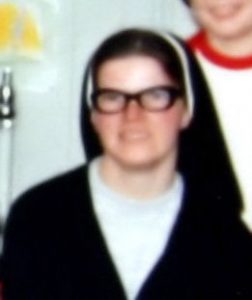 Tears were never too far away. It was a Monday evening and I was driving from Galway to my home in Dunmore to tell my parents that I was going to New Zealand for three years. I remember talking to myself and preparing for the encounter. I didn’t want to cry in front of Mam and Dad.
It took me a while to break the news and when I eventually told them I finished by saying “it’s only for three years.” My father’s reply was “three years are very short looking back but very long looking forward.” You see he had spent a number of years in Boston so he knew what life was like away from home. The fact that he was seventy – seven years of age at the time made my departure that bit harder. My mother was much younger.
Life was good in Athenry
I got the shock of my life the day I was asked to go to New Zealand by my superior. I loved life in Athenry. I loved teaching the children in the school and I loved the people who were always so welcoming and friendly. I lived in a great Community of ten Sisters and we were all rather young and very vibrant. Life was good.
Sr. Laura and Athenry Church Choir
Derek Kennedy, Charles Meehan, Noreen Cunny, Nora Byrne, Kathleen Quinn, Sr. Evelyn Geraghty, Sr. Laura O’Boyle, Patricia Kelly, Ena O’Grady, Austin Cunny. Maeve Rooney, Carmel Farragher, Hillary Duddy.
Apart from teaching in the Primary school, which I loved, a big part of my life in Athenry was given over to the Charismatic Renewal, which was a new development in the Church and very popular at the time with some people. Little did I know that it would be a part of my life in New Zealand also.
A painful letting go
Apart from having ten months to adjust to the news, I had no preparation for the transition at all. Once I made the decision to go, I began winding down and letting go. From then on life took on a new meaning. That was painful because whenever there was talk of planning for the future I knew I would not be part of that life. For instance, my sister Bernie would be getting married during my three years away and I knew I would not be present at the wedding.
What a journey!
I left on Friday, 13thAugust, 1976: not a great date to travel to the farthest end of the world if you are superstitious. It was my first time travelling alone on such a long journey and that was a challenge. As it was the bicentenary of American Independence, I stayed for ten days with my uncle Michael and his family in Boston. That was wonderful. I saw all the sights and we spent three days in Cape Cod. Even though I was having an enjoyable time, everyday was tinged with a little sadness and loneliness.
Soon it was time to continue the journey. I flew to San Francisco and stayed with the Presentation Sisters for three days. On my final day I took off to Disney Land on my own. That was rather daring as I was flying on to Auckland that night. I managed it though.
As I boarded the plane in San Francisco I realised I was going farther and farther from home and the tears began to fall. Sitting next to me in the plane was a very nice gentleman who cheered me up a little on the long journey. I discovered later that he had slipped a $100 bill into my pocket. I think he felt sorry for me.
What a journey! I seemed to be in the air forever. We stopped off to refuel in Tahiti and when I tried to put my shoes on I discovered my feet were swollen, so I stayed on the plane and walked up and down the aisle for about half an hour. Soon we were ready for take off again. We flew to Auckland where we took another plane to Wellington, my final destination. I was welcomed by Sister Mairéad and Sister Teresa, two Presentation Sisters, and was I glad to see them!
A country very different to Ireland
It was winter when I arrived so the weather was very cold and blustery. The first thing I noticed was the terrible wind. I learned later that Wellington is called the ‘windy city’. New Zealand is very hilly and as we drove to the Convent in Taita I noticed that lots of the houses were nestled in the hillsides, very different to Ireland, which is rather flat by comparison.
Very little news from Ireland
On arrival at the Convent a big welcome awaited me by the Sisters and the local clergy. What meal! I tasted pumpkin and pavlova for the first time!
How did I settle into life in New Zealand? I found it difficult at first. The day I arrived, the phone rang and I said to myself “nobody in this country knows me or will ring me”. When I was about a month there, I was having lunch with another Irish Sister, Sister Borgia, one afternoon and she asked me if I was lonely. I said I wasn’t sure. “Do you cry in bed at night”, she asked and I said “no”. “I cry myself to sleep for three months every time I return from a holiday at home”, she said. I thought that was very sad and I wondered if I would end my days in New Zealand like that.
I found the change of seasons very strange especially celebrating Christmas in the middle of summer. We had the traditional turkey and ham but we ate it outside in the sunshine and we went on our summer holidays on Boxing Day, as they called it. I never got used to the time difference; Ireland was twelve hours ahead of New Zealand so I couldn’t connect. As we were going in bed, Ireland was starting the day.
Very little news reached us through the media from Ireland apart from the bombs in the North or the number of people killed through sectarian violence. The resignation of President Cearbhail Ó Dálaigh was reported one evening. That seemed to be a major catastrophe.
‘A bite of a dog’
My main work in New Zealand was teaching, which I enjoyed. I can still recall the difficulties the parents and children had with my Irish brogue and also with my turn of phrase, which they found amusing. One day a dog bit me so I rang the doctor to tell him of my plight. I told him, “I got a bite of a dog” (I know now how funny it sounded to the doctor) He asked me about three times what happened and of course I repeated, “I got a bite of a dog.” He was fascinated and kept repeating, “you got a bite of a dog”. He found that really funny but I did not think it funny at all.
Charismatic Renewal and concert tickets
I mentioned previously that I was involved in the Charismatic Renewal while in Athenry. I was scarcely off the plane when I was tracked down and invited to join the group in Taita and I was delighted, as I knew it was very worthwhile work and I had had great experience from working with the core group at home so I was rather confident. There was a real sense of community and caring in most Charismatic groups and ours in Taita was no exception. I experienced great love and support from the members and I believe it helped me settle into life in New Zealand and it gave me
an understanding of the people that I would not otherwise have got. Every now and then, tickets would arrive in the post for concerts in Wellington, usually by Irish artists, and I never knew who sent them. I discovered later that a rather wealthy gentleman in the group was responsible. So I had one admirer!
Once a month a Charismatic Mass was celebrated in the Church in Lower Hutt and I was the co-ordinator of these Masses. I also joined Father Eddie Condra giving Retreats. These were great occasions and I enjoyed that work very much.
Presentation Sisters in Taita
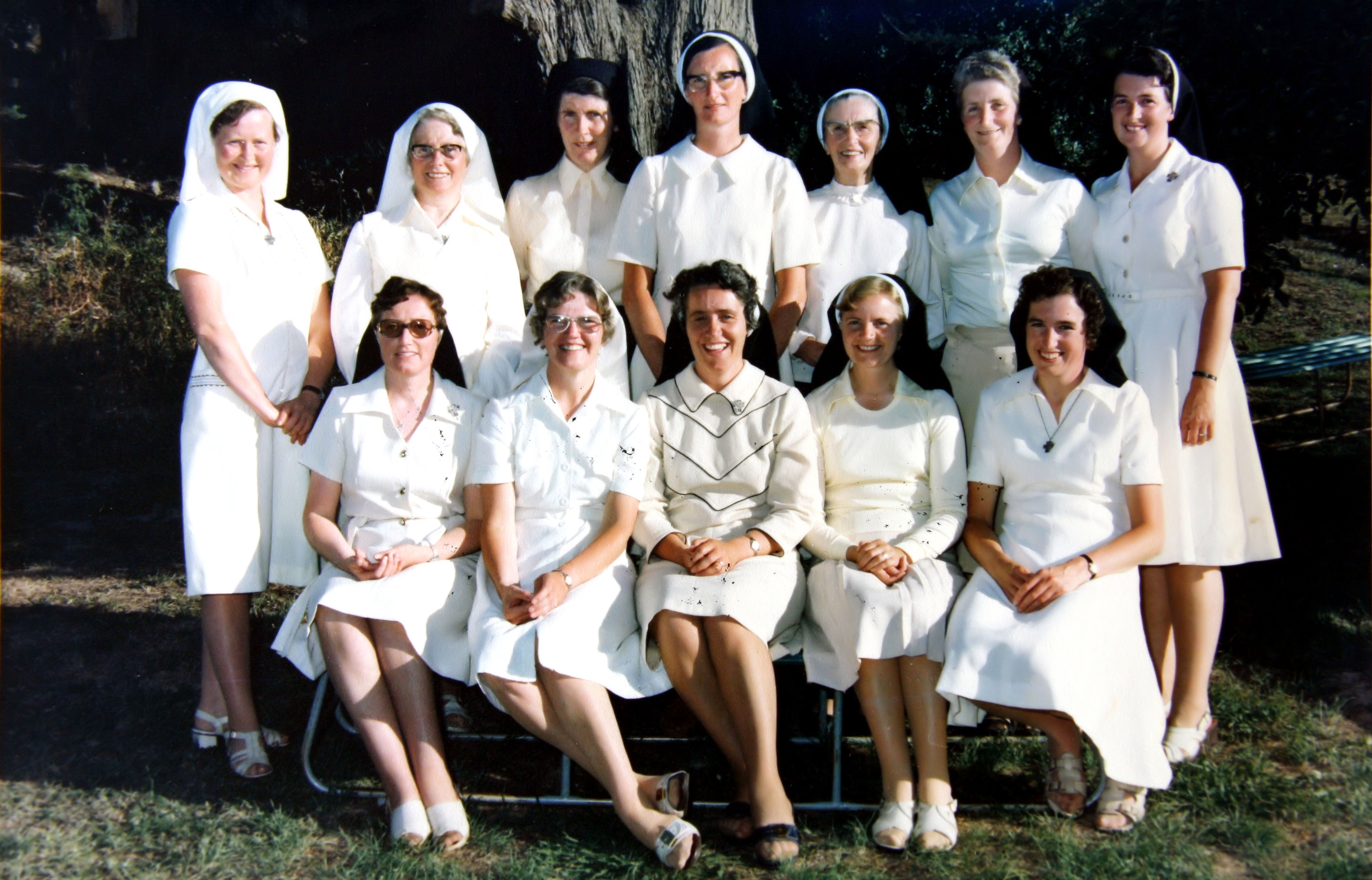
Front, l-r: Teresa Tierney, Laura Boyle, Bernadette Joyce, Juliana Purcell and Fran Nicelle. Back, l-r: Mary Tait, Sr. John McHale, Clement O’Sullivan, Catherine Mulcahy, Christine Leahy, Breda Ryan and Eileen Kearney.
A fascinating culture
New Zealand it is about 1,250 miles south east of Australia. It consists of two main islands, the North Island and the South Island, separated by Cook Strait and a number of smaller outlying islands. The population of New Zealand is approximately four million, about 157,000 of them Maoris.
I found the history of the country fascinating. Maoris were the first inhabitants, arriving about 1000 AD. Maori oral history maintains that they came in seven canoes from other parts of Polynesia. In 1642, Abel Tasman, a Dutch navigator after whom Tasmania was named, explored New Zealand and British captain James Cook made three voyages to the islands, beginning in 1769 and Britain formally took possession of them in 1840. The Treaty of Waitangi (Feb. 6th 1840) between the British and several Maori tribes promised to protect Maori land if they recognised British Rule. The British did not keep their side of the bargain and much trouble and unrest ensued.
The two official languages of New Zealand are English and Maori. The Maori language has been part of New Zealand and its culture since the first people came to the Islands. It is a Polynesian language similar to the languages of the other Pacific Island cultures, such as Hawaiian, Tongan, and Samoan. However, it has only been recognised as an official language since the Maori Language Act in 1987.
New Zealand is known for its beautiful scenery and there is a great variety of it. I travelled the length and breath of the country and the one place that really impressed me was Rotorua, a smallish city on the shores of Lake Rotorua. The surrounding areas are a geothermal wonderland, with geysers, boiling mud pools and steaming craters. Rotorua is also a showcase of Maori cultural activities, a centre of tourism and a place of extraordinary natural beauty.
It is one of the major tourist attractions in the North Island but despite this, manages to retain some of the charming characteristics of a country town even to the present time. The small museum is of particular note in this respect.
Why are you going?
I had been requested by my Superior to go to New Zealand for three years and as my time there was drawing to close I was asked if I would commit to the New Zealand Province permanently. I did so reluctantly.
Then it was time for my trip home. While at home I reflected on my future and in order to avail of more time, I requested to do a course in Catechetics in Mount Oliver. Doubts started to take hold and I was no longer sure about my decision to return to New Zealand, but I was reluctant to let my feelings be known. Then it happened very simply. I was in the kitchen in Athenry and Sr. Philomena asked me if I loved going back. “No, I don’t”, I answered. “Why are you going?” she asked. That was all I needed. It’s obvious I didn’t return and I am grateful to Phil for that question.
Longing for Ireland and family
I would not like to give the impression that I was unhappy in New Zealand but there was something missing. I longed for Ireland and most of all I missed my family and all the special celebrations which went on in my absence, such as the births of my nieces and nephews, weddings and other events. I wanted to be part of their lives and see them growing up. The thought of leaving home again, especially my Mum and Dad as they were growing older, was very painful.
I have the greatest admiration for people who are forced to emigrate and for missionaries who give their lives to work in foreign countries. I remember saying to myself one day, “if there is a heaven and I believe there is, there is a special place there for these very generous and courageous people”.
Veil-free and a green skirt
Of course my time in New Zealand was quite special and I made great friends while there. As a Presentation Community we were very close on account of our dependence on one another and being so far away from home. I got opportunities there that I would not have got in Ireland and I loved the freedom of the wide, open spaces. While there, we abandoned the veil and I bought a green skirt for the first time since I entered Religious life. Now that was daring!
Zambia
Sr. Teresa Morris
In 1977 I was asked to take her class in Kasiya Secretarial College in Zambia. The College is situated on a dirt road a few miles from Pemba, which is a small town on the Great North Road that runs between Lusaka and Livingstone. The main ethnic group in the area is the Tonga.
Presentation Sisters taught in Kasiya in the early 1970’s. The Primary Schools were zambianised so we could only teach in the College. Before leaving for Zambia there was a lot of preparation to be done like immunisation for Small Pox, Yellow Fever, Cholera, etc. and buying a supply of malaria tablets. I also had to apply for a Passport and Work Permit. As I arrived in the month of September, it was very warm and even got hotter in October but I got used to it. We did not have any air conditioning but we did have electric fans, which were marvellous.
We got up very early in the mornings and finished our day’s work after midday. After lunch we had a siesta until it got a bit cooler. After supper we played cards most nights, as we had no TV. In those days, I had a radio but very few programmes were in English except Radio America. I was never lonely or homesick in Zambia. I found that working on the Missions was much easier than teaching in Ireland.
I taught Shorthand, Typing, Commercial English and Religion. I also for a time looked after the Production Unit in which we grew tomatoes, corn on the cob, etc. The biggest problem with that project was keeping it watered. This could only be done after sundown as it was too hot during the day.
We used Typewriters in those days. The students were all boarders who had completed their Secondary Education. They were excellent students and spent a lot of time practising shorthand and typing. They got a better salary when they graduated if they had very high speeds in those subjects. There was never a problem with discipline or homework not done. I found them to be very cooperative and friendly.
In the afternoon when it got a bit cooler I went out with a few students to visit some of the local families, especially the elderly. We helped them by picking ground nuts, corn on the cob, sweeping the yard and sometimes doing some laundry. They were very welcoming and hospitable and always offered us some refreshments.

On Sundays I went out to an outstation in Simbulu. The locals conducted a prayer service. I gave the homily and distributed Holy Communion.
We returned to Ireland for a holiday every two years. During holidays we usually went away from Kasiya – to Malawi, Copperbelt, Livingstone or Zimbabwe.
It was very exciting to go to the Victoria Falls in Livingstone. It was described by the Kilolo tribe living in the area in the 1800’s as ‘the Smoke that Thunders’ and in more modern terms as ‘the greatest known curtain of falling water’. The Victoria Falls are a spectacular sight of awe-inspiring beauty and grandeur on the Zambezi River. Columns of spray can be seen from miles away. We usually walked across the Knife Edge Bridge to get a good view of the Main Falls. It was only in 1980 that we were free to cross over into Zimbabwe as the Border was closed until then. We had curfew as there were guerrillas crossing over from Zimbabwe.
We had bore-holes on our compound to supply us with water. They were fairly satisfactory but some times they broke down and then we had to spare whatever water we could get. During the frequent droughts crops suffered and disease rose sharply Malaria is a high risk in some locations. I was lucky that I never suffered from malaria.
English is the official language and the other major vernaculars are – Bemba, Lozi, Nyanja and Tonga and about 70 other indigenous languages. Tonga was spoken in our area. The local people in Kasiya had very little English, especially the women. I went to the Language School for a few months and really enjoyed the experience.
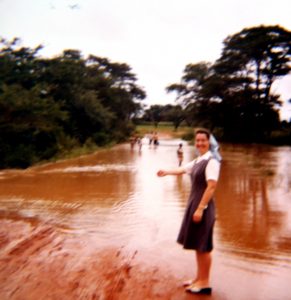 The rains used to fall from October to March but some years no long spells of rain fell until Christmas. Corn-growing is the basis of nshima, which is the Zambian daily staple.
| Sometimes we went on safari and saw lions, wild dogs, elephants, giraffes, and zebra. I was never too afraid of snakes but I hated earwigs and ants. Fireflies were lovely to watch at night time. Flying ants were a great treat as the students usually collected them in buckets and roasted them. They were like salty nuts to eat and were delicious. |
Greetings were always exchanged before any conversation took place. Gifts were offered to a visitor as a sign on friendship or gratitude. It wasn’t polite to refuse a gift and it was customary to accept it with both hands at the same time expressing thanks.
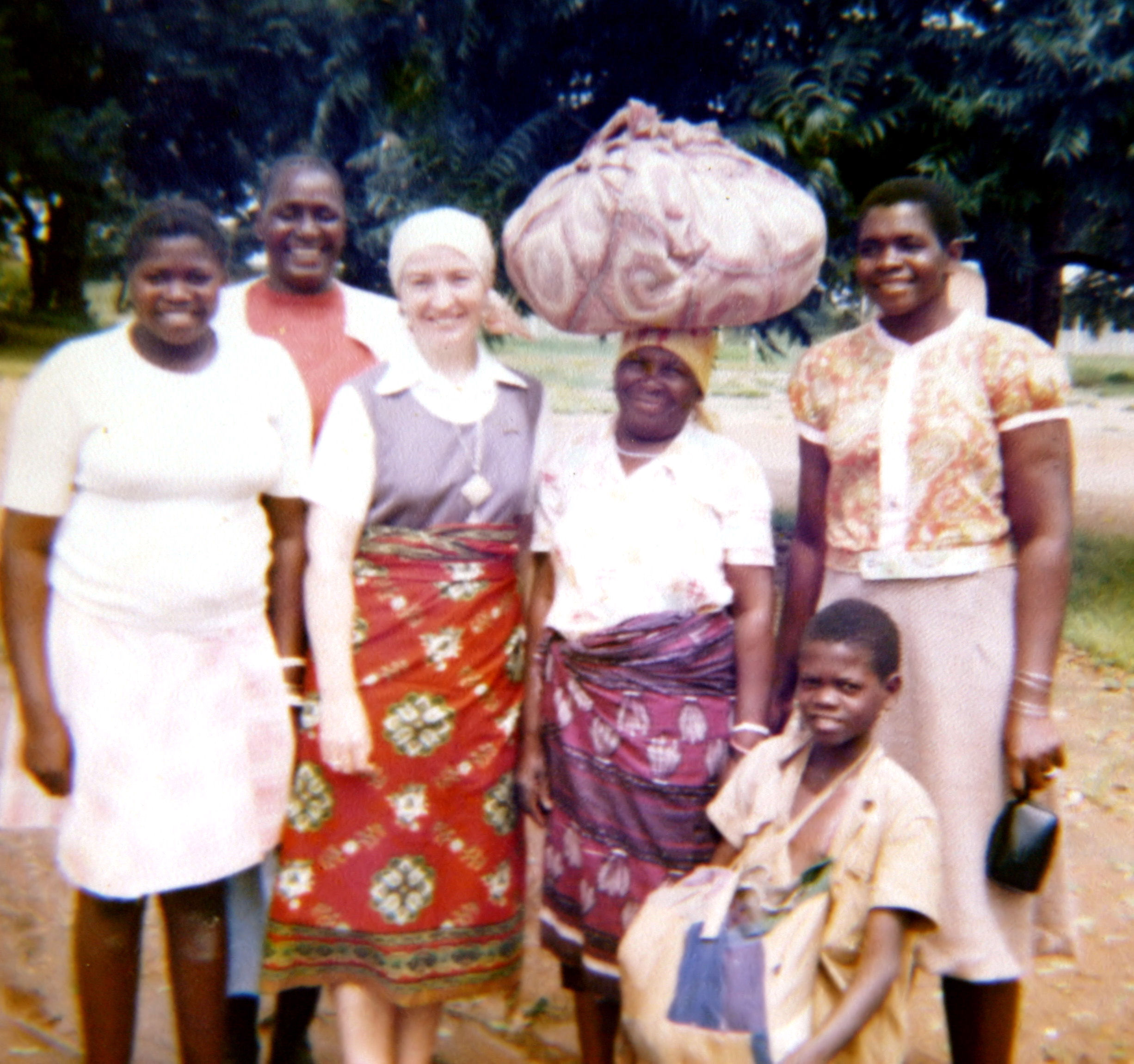 Funerals were also big occasions in the villages. Grief was shown through wailing, singing and dancing and became quite an emotional affair. After long speeches about the departed friend, the villagers walk to the place of burial to pay their last respects.
I now teach English to foreign nationals, it is a bit like being on the Missions! I am grateful to have been associated with Zambians who were kind and generous. They are a people who enjoy interacting with other Africans and with people from all over the world.
Pakistan
1979-1999
Sr. Marie Ward
 There used to be a magazine about the Pakistan mission called ‘Presenting Christ’, circulated by the Presentation Sisters in Pakistan whose one house in Ireland, before all the Presentation groups came together in Union, was in Baileboro, Co. Cavan. I often read the magazine and thought how difficult, austere, far away this group was. I had great admiration for this group and their work, but had a firm notion in my head that I wouldn’t really want to or be able to do that work.
In the early 1970s a circular came around the houses asking where Sisters would like to work on mission fields abroad. I volunteered for New Zealand when I joined the congregation in 1966, which at the time was the Tuam Presentation foreign mission. When the circular came again and other Sisters had gone to New Zealand in the meantime, I volunteered for any area of greatest need in the world. I heard nothing more about it for a couple of years. I felt young, energetic and enthusiastic. Nothing was too great, too big or too far away and obstacles never featured in my path.
“Is it Pakistan?”
In mid-April 1979 I was invited to visit the Superior General in Monasterevan, Co. Kildare. All the way there that evening I discussed with my companion all the missions throughout the world except Pakistan. That morning a newsletter had revealed the names of the two Sisters who would be going in September to Pakistan. I came up with nothing as I approached Monssterevan.
On entering Sr. Lucy’s Office I asked “where are you asking me to go?” She opened a filing cabinet and took out photo albums of Jubilees and work situations in schools. When I took one look at all the nuns dressed in long white habits I asked, “Is it Pakistan?” Sr. Lucy said, “Yes”. I felt dumbfounded and shocked and overwhelmed.
Tearful pondering
Sr. Lucy gave me plenty of time to think and pray. I told her then that, although I had doubts, I would go. Coming home that night I decided not to tell the Community or anybody until I felt more at home with the idea myself. I cried all the way home arriving at 1.45 a.m., and cried the rest of the night. I went to school the next morning and tried to put it all out of my mind for a while. I don’t remember when I told the Community in Tuam. I took many trips to the lake in Loughrea and to the sea in Connemara, reflecting and wondering. Gradually, I told a few friends. Eventually, I told my relatives. My family were very stoic sort of people. They wouldn’t be exactly dying at your departure. I felt a great freedom in that. My father’s attitude was if you make a choice about your life and have a deep conviction, follow it up. I felt free to go.
I felt broken hearted many times between the time I was invited to think about it and the time I actually departed in mid September. Privately I often cried and wondered why I ever decided to go to such a place. I acted very brave and rarely did I cry out in public. Once or twice with a friend I did shed tears and they made the comment, “You have a heart after all”.
Preparing for the trip
During the last weeks at school in Tuam the parents came to know I was going to Pakistan. I became energized and enthusiastic. I bought a suitcase and started putting some white things into it. I got some white habits made. I visited a nun who worked in Pakistan whom I heard was home in Ballindine. It actually turned out that the day I called at her house her father was dying. I joined with her in praying for a happy death for him and left Pakistan aside. Then there was a three week orientation course in Dublin, which I was invited to attend. I decided that I didn’t need that and instead I visited the one house in
Ireland belonging to the Pakistan group in Bailieboro. I got a good lot of information there about what to bring and what not to bring. I visited the Presentation Convent in Kildare Town and spent a day or two with Sr. Patricia. Together we went to Castlecomer to stay with Sr. Monica. We walked by the river in the garden and we talked. We met Sr. Miriam at that time and the date for travelling was fixed for the 20th September. It was the day the Pope came to Ireland.
Tearful greenhorns
My travelling companions were: Sr. Patricia Byrne from Presentation Convent, Kildare Town, Sr. Monica McGrath, Castlecomer, Co. Kilkenny and Sr. Miriam Murphy, the Vice Provincial leader of the Pakistan Province.
We had a cup of coffee in Shannon and I headed for the departure gate without looking back. I spent one day and night with friends in England, one of whom was due to go to Zambia shortly after. We wept and moaned over dinner. My friends drove me to Heathrow where I met up with my three companions. I remember the three of us greenhorns having loads of luggage, dragging it around – not having a clue. I cried interiorly the whole way. We eventually got the luggage checked in and got our boarding cards. My three companions were seated together on one side of the aisle and I was by the window on the other side. I thanked God for the space. No one could know what or how I felt. I sobbed quietly thinking nobody only God knows, and wondering did God know!
As the flight filled up I looked over once at my companions and one of them was reading her Bible, the same person was full of charismatic spirit. I think I cried even more. After a while a gentleman sat down next to me and began a conversation. He asked me if I was a tourist. I told him I was going to spend three years in Pakistan. He told me he would be spending three months at the Embassy in Islamabad and then returning to London. The flight took twelve hours. We might have refuelled in Istanbul. We travelled with Pakistan International Airlines. This magnificent menu was placed on our table at some stage. With dinner in view I thought things might begin to get better. I did not recognise anything on the menu.
“Are all these Muslims”?
We landed in Islamabad around 6.00 a.m. Pakistan time. Five or six Presentation nuns were there to meet us, all dressed in long white habits. The first thing I noticed when we disembarked and came to collect the luggage was there were people everywhere. There was a great buzz all around the place with everybody speaking in a foreign language and women wearing ‘Burkas’. I turned to a nun who was escorting us out to a taxi and asked, “Are all these Muslims?”
We went by taxis the fifteen minute journey to Rawalpindi City, to the Mother House as it was called then. A big breakfast had been laid out in the dining room for us. Needless to say I didn’t want any breakfast. Introductions started then and there was great chat about the new Sisters. We were sent to rest then for a few hours to cubicles in a long dormitory with white curtains. Sitting up in the bed I would have thought before that our house in Tuam was a very ordinary place but now it was a palace compared to this! I hadn’t reached my destination yet. After a rest and lunch, another nun in a white jeep with her driver came to take me to my final abode, to a place called “Wah”. “Wah, Wah” means very good. In Wah I met a few more Sisters who were to be my Community members for one year.
Culture shock
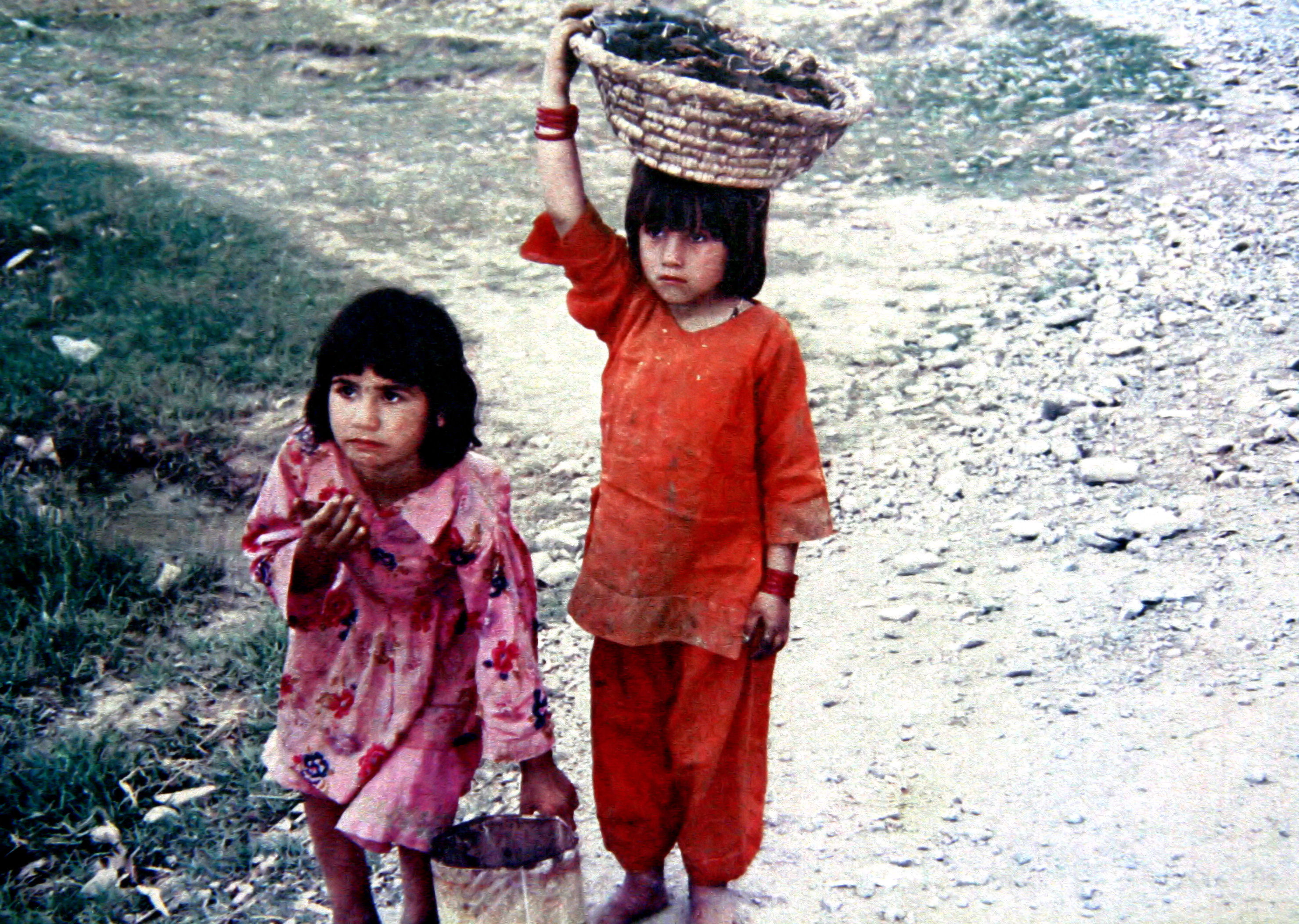 Everything was totally different at first – language, food, the smell of curry, verandas, heat, white ants, black ants, drites and cobras, white curtains and another dormitory upstairs. The house was situated between a hill and the river. There was supposed to be a Muslim man living at the top of the hill. The climate was still very hot in September. I walked out on to the flat roof that first night and sat on a charpoi (a cane bed) and noted to myself the moon and stars that are shining over me now. It must be the same moon and stars that are shining over Ireland. I went to Mass in the Convent Chapel at 6.00 a.m. The Mass was in English that morning and I remember thinking again even the Our Father is different. When I came out of the Chapel there was a lady polishing, dusting around the palace. She was to be part of the furniture. Hamida was her name. I couldn’t find a saucepan with a handle in which to boil a drop of water.
I arrived on a Saturday and decided to go to school on the Monday morning. Well, that was great. The teaching was through English and thus bore some semblance of home.
Homesickness
The door bell never rang for me, or the telephone. I often answered the door to people calling and it was always for someone else. One day as I was sitting having lunch I noticed a calendar hanging on the wall opposite. I went over and marked off the days that had passed – one week and I thought two and a half years to go.
I made a pact with myself never to write or talk about how I felt and that I must not go home within the first year. So whenever I wrote air letters to the Tuam Community, family and friends I wrote all about Islam and the Muslim world, the climate and the culture and a bit about the school.
The children were delightful and so eager to learn. I taught English and Mathematics at that school. To combat homesickness, I did a variety of things, like driving the jeep to Rawelpindi to visit Sr. Monica and I even managed to drive the jeep to Murree to see Sr. Patricia, which was 7,000 feet high after a turn or two with Muhabbad the driver. Muhubbad means love. I went to learn Urdu, which to my cost was like teaching a pig to sing – you irritate the pig and you exhaust yourself. I had difficulty hearing what the teacher was saying. However, it was to push away any deep feelings that might be going to surface. Whenever I received letters from Ireland in the beginning, usually at the small breaks from school at 10.30 a.m., I never opened them immediately. I kept them till night time and I kept all letters – I had them in a file cover and I read them over and over again like a book. People used to send me the “Tuam Herald”. Now I’m thinking, “What on earth was l doing with the “Tuam Herald”. Then after about a year I destroyed all the letters and I must have cancelled the Herald.
A purpose waiting to unveil itself
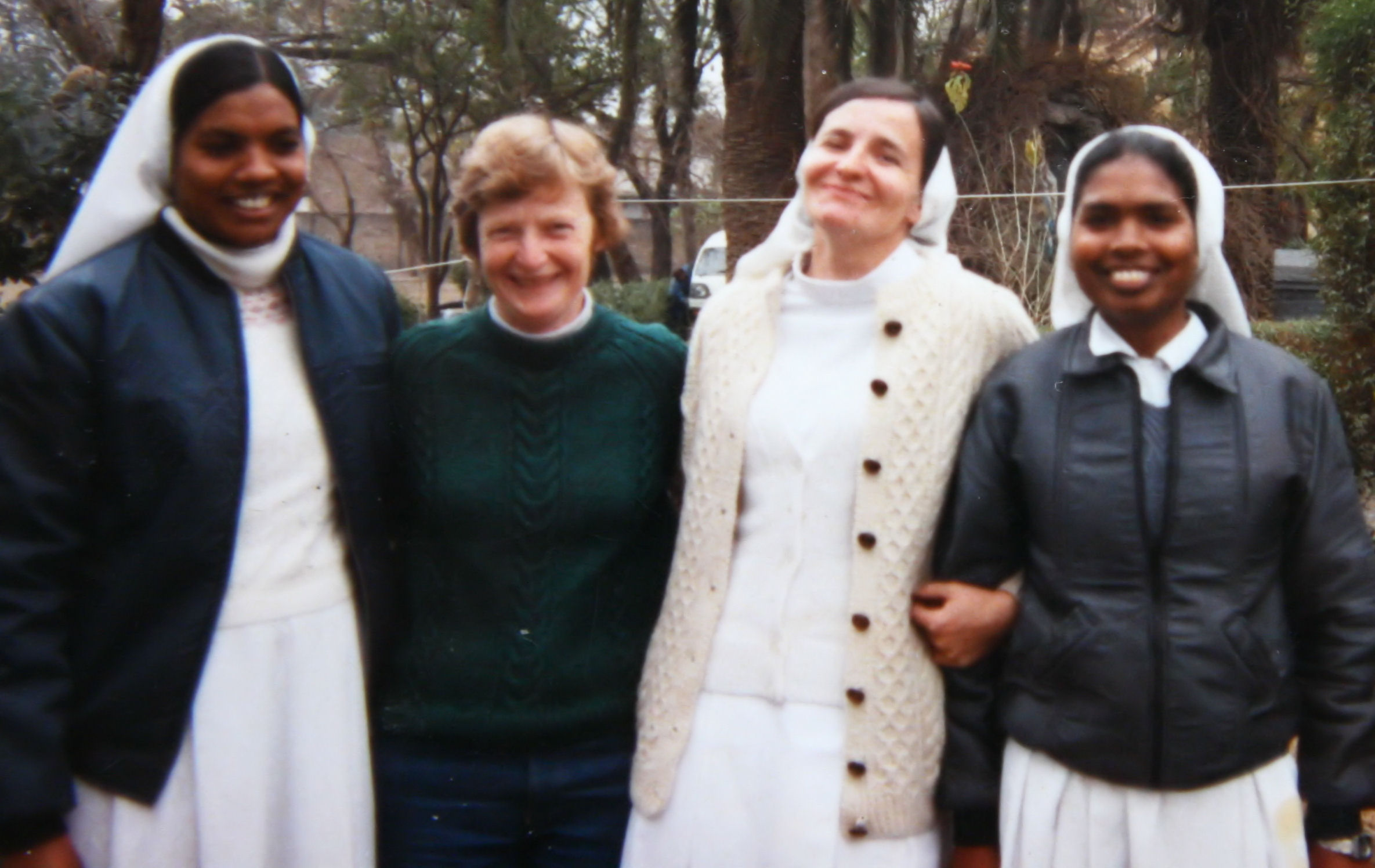 One memory of my first week in Wah was when the Sisters were invited to attend the Final Profession of a Pakistani Sister named Maria Basheri in a Christian village twelve hours journey away. I didn’t want to go really; I felt with every new and different activity I was going deeper into limbo. I wasn’t deemed mature enough to be left behind in the house! However, it was the best thing that ever happened me that I went that day.
On the way, the Mill Hill priest who was driving our jeep said we must stop for tea. I thought, “oh, great this might help to lift my drooping spirit’. We literally just stopped dead on the road. Nearby there was a man standing beside a fire with a pot on it like a skillet and he was filling out cups of tea. I have to say I was disappointed – the tea was so sweet.
After a beautiful Mass in an open Church in the village in Urdu, none of which I understood, we were invited to lunch in the priest’s garden. It was the simplest and the loveliest luncheon – such a contrast to the hassle that used to go on over in Ireland. It did something for me. It made me feel there is a purpose in my being here if I can have the patience for it to unveil in my life.
Settling in
On another occasion after many months, I went to visit Sr. Monica in the city. She said “I want to show you something – a great discovery”. We walked into the Sadder – the Foxrock of the City and into a real cake shop. Sr. Monica said “it’s a great consolation to know it’s there.” I had no interest really in cakes. I preferred savoury foods in those days.
Another time, I was about a year there, I met a dear lady, Dr. Mary de Costa, who adored the Bishop and loved the nuns. She used to give herbal medicine. It was good too. She asked me would I take her nephew to the Islamabad International Airport. I hadn’t seen the place since my arrival. Her nephew was returning to Germany after a holiday with Mary. I had to spend a few hours at the airport. I felt so lonely. I couldn’t believe the regression that took place that day.
Teaching in Middle and High schools
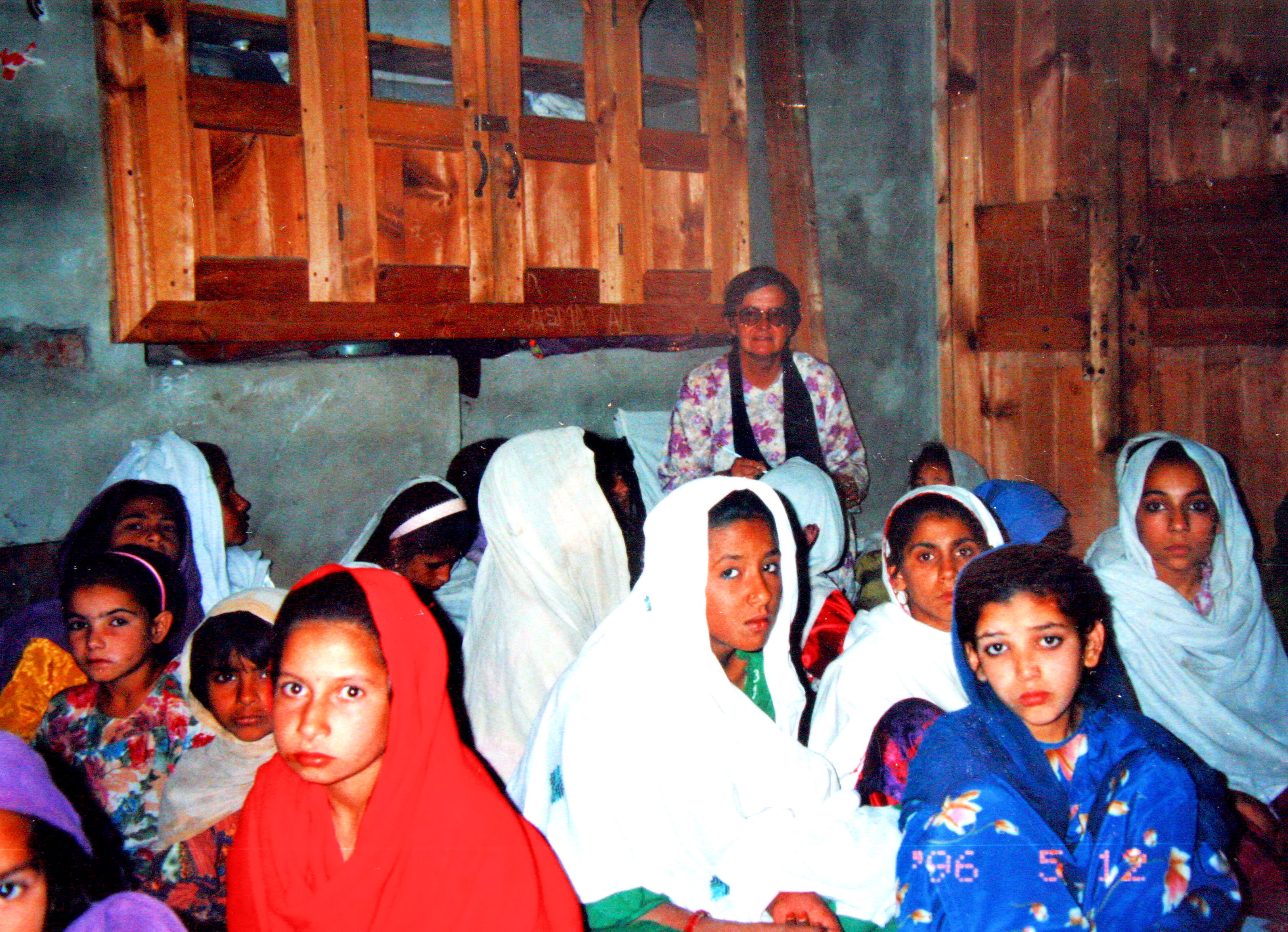 I taught English and Maths in the Middle School in Wah for one year and in the Middle and High School in Jhelum. I taught English in the Middle School and Pakistan Studies (Geography, History and Civics) in the High School in Swat for six years, and looked after the Boarding School. I taught English in the Primary School in the Christian Village of Josephabad for one year. I was engaged in the administration of the girls High School in Sergodha for six years. In the morning school I taught English to Matriculation Class in the Public High School, Sangola, Swat. With another Sister I started a school programme for children who never attended school or who had dropped out of Government schools. This Primary Education Programme was funded for five years by the local government Frontier Education Foundation. After that we had to generate enough funds to sustain this programme ourselves. The programme progressed and still goes on today. Subjects were taught through the medium of the Pushto language. The subjects taught were: Urdu, Mathematics, Pakistan studies, Reading, Writing, Book Binding, Cookery, Shoe making and Embroidery. The programme went from Kindergarten to Class Five, at the end of which children would be expected to join the school’s mainstream in class Six. We also had small scale farming – the boys were taught how to cultivate a small plot of land where they planted potatoes and vegetables. They were encouraged to take this produce home to show to their families.
Literary Centres
Around 1990 I was invited to attend a UNICEF Literacy Programme in Islamabad. The result of that was I was able to establish Literacy groups for adults and some children who had no access to school. We had nine Literacy Centres in the villages and the townlands of Sangota, Saidu Sharif. If the town could provide a room and a teacher to be trained, then UNICEF provided Teacher Training and equipment. We did a survey in the areas and to find out how many people wanted to learn to read and write. In some of the centres adults came. They studied Reading, Writing and Mathematics through the medium of Pushto. In other centres mostly girls came, as boys, once they reached the age of five or six, were sent to the mosque where they learned to read the Koran only.
In the evening at about 3-4 p.m., I would visit the Literacy Centres – a different place each evening. There was a gentleman from the Public School trained in Pushto. He taught the teachers and translated what I wanted to say to guide them. Sometimes we travelled to the Centres by motorbike, other times by Suzuki Van. Usually one of the women in the house would give us very sweet tea on a hot afternoon. – I would be very glad of it.
Daily School life
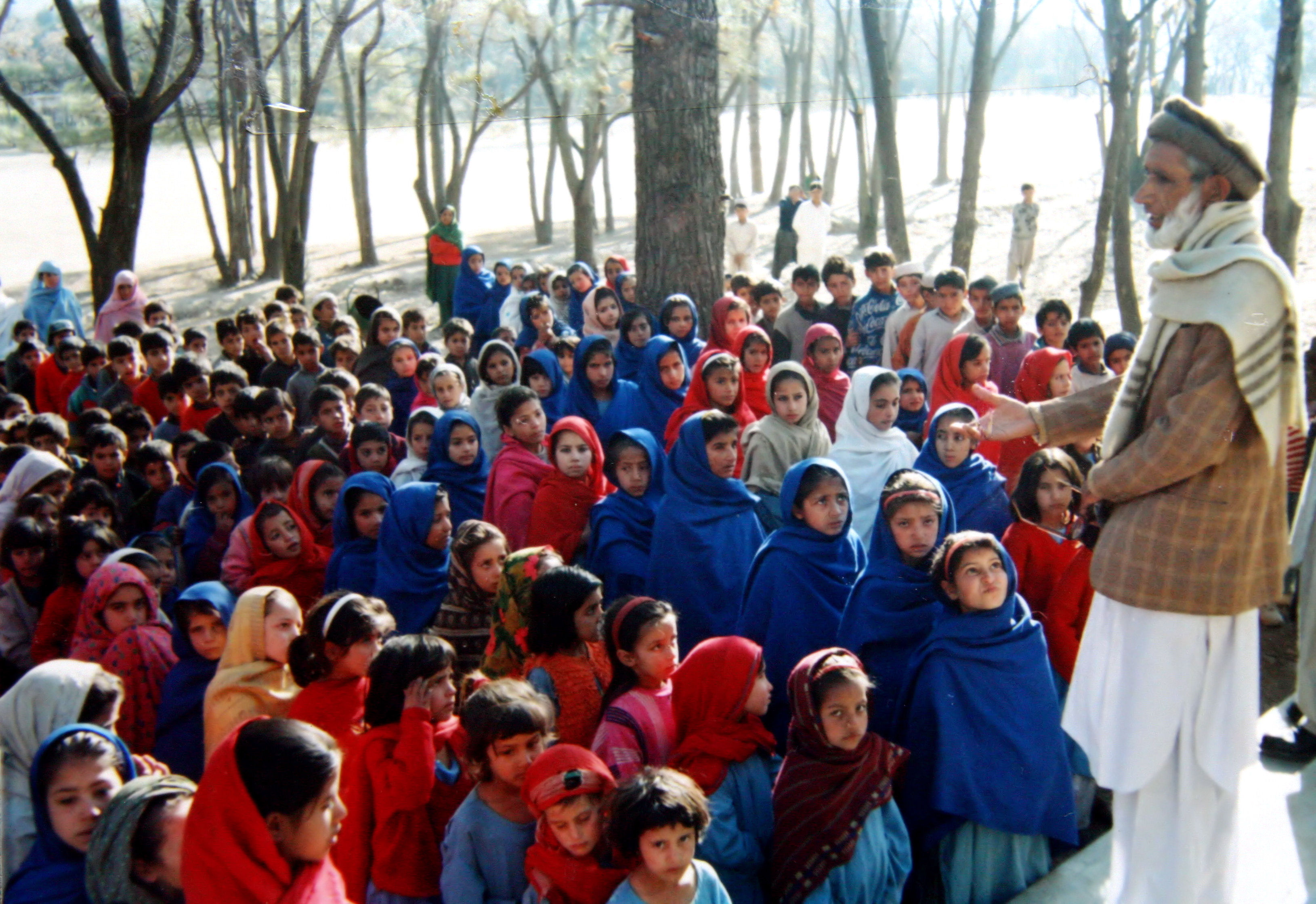 The daily schedule for living varied from place to place. In the Punjab, the Azan, the Muslim call to prayer usually went off around 4.00 a.m. This was a wake up call for us too. The day began with Mass in the Parish Church at 6.00 a.m. in the summertime and 7.00 a.m. in the wintertime.
The Community would have breakfast, which consisted of cereal, coffee/tea, toast or a prata – delicious locally made chapatti cooked in oil, detrimental to the waistline and the cholesterol. None the less it was irresistible. School began at 7.50 a.m. with an Assembly in the playground – a recitation from the Holy Quran, a Psalm from the Bible. The children marched to the tune of O’Donnell Abu – into their various classes, which went on up to 2.00-2.30 p.m. with a half hour break for lunch and fifteen minutes break for coffee. In the hot weather one might have a siesta from 3-5 p.m., go for a walk or a bicycle ride in the cool of the evening and prepare for the next day’s work. We had Evening Prayer and supper together and an odd film on television. Generally, all the programmes were in Urdu/Punjabi, except the news in English at 9.00 p.m.
In the North West Frontier in Swat, usually during term time, we would have Morning Prayer and Mass at 7.00 a.m. School would start at 7.50 a.m. Children would arrive by car or bus. There were about 1,200 students in the school. In the Northern areas the Muslim teachers prayed five times a day. They often took time out during the school day.
In Sangota we had a boarding school for boys and girls. On returning from the Centres I would go to the Dormitories and meet up with the two Matrons and fix up our domestic affairs, have tea at 6.00 p.m. that consisted of chapattis/brown beans, a rice and Curry. This was followed by children’s study from 8-9 p.m. Then bed.
Seeing the variety and beauty of Pakistan
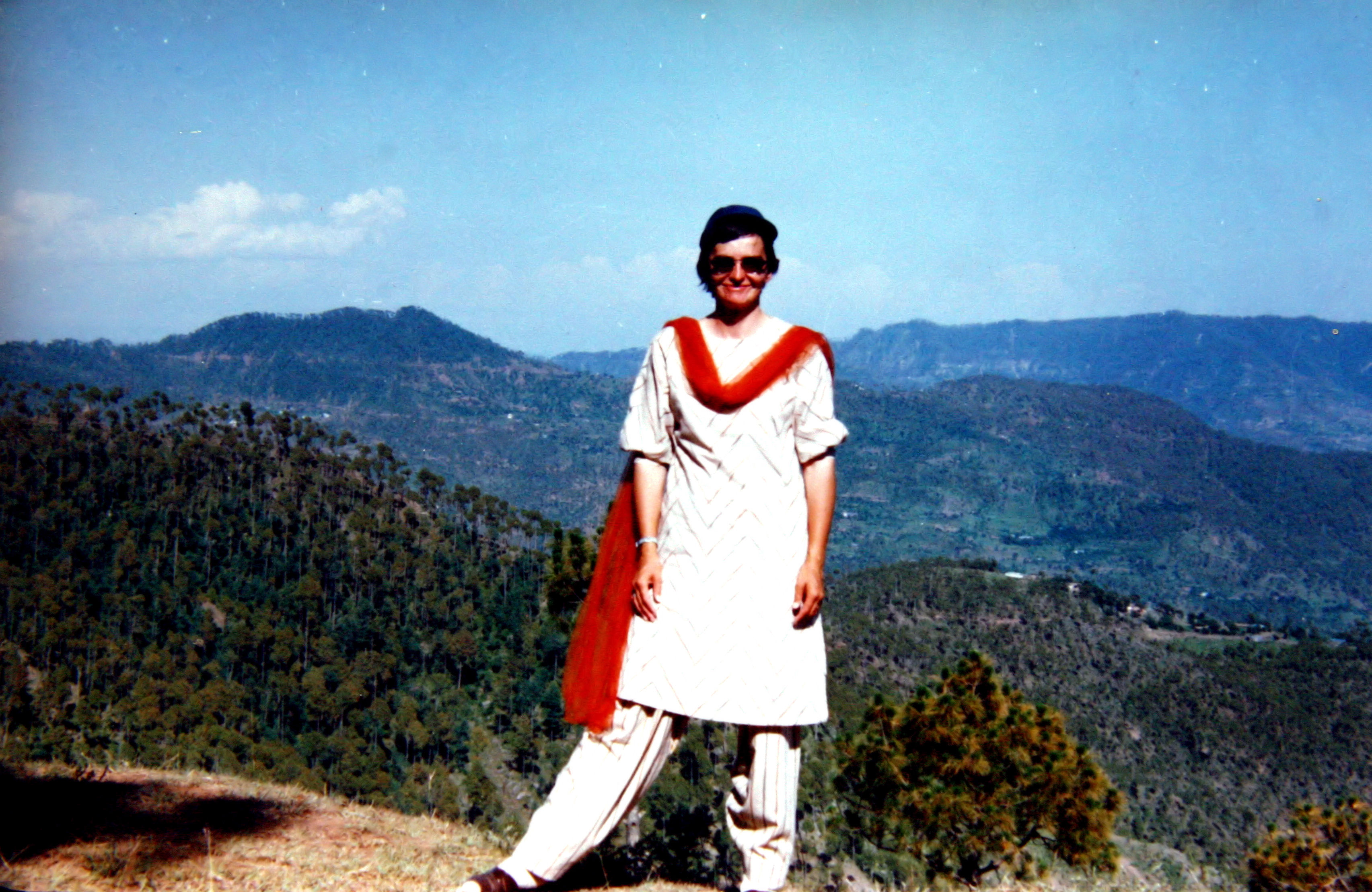 “The ground you stand on is holy… Take off your sandals”. Travelling from the majestic heights of Murree to the China Border and Chital, to the desert plains of Sind gives a sense of the country and the variety and beauty of its people. It was with a great sense of the sacredness of the ground on which I walked that I journeyed through Pakistan.
Murree, 7,000 ft high, was the first hill station I visited and I was to discover that it was a great experience each summer for two weeks to get away from the burning heat of the plains. There you met everybody from the branch houses on the plains. The whist drives, picnics down the hillsides, celebration of Jubilees, Feast days, walks around Kashmir and Pindi Point were wonderful.
On one occasion I went with a group of people on a tour to the China border. The border crossing between China and Pakistan at the Kunjerab Pass (the highest border of the world was then open between May and October). During the winter the roads were blocked by snow and during the monsoon season in summer they were often blocked by land slides. We went from Rawalpindi to Besham – to Dasu where we spent the first night in a guest house where I got bitten alive by sand flies. On arrival at Chilas, we had tea, lamb chops and chapattis and spent the day visiting the bazaars and the ancient stone sculptures.
 We stayed overnight in a motel and had an early morning start to Bungi. We had breakfast of lamb chops, pratas and tea on the bank of the Indus, dipped in the river fully clothed in Shalvar, Kameez (loose shirt and baggy trousers) and continued our journey to Gilgit where we spent two nights. We had the day free to explore the bazaar. After an early morning departure to Karimabad we stopped for a meal and a break
The further North and the higher we climbed the bigger the freezers of lamb and the more plentiful the tea –shops along the road and the more scarce the sweetmeats and delicacies were becoming. From Karimabad we went into the Hunza Valley.We spent the whole day visiting bazaars and shops. We visited the 800 year old Baltit Fort, drove to Duicker and looked into the whole Hunza Valley. We managed to get accommodation in a guesthouse at Passu. That was to become our base for two days. The owner of the house was a member of the Aga Khan tribe, and was very welcoming. He sat beside a big open fire with a great big pan, the size of a cart wheel, cooking lamb chops and pratas. You picked up your plate of food from him and sat at a long table. Great chat and stories went on there about people’s escapades to the China Border.
The following morning we set out for Sost where we surrendered our passports to the police. I have to say I felt great myself, I observed around me that people were getting a bit light in the head; one or two members were sitting on the ground unable to stay upright. After partaking of some flasks of hot sweet tea we headed for the Kunjerab Pass, the world’s highest at 15,000 ft. To me it felt as though it was about 30,000 ft. We spent some time at the border. It was like having an aerial view of a city below. I was feeling a bit wobbly and tired at this stage I did not comprehend too well what was on the other side. We came back to Sost, had more tea and returned to our base at Passu. We sat around the fire. I was never happier to see a charpoi (bed) in my life than that night. We took an early start for our journey home, stopping at the same places on the way. It was a magnificent trip. We made a pact in the group before we started out that we would be fair and honest with each other and a promise that no one would break away from the group. It was the hardest bit of the trip. The most frightening and risky thing for me was handing over my passport.
On another occasion I visited the State of Chitral (field), formerly a Princely State in the Malakand Division of the North West Frontier of Pakistan, with two companions. Our flight from Peshawer took about two hours and I stayed in a one star Motel in the town. During our time there we walked the bazaars and watched polo in the playing ground. The snow leopard is to be found in these regions in winter but luckily we did not encounter this animal. I saw falcons instead.
From Chitral we went by bus to the Kalash Valley. The culture is Islamic due to its proximity to Afghanistan. The most interesting facet of this valley is that women are nearly invisible except to their male relatives and other women. They do not walk the streets of the town alone, so men and women do the shopping. I visited a hut by the river called a “Bashaleni”, menstruating girls and women are sent to live in this house during their periods, until they regain their purity. They are also required to give birth in the “Bashaleni”. There is also a ritual restoring “purity” to the woman after childbirth, which must be performed before the woman can return to her husband. Kalasha women breastfeed in public, as do many Pakistani women.
Benazir Bhutto
I lived and worked in the State of Swat for twelve years. Swat was an autonomous and independent state in the Northern areas. In the early 1960s, the Wali or Ruler of the State, Mian-Gul Jehan Zeb, invited the Mill Hill Bishop Hettinga to bring Catholic teachers into the Islamic state to set up a school. Two sites were set aside – one for boys and one for the girls. To make a long story short, a girls’ school and residence for the Presentation nuns was built in the 1960s and the nuns went there in 1965 to run a boarding school. I had the privilege of meeting the Wali’s two sons and families and in the late 1990s I invited the Wali’s grandson, who was then Minister for Education, to the school to address the parents on an open day.
The entry in the Annals for October 1st 1995 reads, “Today was a red letter day in the history of the Presentation Convent School, Rawalpindi. The Prime Minister, Benazir Bhutto, came to celebrate the centenary with the Sisters, staff and students.”
Hand to the plough
It was time to have a good think about my life. In my life my aim and motto is, “hand to the plough”. When I went to Pakistan it was with great enthusiasm, great energy, I could redeem the world. I felt greatly inspired and influenced by the many great women who lived and worked there before me. During my time there many of them were pillars of the Congregation and I thank God for the thousands of lives entwined in the years, lives enriched by a small group of women who gave their lives to make a difference.
I never envisaged coming back except for holidays as I had heard of Irish nuns who had given their whole life, like fifty or sixty years, and went to their eternal reward out there. Ach d’imigh sin and tháinig seo. After a couple of bouts of malaria and a severe dose of hepatitis, I felt I needed to cleanse my energetic self. I have often found in my life that it is not I who makes decisions but the circumstances around me become the deciding factor.
Exploring new avenues of Creativity
Sometimes the struggle and the strain to achieve so much ends in unwittingly blocking oneself and this occurs when you want it so badly that you try over and over again to make it happen. I never really made a conscious decision to come out of Pakistan but, having dispelled all pent up feelings of fatigue and burnout outwardly in an appropriate way, I was able to explore new avenues of creativity. I was still young enough to join the Irish Primary School System where I have spent the past five years. Earlier, I would never have entertained the idea.
As I have become recharged, revitalised and rejuvenated I understand myself more deeply. My life becomes more colourful through self-expression. Dream big is the thing.
I made eight trips home to Ireland during my time in Pakistan. The most exciting part of which was meeting relatives and friends, staying up all night talking on arrival the first night, waking up in the morning to a cool mosquito-free atmosphere, drinking spring water without having to boil it and enjoying a good Irish breakfast.
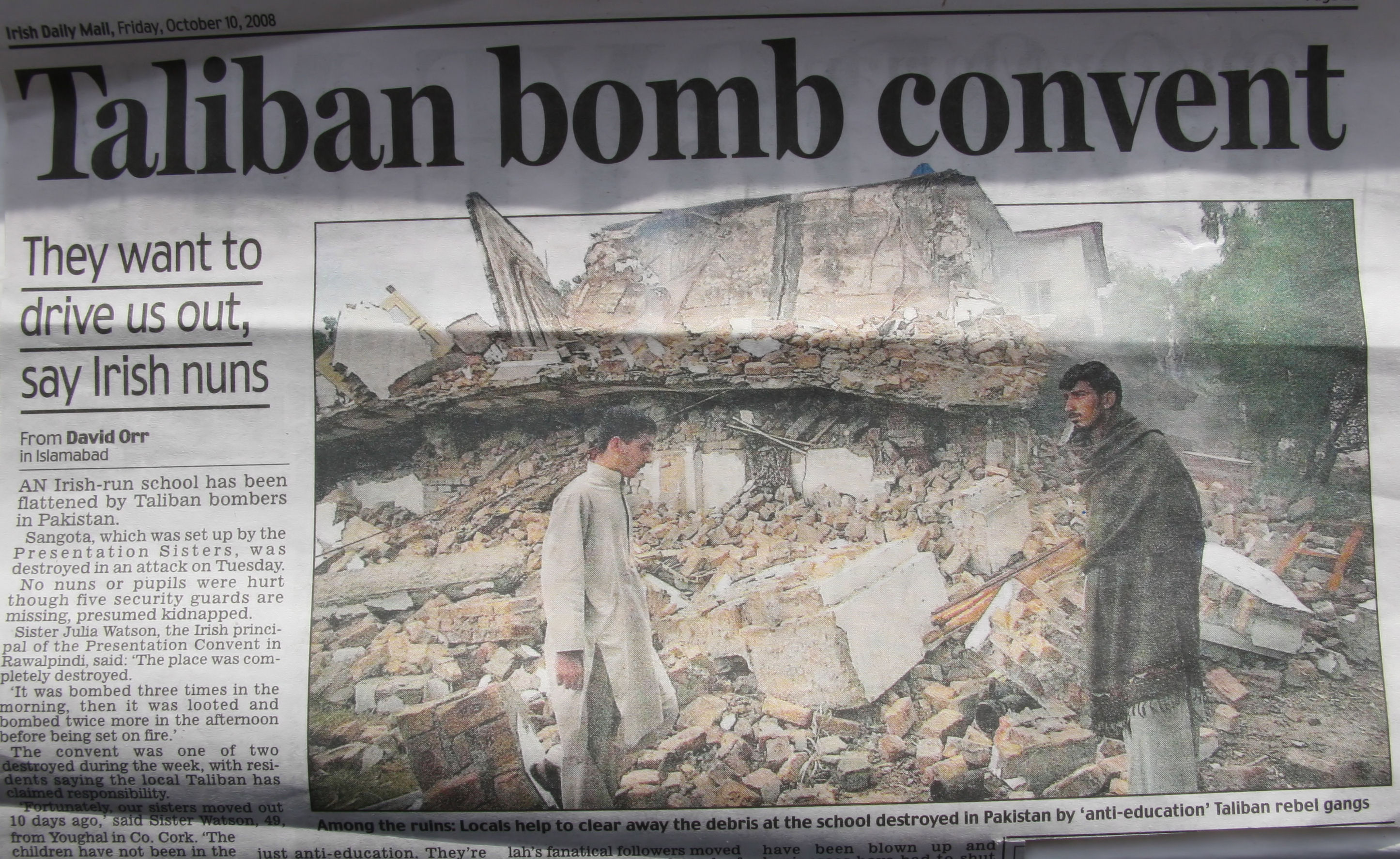
Sangota Public School, Swat, Pakistan was bombed by the Taliban the 7th of October 2008
The Minister for Foreign Affairs, Mr Micheál Martin, T.D., condemns the destruction
08/10/2008
The Minister for Foreign Affairs, Mr Micheál Martin, T.D, has condemned the destruction by militants yesterday of a girls school in Sangota, Swat, Pakistan run by the Irish Presentation Sisters. In his comments on the loss of the school, Minister Martin said: ‘I was deeply saddened to learn of the destruction by Taliban-like militants of a girls’ secondary school run by the Irish Presentation Sisters in Sangota, Swat, Pakistan. This school, opened in 1965, has been educating about a thousand low-income secondary students – Muslim as well as Christian. The destruction of the school represents an enormous set-back for the girls and families of this area and for the courageous Sisters of the Presentation Order, who run this and several other schools in Pakistan. Such incidents remind us of the often very difficult, and dangerous, conditions in which the Presentation Sisters – and many Irish missionaries around the world – serve the people of the countries in which they operate. I would like to take this opportunity to pay tribute to their tremendous dedication and contribution. I remain deeply concerned about the general security situation in Pakistan and the serious casualties and damage that militants and terrorists are inflicting on the people of Pakistan, including efforts to prevent the education of children, especially girls. It is vital that the Governments of Pakistan and Afghanistan come together to agree a joint security strategy to combat terrorist and militant operations across and near their common border area. In pursuing such a strategy it is of course also essential that every care is taken to protect innocent civilians.’
Latin America
1991-2001
Sister Carmel Raftery
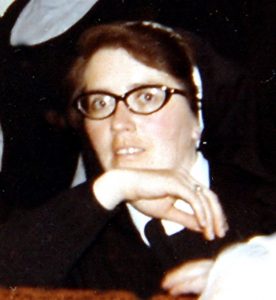 Missionary activity has had a long history among Presentation Sisters. ‘The Lady of the Lantern’, Nano, continually urged her Sisters to ‘take down their lantern and go out’. She had a keen desire, herself, to be a missionary, as we know from her words, ‘If I could be of service in saving souls in any part of the world, I would willingly do all in my power’, but she never saw her dream come to fruition.
As a young girl growing up, I was greatly influenced by the work of missionaries in foreign countries, because in our home we always got magazines like ‘The Far East’, ‘Africa’ and ‘Presenting Christ’. Later, when I became a Presentation Sister I would have loved to have gone to New Zealand, where we had a vibrant mission, but the opportunity never presented itself. However, once I got involved in teaching, I put it out of my mind, and concentrated on the home mission.
The opportunity did eventually come in 1991, when after a process of discernment; the Northern Province decided to send Sisters to the mission in Latin America. I left Greenhills, Drogheda in November 1991 and with Sr. Catherine Codd we went to a country area, in Chile, called Lo Valdivia, 30 km from Curico and a three hour bus journey from Santiago. Here we joined three other Presentation Sisters, who had come from New Zealand ten years earlier at the request of the Bishop of Talca. He and the priests of the Deanery, with whom they had an excellent relationship, supported them in all their activities and projects in the diocese.
We were warmly welcomed by the local people, but highly frustrated at not knowing a single word they said! We came, as we thought with a few words, and were quite surprised that people laughed at us as we attempted to communicate. Our pronunciation was so terrible that the people did not know what we were trying to say.
 Language, of course, was no barrier when it came to admiring the beautiful countryside. Luscious green grapes grew just outside our back door; oranges grew in the garden, and across the fence as a tobacco farm, while further down the road were acres of tomatoes and kiwis. However, no such abundance was evident in the living conditions of the people, who were made poor by successive political regimes.
The Sisters were involved in pastoral work, such as catechetics, home visiting, development education, leadership skills and youth education, to name but a few.
As newcomers, we were constantly impressed by the involvement of our Sisters in the life of the community, the way they were always there for the people, with them in their joys and sorrows, at their weddings and wakes.
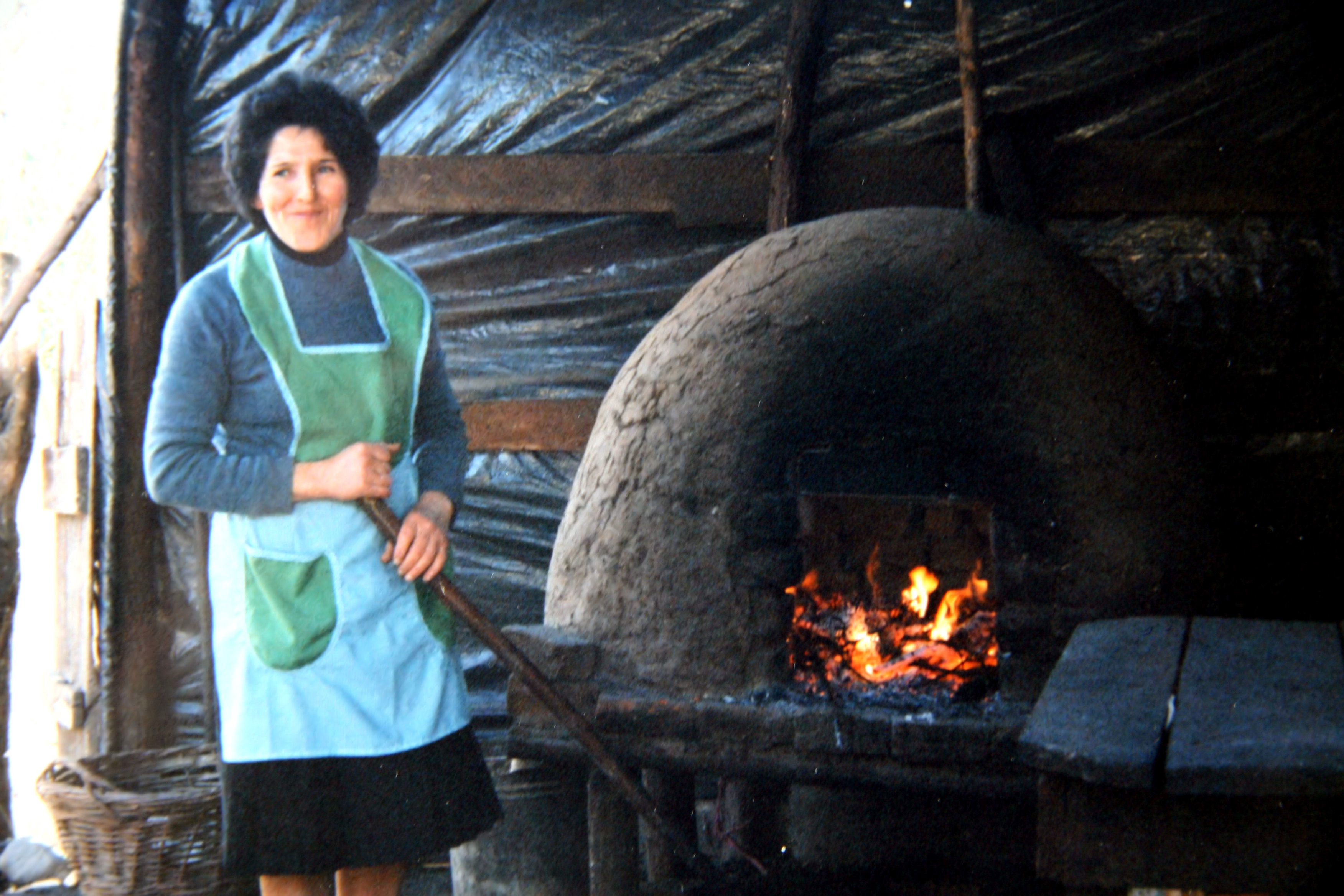 The life style of the people was very simple then, lots of people, like Estela, next door made bread in an adobe furnace, made of mud and bricks. This produced the most beautiful bread imaginable. Her neighbours were not as fortunate; they made bread also, in the open air, but in an old tin can, on top of which were red hot coals. This was the way of people who lived in the ‘campo’, and their bread was delicious.
 Our first Sunday meal in the parish was cooked by the parish priest (above), working over a huge fire. The meat was lamb, washed down with wine, as the people believed that that was the only way to eat lamb, on account of it being so greasy. After this delicious meat we went to the ‘rodeo’, a local festival, in which the local cowboys in their local costumes rode for hours, in what for us was like the local races!
After this valuable experience of three months, we became acutely aware of our insufficient language skills, so we decided to go to the Language Institute in Cochabamba, for a six months’ course in Spanish.
On our return, Catherine and I were stationed in Iquique, in the heart of the Atacama Desert, the highest and the driest in the world. Life was tough here; we had no electricity and little water. After six months, I never wanted to see another candle! But when we did get electricity we found that we were so used to living without it, that we had become very selective about its use, even the use of the iron had become totally superfluous, something we could hardly live without in Ireland! Life was simple, good and wholesome.
My strongest memory from there was attending parish and local community meetings, outside in the sand, sitting around a candle that was placed in the centre of the group.
Pastoral and development work were again priorities here. We were also very involved in dance groups. These were groups that danced for all the major religious festivals, the biggest and most famous being ‘La Tirana’.
We travelled by foot, under the glaring sun, from village to village training leaders, who, in turn became catechists, and youth leaders in their own area. This enabled us to move on to another area of greater need, to La Pintana, a very deprived area on the outskirts of Santiago.
This was very different from any place I had been or anything I had done up to this. The population was huge, something like 30,000 people in the parish, served by an Irish priest, who came for Mass and the sacraments when he was able, otherwise we helped the people prepare and direct the Sunday Liturgy.
Our work here, again involved us in catechetics, sacramental preparation, alcoholic anonymous, card making, youth work, personal development groups, training leaders, and many other activities. I loved the way we were able to use the church building, and its adjoining ‘salas’ or rooms as meeting places for all these groups.
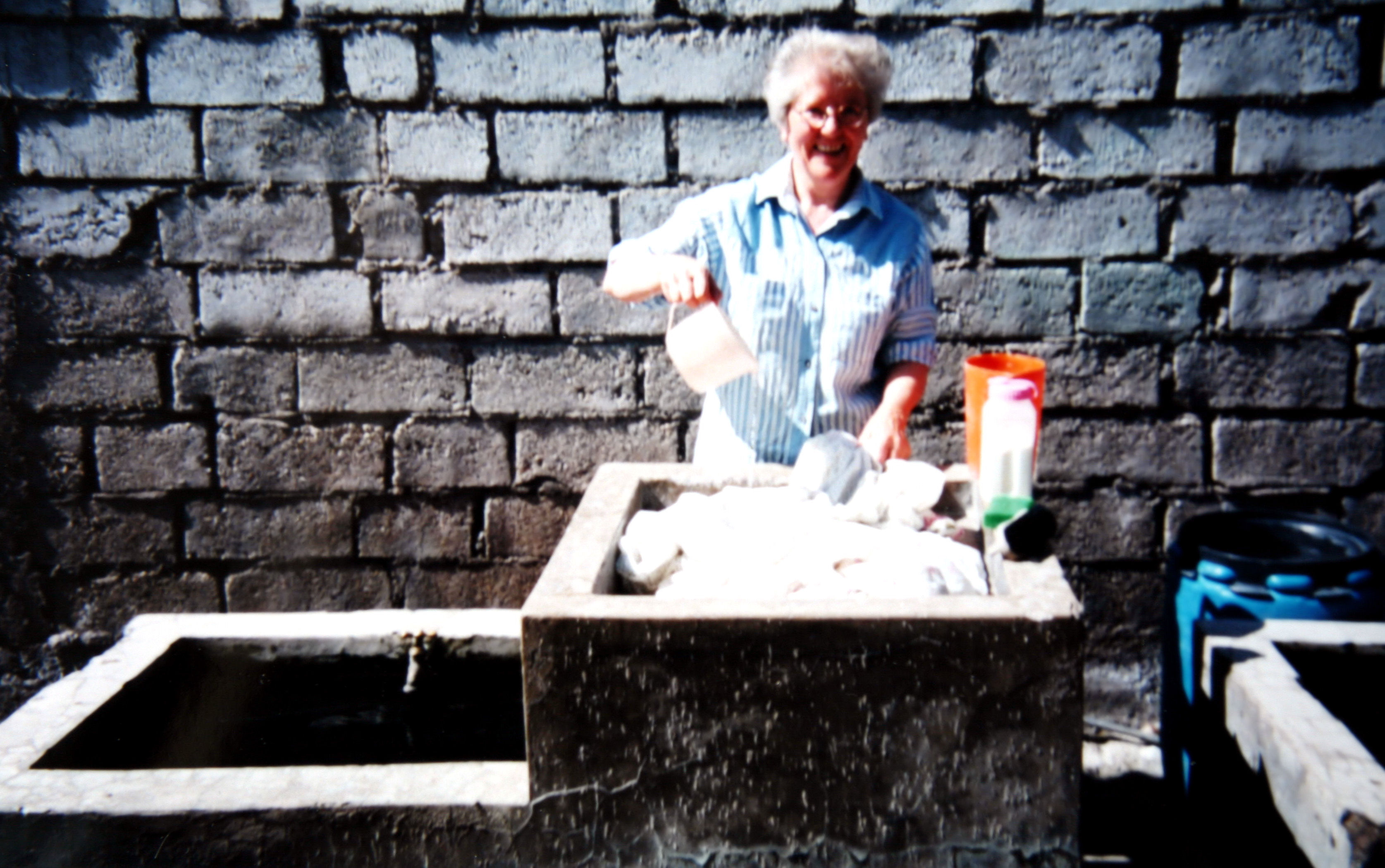 Eventually, having enabled the local peopled to take responsibility for their own parish, we were able to move on. I went to Ecuador, and Sr. Bernadette Joyce, my companion went to Iquique, in Northern Chile.
Ecuador, as the name suggests is right on the Equator and high above sea level. It was a totally different experience. Once again we were on the edge of a big city, Quito, living in very poor rented accommodation. There was no running water, in those days. We washed our clothes outside along side our neighbours, in a stone sink (above) and hung them out in a common line.
In Quito, we worked in close collaboration with the Parish Priest, Padre Corrolo, a dedicated and committed Italian priest, who did tremendous work in building up the area by providing hospitals and schools. He took seriously ‘the option for the poor’ and was totally committed to the growth of ‘Basic Christian Communities’.
We were four and were again involved in parish work, as well as visiting the hospitals and prisons, working with indigenous, and learning their language, ‘Quitchua’, in order to be with the people in their daily struggles with life. We also started a small primary school, did some teaching and worked with the parents. Since then, with great help from the Irish people Sr. Mary Ivers has replaced that mud cabin with a beautiful new school, and more and more children now go to school and enjoy the very best facilities of modern education.
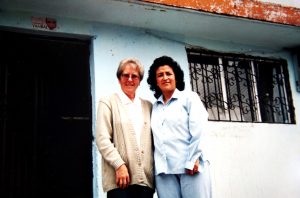 Four Presentation Sisters continue to work in Quito. Regretfully, I had to leave and come home, it was a hard decision for me to make, and it was harder still for me to settle down in Ireland. Having lived outside Ireland during the ‘Celtic Tiger’ era I was totally unprepared for the prosperity I was to encounter on my return. Settling in to Irish society was more difficult than was settling in to Latin America in the first place.
Missionary activity was for me an enriching and fruitful experience and one that I will forever cherish and be grateful for. I take great pleasure now, knowing that Chileans and Ecuadorians are keeping the lantern burning, and that faithful to Nano, they ‘continue to go one step beyond’.
Zambia
1990 -2004
Sr. Mary Caulfield
In June 1990 Sr. Emmanuel Campion (Peggy), Provincial Leader, visited me in Athenry to ask if I would be willing to go to Zambia for a nine month period, while Sr. Annette O’Brien would be home on Sabbatical Leave for that year.
I felt very honoured to be asked as I had earlier expressed a wish to spend a Sabbatical Year in Zambia – possibly the following year. I had no hesitation about going that year (1990/91), and through the summer prepared for departure in September ’90 – there were medical preparations of vaccinations, etc. for the tropics – learning about the culture and language – becoming familiar with our Presentation mission there – meeting with Sr. Catherine Campion (Provincial in Zambia) home on vacation.
Courage and excitement
With much reassurance from Sr. Catherine, I felt courage and excitement come over me and knew I had something I could contribute to the life of our mission there.
Facing the long journey alone and leaving family and friends behind were a cause of great loneliness for me. One redeeming factor was the flight to London. My niece, an Aer Lingus cabin crew member, was rostered for my flight and with her cabin staff made that leg of the journey most pleasant and memorable, but then we had to say farewell on board and the ten hour journey to Lusaka through the night was a very lonely one.
First glimpse of Africa
 Seeing an African sunrise as we came over the equator into the Southern HHHhemisphere dispelled the darkness lingering within me. By then, in September, Sr. Catherine was back on mission and waiting in welcome for me at the airport. It was Sunday morning, so first stop was Mass in Roma Cathedral in Lusaka.
The overwhelming heat and the ‘sea’ of black congregation at Mass were almost frightening to me. In those days I had met very few black people in Ireland – unlike nowadays.
We had no provincial house in the city then (Lusaka), so the long journey to Pemba in the Southern Province had to be endured. In the nineties the roads of Zambia (and they were few) were speckled with large ‘pot-holes’ making travel very hazardous.
First Training Programme
Meeting again with Sisters Nora and Agnes in Pemba was like coming home and with Sr. Catherine made me feel very welcome and needed. Soon I became familiar with the people of the parish and following discernment and planning with the local people we established a training programme for young women – early school leavers. The tailoring skills learned became a source of income for their families – a much needed supply of locally produced affordable school uniforms went on sale.
Kalomo Mission
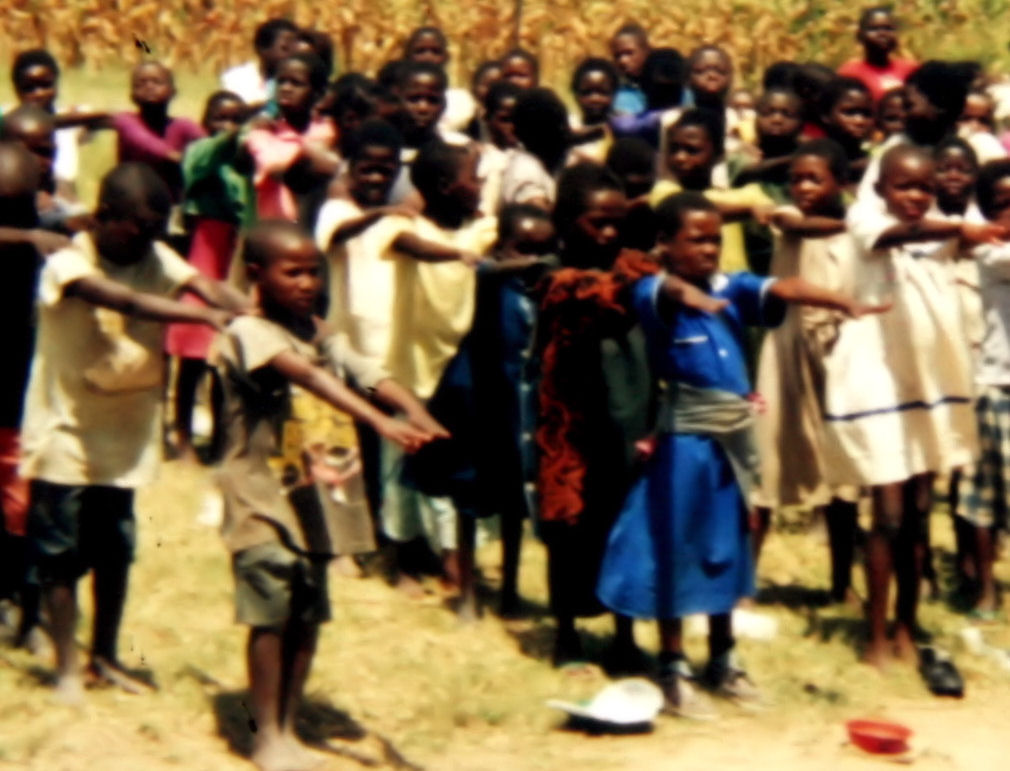 The Lord who called me for nine months in Zambia had a change of plans for me! I stayed in Pemba Parish for four years with a visit home midway in 1992.
Following an extended break in Ireland for recovery from a serious cycle accident in 1994, I returned to Zambia and to a new mission in Kalomo also in the Southern Province. By this time in the mid nineties, HIV/AIDS had become a serious problem in Zambia. Street Children, AIDS orphans had become common place throughout the country. Local centres of informal education were being set up for the ‘out of school’ youth. In Kalomo, we established one of those schools for orphans and vulnerable children (OVC) 10-12 year olds. This work of building, training teachers and establishing a full education system engaged my energies from then onwards until my return to Ireland in 2004.
Language
Learning the language of the local tribe (Batonga) was a most rewarding experience for me. Citonga is the language of the Batonga tribe. The basics I learned at the language school – a three months programme but the children at school and the local people ‘polished off’ much of the roughness while they in turn picked up their much needed English. In school, all examinations must be written in English even though there are nine official Zambian languages (and 72 tribal dialects).
Athenry assistance for our school in Kalomo
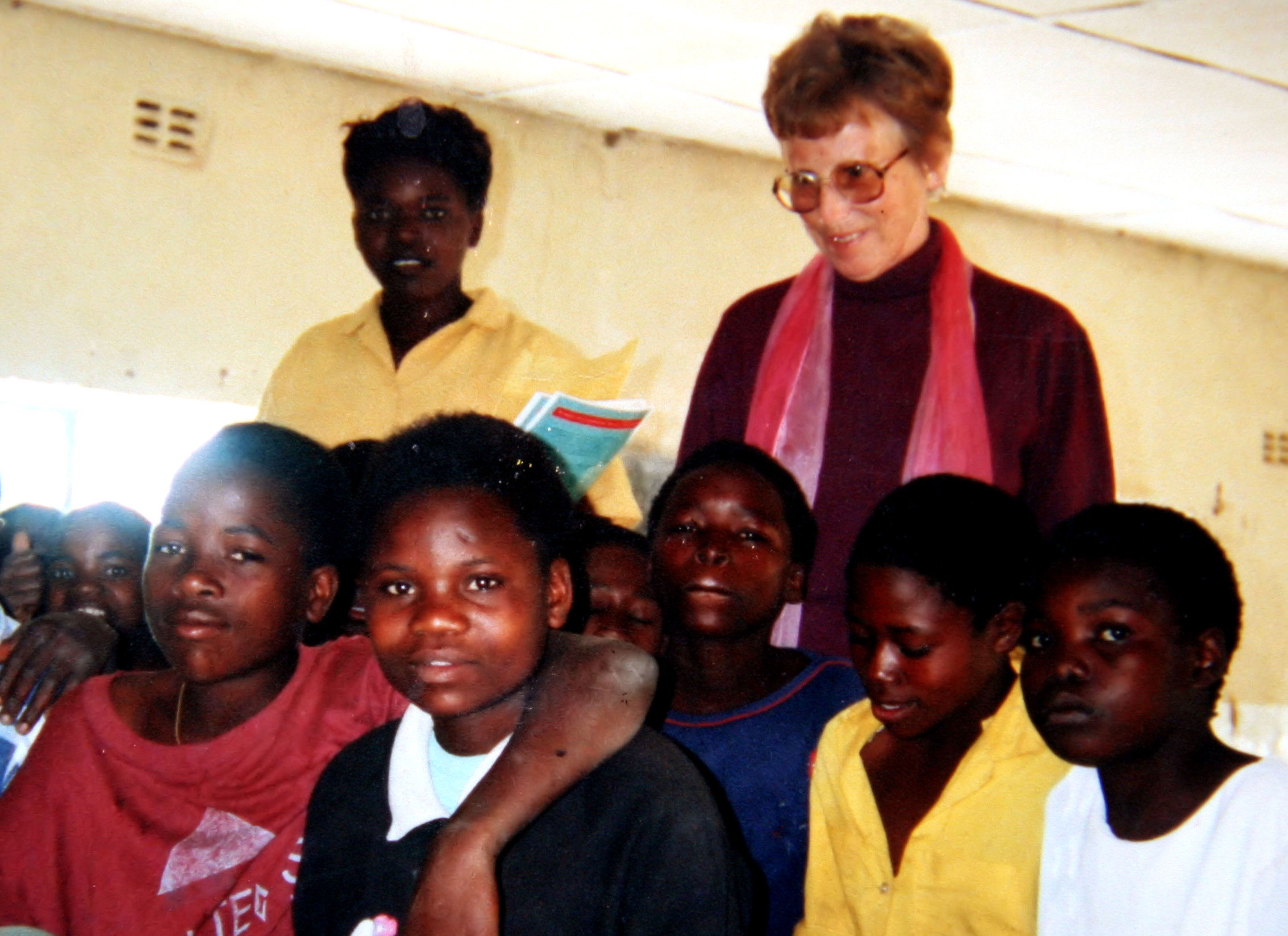 Community schools in Zambia belong to the community, set up with help from the Zambian Community School Secretariat, especially for the education of AIDS orphans and street kids. We employed local school leavers with minimal exposure to classroom teaching. Later, some of those teachers became fully qualified trained teachers and returned to our school to teach. The people and school children of Athenry contributed much funding to the building and furnishing of our community school. For so much generosity I would like again to say ‘thank you’ on behalf of the people and children of Kalomo to all our generous friends. The planting of our school garden with large amounts of vegetables was initiated by a young German volunteer who worked with us for one year. Parents and children all participated in gardening for fund raising for necessary school items. A meal was also prepared daily by the parents/guardians from donated food – maize, meal and milk powder.
No rain, no food
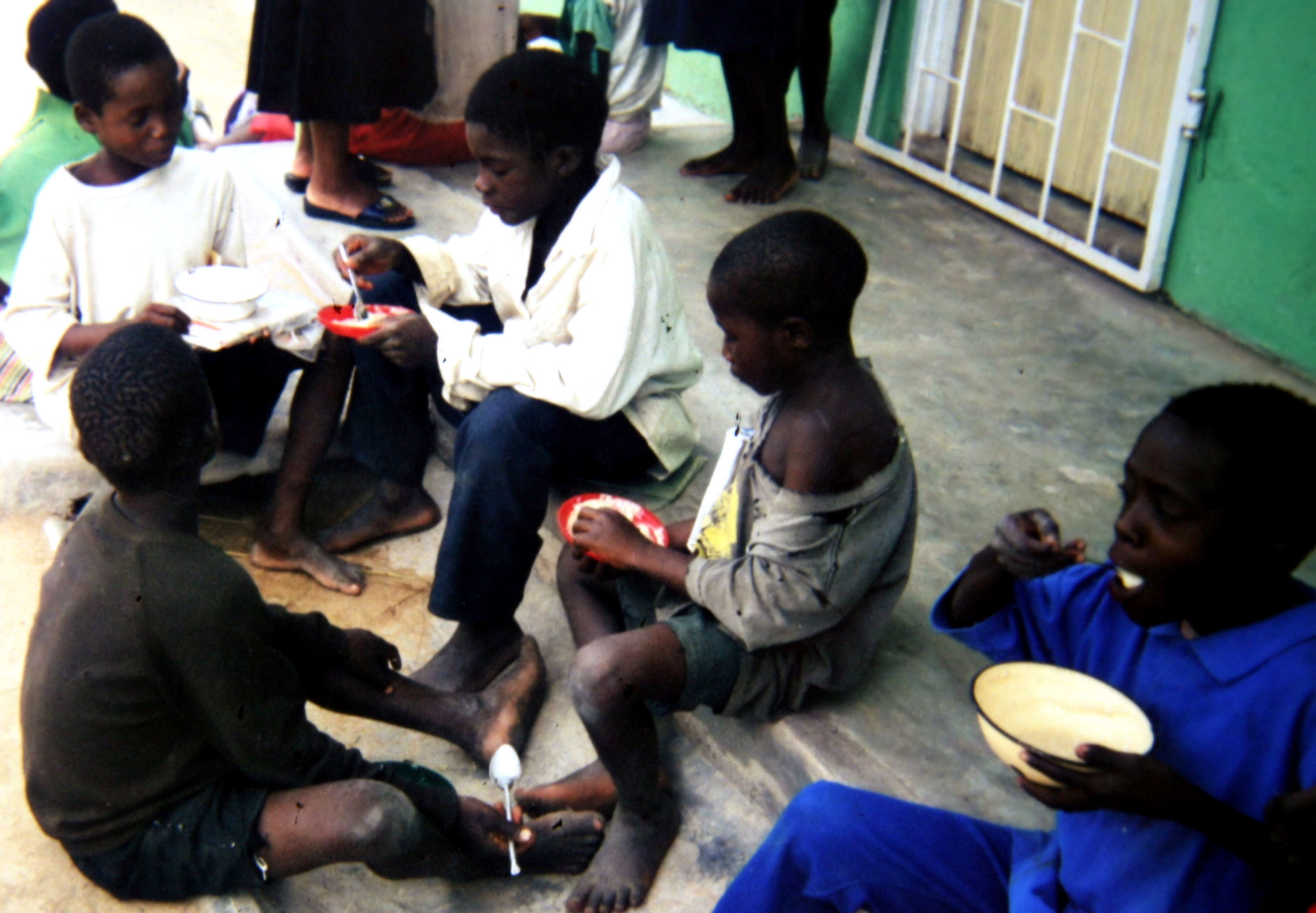 Zambian women do the bulk of farming in the country. At the earliest signs of the rains (Nov/Dec) they are ready with their hoes to break open the hard, unbaked earth and plant the maize seed that will provide them with food for the year ahead. Sadly, some years the rains fail – no rains – no food! Then the dependency on foreign aid (EU/USA) brings a proud people to its knees.
Travels
The biggest treat we could get in the nineties was a trip to Zimbabwe. Everything we could imagine was available there for a pittance! It was to Victoria Falls (tourist town) we would go for a well earned break from the poverty of Zambia. Only in Zimbabwe could we do any bit of Christmas shopping – for food, of course. Now poor Zimbabwe looks for help to Zambia – turn of the tide!
Zambia is a vast country – ten times the size of Ireland. I travelled to all of our mission locations in 1991 – Western, Central and Southern Provinces. Some were journeys of up to six/seven hours through bush and forest area with very poor road structure – fallen trees, sand banks, etc. Coming upon an accident one day and having to take the injured to the nearest hospital, some to remain with the crashed vehicle to prevent looting of all the victims’ belongings.
Hospitality
The great hospitality of fellow missionaries on arrival at a mission was always significant and wholehearted. Likewise, at our house too, the door was always open. St. Patrick’s Day was celebrated each year by the hosting of “The Wild Geese” party by Embassy personnel in Lusaka – a great event for all who could get there.
Every two or three years, there was the much longed for visit home. The great joy of meeting family and friends again brought sunshine all round. Many changes in the young generation growing up – marriages and baptisms brought added happiness but sadly too death of loved ones cast a shadow.
Letting go
The decision to make the final trip home came to me in 2003. My school project was up and running quite well. The committee and staff had developed and managed quite independently; the local Ministry of Education were willing to support the school. I could be free to move on, but energy was a factor in starting any new project. What energy I had could best be used back home. Making the decision to return was painful. My roots were deep in Zambia and some are still imbedded there.
A deep and simple faith
The farewells were many, heaping me with beautiful African reminders. The handing over of school project, letting go in hope and the shedding of responsibility was both a struggle and a blessing. There was so much to thank God for. Never would I have considered that so much joy and friendship, loss and pain, hope and trust, surprise and love and so much more could be mine when I said ‘yes’ to the call fourteen years earlier. The deep and simple faith of the Zambian (African) people is still an inspiration to me as was the faith of an Ireland past, which first inspired me to follow in the footsteps of our brave foundress, Nano Nagle.
May the great work that Nano began, two hundred and thirty three years ago and more, inspire many young Zambian/Zimbabwean Sisters to carry the lantern light of faith, love and learning among their own brave and beautiful African people for generations to come.
Peru
1993-
Sr. Eileen Kearney with Sr. Margaret Kehoe
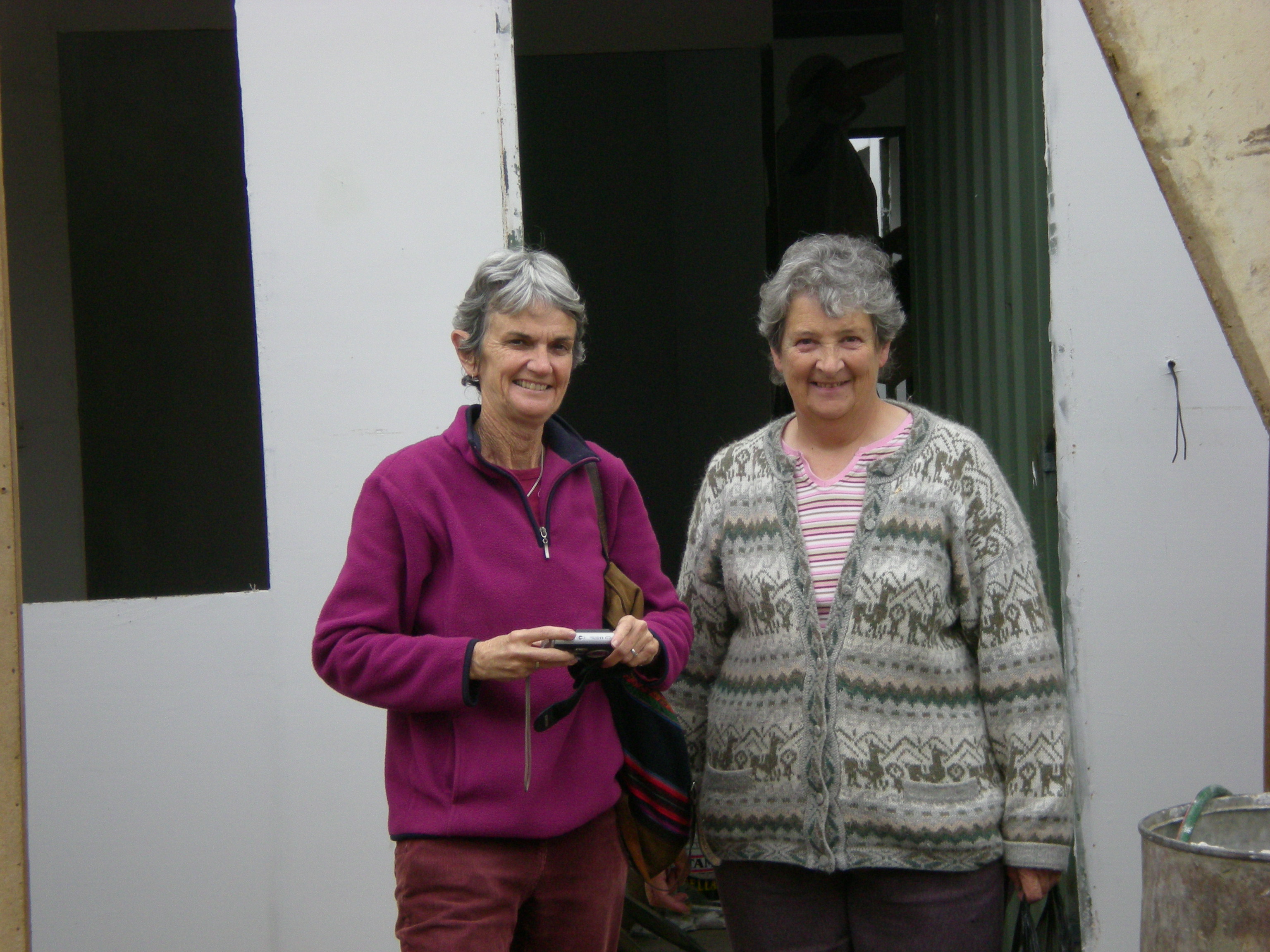 We have been living and working in ‘Los Eucalyptus de Villa’, a shanty town in Lima, Peru for the past fifteen years. Over this time we have been involved in Community Development, especially in the development of women and children.
Photo: Margaret and Eile
As the years go by we are becoming more involved in Complementary medicine. We are finding that working as practitioners and instructors of healing modalities such as Healing Touch and Energy Medicine, has helped us not only in our own growth and healing as women, but also Complementary medicine has enabled us to help others to participate in their own self-healing processes.
On the 8th of December 2007, we celebrated the first anniversary of the new Corazón De Nana, which is a Holistic Healing Centre for children and Youth. Here we work with a team of psychologists and complementary medicine therapists helping children and youth to manage their lives in a health-filled way.
Apart from receiving individual help, they are taught self-care techniques with the hope that they will not only care for their own health and healing but will also be protagonists in teaching other children to care for their health at a physical, mental, emotional and spiritual level.