APH
APH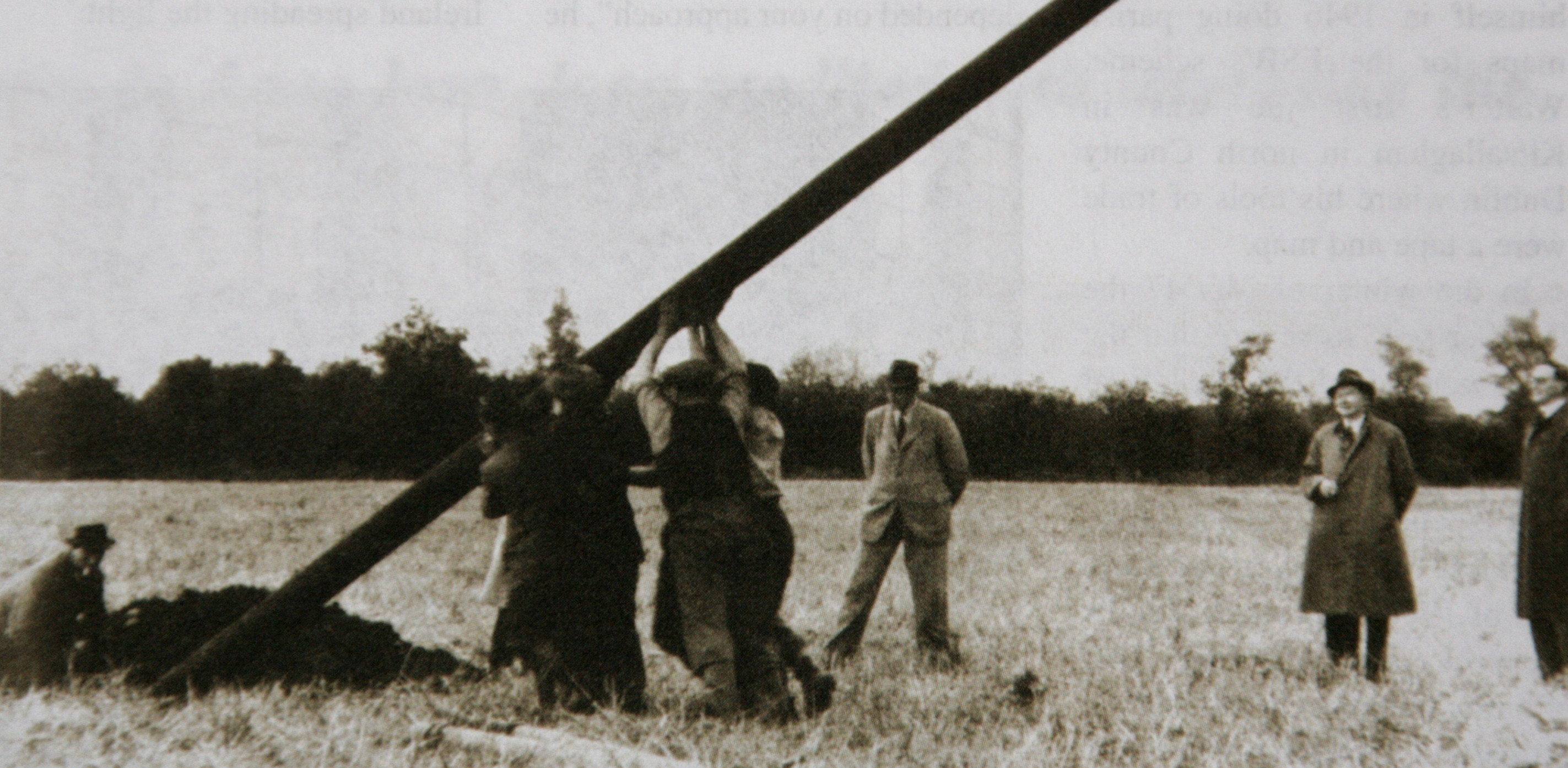
Ned Waldron’s memories of the 1950’s Rural Electrification Scheme
and his subsequent career in the E.S.B.
By Gerry Ahern
Source: Athenry ADC’s publication of The Athenry Journal, No. 17, 2003
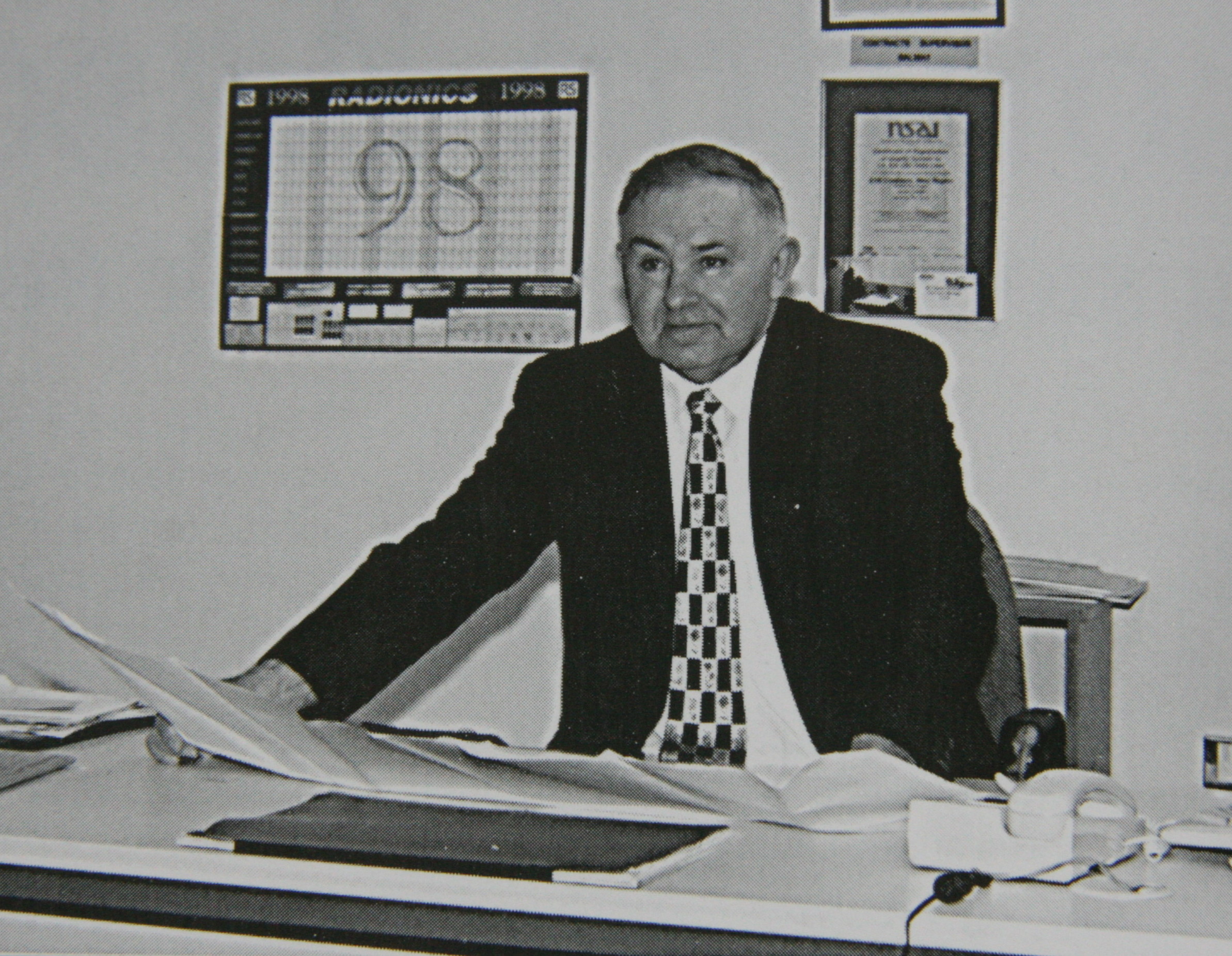
Back in the 1950s, candles, paraffin-oil and Tillie-lamps were the only means of dispelling the darkness in rural homes throughout Ireland, says Ned Waldron. Ned is a retired E.S.B electrician and staff manager, who served his apprenticeship at that time with Fox & Fury, Electricians, whose business premises was located in the late Joe Burke’s house in Old Church Street, Athenry.
He, along with Johnny Duffy (cousin of Margaret Mitchell, Ballydavid), Joe Burke R.I.P. (Old Church St.,), and Christ Duffy wired houses, churches, pubs and shops in many parishes including Abbeyknockmoy, Kiltullagh/Attymon, Turloughmore, and as far west as Letterfrack and Kylemore Abbey. It was an 8 a.m. daily start, wages were 25 Shillings (euro 1.60) a week, and they took lodgings in local houses.
Private Generator
In the early 1940s in Athenry town, Ruanes, Northgate Street, (now the Castlegate Hotel) had their own generator and supplied current to private houses and businesses. Olive Coffey’s uncle, Paddy Dobbyn, worked on this and later joined the E.S.B. and was based in Westport and GalwayCity as senior electrician. Here in the West, the first rural area to enjoy electric light supplied by the E.S.B was Ballindine, Co. Mayo in 1948, and Ardrahan in 1949 became the first rural area in Co. Galway to be connected up to the national grid.
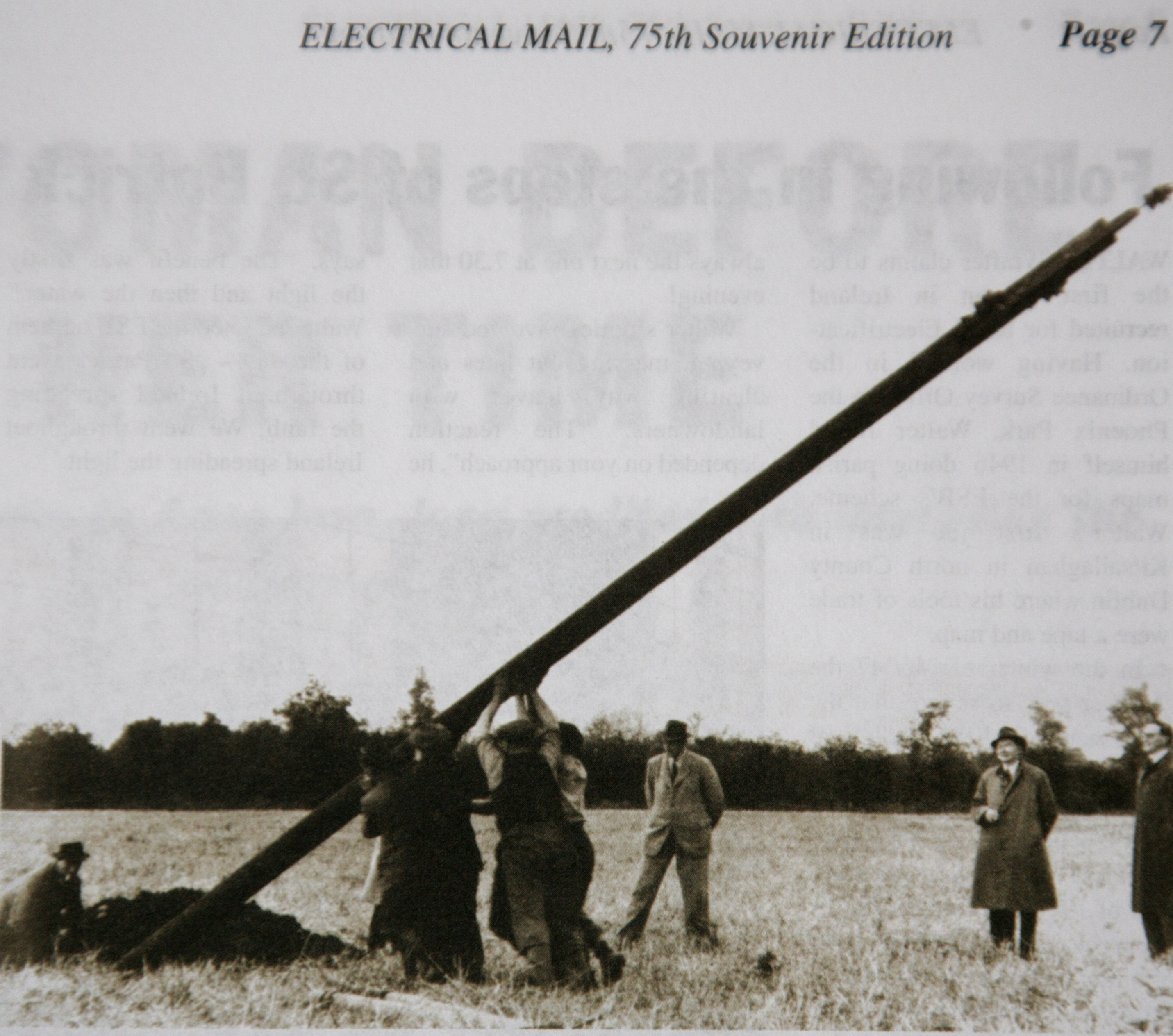
‘The first stage towards electrification involved a canvass to find out how many houses wished to avail of the service. E.S.B. personnel, Sean Duggan, Tom Curran, (now CT Electric, Galway and brother of Meg Hession, Clarin Crescent), and John Staunton R.I.P. completed this and signed up the householders in each local area’, remembers Ned. ‘Local workmen and farmers then dug holes for the poles, and horses with chains dragged the poles across the fields. If these workers proved satisfactory, they would be hired by the E.S.B to do similar work in other areas. After that the E.S.B erected the wires and brought the line to the houses and installed a meter’, he says.
Priority
Private electrical contractors then came on the scene and competed with each other to wire the houses. Generally, homeowners were charged 30 shillings (euro 1.90) per light and 40 shillings (euro2.54) per plug. ‘On average 4 to 5 lights and 2 to 3 plugs were fitted’, says Ned. ‘with a light for the Sacred Heart picture a priority in all homes’.
Ned emigrated to Birmingham in 1957, where he attended Garrett Green Regional Technical College. Later he worked for F.H. Wheeler & Co. installing the first electric ARK furnace in Europe in the Round Oak steel smelter plant in Dudley, West Midlands. He returned home and was principally employed by Dwyer & Co., Callan, doing a lot of post-electrification work in Tipperary and Kilkenny. ‘I’ll never forget one day being 300 feet under ground in Ballingarry coalmine and feeling the freezing cold water running down my back as, with others, we installed the first electric ‘coal plough’ used for mining coal’ he vividly recalls. While in that part of the country, he stayed in digs and enjoyed playing at left-half back on the John Lock’s, Callan, hurling team.
Industrialization
When he joined the ESB in 1961, Ireland was taking its first steps towards industrialization, and this provided large electrical contracts for Ned and the Galway E.S.B staff employed to wire the Potze factory (now Thermo King), which made oil heaters. He transferred to Dundalk in 1962 and then Ennis to work in the Harp Brewery and the Austrian spectacle plant.
Based in Co. Mayo from 1963 to 1966 he worked on such projects as; water pumps on Achill Island, the Hughes shirt factory in Westport, and the new admittance unit of Castlebar psychiatric hospital. While in Westport, he didn’t neglect his social life, as he had the good fortune to meet a young student nurse, Ann Conlon, whom he later married. On the sporting field he was a member of the victorious Westport hurling team of 1964.
Dog Licence
‘1967 was a good year’, he recalls. ‘I was transferred back to Galway and for nine months was chief electrician on the set of the film “Alfred the Great” in Kilchreest’. The late 60s saw the construction of Galway Industrial Estate and the new GalwayUniversity campus, and he and colleagues spent nearly four years on E.S.B contracts for both projects. During the construction of the new E.S.B office on Sean Mulvoy Road as foreman electrician, he worked with foremen Batty Cunniffe, Peadar Monaghan and Billy Delaney, all from Athenry. In 1975 he worked on Roches Stores, the new Digital computer factory and public lighting in Castlebar. During those years, Corkonian Charlie O’Driscoll was his supervisor, and was firm and fair and tolerated no nonsense from staff. ‘There is no point in paying a dog licence if you have to do the barking yourself’ Charlie used to say regarding problem workers.
Promotion
Ned replaced Wally Ford (nephew of Martin Ford, Railway Station, Athenry) in 1996 as contractor supervisor responsible for all rural public lighting in Galway city and county and parts of Mayo. ‘I made many wonderful friends down through my years with the ESB’ he recalls, ‘including the late Paddy Farragher R.I.P. and Mickey Lyndon R.I.P, Paddy Collins, Vincent Crilly, John Small and Michael Caulfield from Ballyhaunis who is in charge of public lighting in the Athenry area’. Looking back he says ‘I was saddened in 1978 when the Athenry ESB office, with staff of Noreen Hession, Patricia Parr and Josie Maloney, was the first in the country to be closed. It is amazing how the service wheel has come full circle’ he states, referring to the 75 years the ESB spent supplying wiring, repairs, etc. to the general public, ‘as nowadays it is the private contractors, like those in the 1950s, who dominate in the service market, and also privately owned electricity generating stations that are supply current to the national grid’.