APH
APH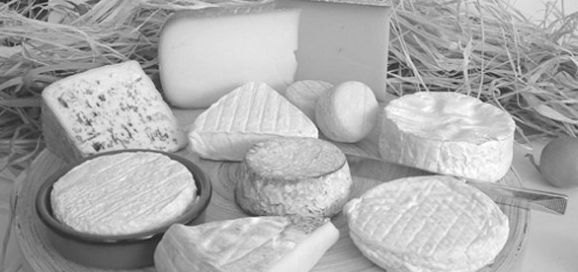
Source: The Western Star Newspaper, 5th September 1846
To the Editor of the Western Star
Sir,
Knowing that your paper is extensively circulated amongst the gentleman farmers of the County Galway, as well as many others who are equally anxious to benefit by the matter contained in its columns from time to time on various subjects of importance to a rural population, I feel a desire to convey through it with your permission, a few hints, which however scattered and incongruous they may be, will I hope, nay am certain, be understood by the “fair class” to whom they are especially addressed. It is a subject with which every Irish female should be acquainted who has got anything to say in the management of a dairy—I mean cheese-making.
I shall offer no apology for trespassing on the time and attention of those who are already acquainted with the details of the subject. I mean to submit for consideration, for I know they are too prudent to take offence; and to those who have not been so fortunate, I would merely say, if you wish to increase your domestic comforts, economise your own resources, for you have within your reach the opportunity of doing so, in the manufacture of many articles, which on account of their being generally speaking, bought and dearly paid for, are esteemed luxuries. I say nothing should be esteemed a luxury that we have within our reach the means of making them at home. Why do we send to China for tea? It is because we can’t produce it at home.
Why are we obliged to use Cheshire and Gloucester cheeses in Ireland? It is not because we can’t manufacture that article at home, but because we don’t do so. Generally speaking, when Irish farmers are asked why they don’t fence, drain and do many other things calculated to increase the value of their land and consequently improve their own condition, their reply is often and with no small amount of truth, to the effect that they could not derive much pleasure or satisfaction from seeing their rent raised, or, perhaps, someone else enjoying the result of their labour. No such extras can be tendered if farmers’ wives or daughters are asked why they don’t make cheese, which is just as simple, although, not quite so expeditious a process, as that of butter-making. But whatever excuse may be, let us try whether we can render any assistance.
The cow is a most useful animal, and her produce can be rendered serviceable in a variety of ways, as in the form of milk, butter, cheese and flesh. She is capable of contributing in a more extensive degree to the comforts and wants of man, than any other animal he has thought proper to domesticate yet, how little she is studied-how carelessly attended to. These capabilities, which she possesses even in her natural state, may, with some care and attention be doubled, and in many cases trebled, with ease and much profit. There are many fine cattle in this country to which all these qualities may, with justice and due merit, be ascribed in the highest degree, and although the agricultural of this country is, on the whole exceedingly defective, which I regret to have to say, yet there are some as eminent breeders and judges of superior cattle as are to be met with anywhere.
It is difficult to procure a stock of black cattle combining all the qualities for which a farmer might require them. When the purposes for which an animal is required are a few, it is, perhaps, less difficult, as in the case of a horse, for here we only require strength or swiftness and symmetry; it is seldom even these few are combined in the same animal, and as seldom are they needed. But lest these few preliminaries should by some be construed into digression, I shall proceed to the plan and construction of the dairy, which is the first step in setting out to make cheese or butter on an improved scale. This, however, I shall reserve for a future occasion, and remain, in the meantime
Yours Sir, very truly,
J. Macartan,
Esker Agricultural College,
Athenry,
August 30th 1846.