APH
APH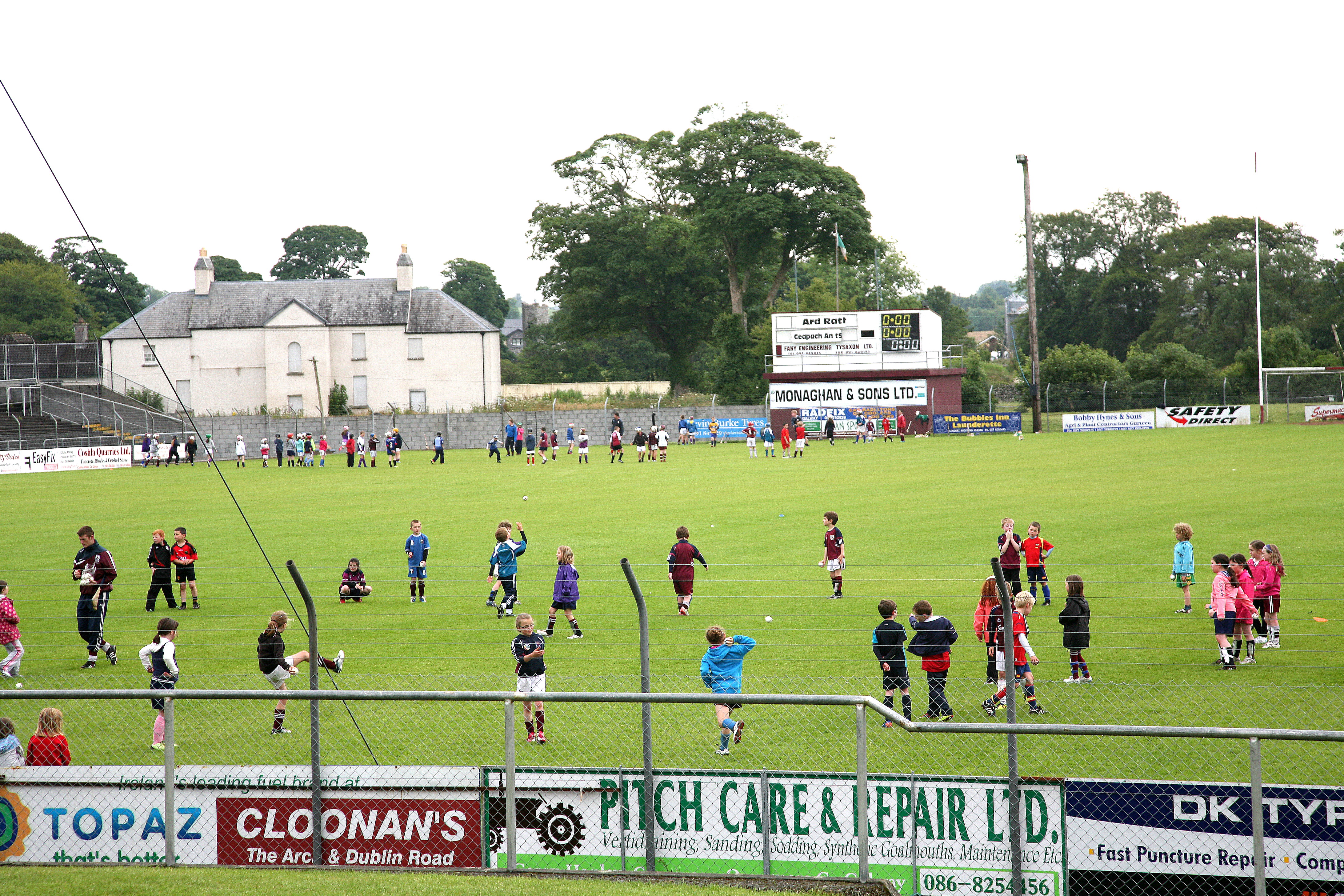
Sale Forbidden by Court
INTERESTING EVIDENCE
Source: Connacht Tribune 1933
At Galway Circuit Court on Tuesday, his lordship Judge Wyse Power began the hearing of an action in which the Attorney General with Stephen Jordan, T.D., Athenry, and others, asked for:
a declaration that John F. Kelly, of Athenry, at the date of his death held the park known as Back Lawn, Athenry, as trustee for the people of Athenry;
an order cancelling the contract for sale and the deed of transfer of the promises to Mrs Annie Fox; an order that the defendants appoint now trustees for the premises, including himself, if he so wishes. In the alternative that new trustees be appointed by the court and that they execute a transfer of the premises: in the alternative that the court appoint the present relators as trustees of the premises and the defendant, if he so wishes.
That an account be taken of rents and profits received by the defendant and that such an order be made for the payment thereof as the court may direct.
An injunction restraining the defendant from completing the sale of the premises to Mrs Fox or any other person or from further interfering with the premises
The other plaintiffs in the action are James Ruane, merchant, Thomas Clery, plasterer, James Barrett, painter, Edward Kennedy, cattle dealer; Michael Walsh, carpenter, all of Athenry; Michael Kilkolly, Caheroyan, Athenry, motor proprietor.
The defendant is Patrick M. Kelly, Cross Street, Athenrv, and nephew of the late John Kelly,
J. Conollv, B.L. instructed by O’Dea and Ark ins, solicitors, Galway, appeared for plaintiff, and Mr. Gearoid O’Sullivan, BL (instructed by Messers. Hogan and Shields, solicitors, Loughrea, defended.
Mr. Connolly in opening the case said this was the oldest field for Gaelic Athletic games in Ireland, being used for that purpose over fifty years ago. About thirty years ago it was held bv a Mrs. Barrett at a yearly tenancy subject to football rights and the holding of the annual show. The field was then bought by a committee for public purposes. When the town of Athenry was purchased by the Land Commission under the Land Act of 1903 a question arose as to how the field was to be dealt with and the feeling of the town was that it should not be held by any individual but that it should be held by a committee for the same purpose as before. Eventually, it was vested in five men to hold in trust for the people of Athenry as a sportsfield. These men were P. J. Quinlan, Michael J. Lardner, Richard P. Nolan, John F Kelly and James Ruane.
John F Kelly was the last surviving trustee and under his will in 1928 he left all his property to his brother and to his nephew Patrick M. Kelly, the present defendant. Under a codicil to that will he bequeathed all or any of his interests in the back lawn to to the Catholic Bishop of Tuam for the time being, to the Parish priest of Athenry for the time being, to James M. Kelly upon the same trusts as it was held by him for the people of Athenry and all profits to go to the poor of Athenry.
The present defendant put up the park for sale and a Mrs. Fox contracted to buy it. If this park was sold it would be a great loss to the people of Athenry as the football matches and shows, which were a source of revenue to the town, could not be held there. He contended that a trustee could not appoint another trustee by virtue of a will and he contended that Patrick M. Kelly as the personal representative of John F Kelly could not sell the premises.
A GAELIC GROUND
Thomas Cleary swore that he was 73 years of age and lived in Athenry since he was 4 years of age. For about 43 years the Back Lawn was used for Gaelic and Athletic sports. It was there that Michael Cusack, the founder of the GAA, held the first sports. Mrs. Barrett held the place for some time and was then taken over from her by the sports committee. Around that time the horse fair was established there too.That would be after 1903.
Mrs. Barrett gave some lands for the church and the parish priest of Athenry got her this field instead. Mrs. Barrett always used the field for grazing.
The committee originally was a commercial club and purchased this field for the designs which they had for the improvement of the town. It was they who started the first horse show at Athenry.
There was a debt due on the field and the committee gave Mrs. Barrett as much money as cleared the field. The town of Athenry was eventually bought and there were several claims on the sports’ ground. The claimants were asked by the committee to waive their claims and the claimants did so, on condition that it was not given to any other one for agricultural purpose.
He went to Dublin to the Land Commission in connection with the matter. The Land Commission wanted to establish ownership of the place and the people of the town did not want it vested in private ownership and eventually it was vested in a committee selected at a public meeting in the town of Athenry.
The field is used for games and horse shows still
To Mr. O’Sullivan; He would not contradict the statement that the money paid to Mrs. Barrett was raised in the bank by the five trustees, but there were games afterwards in the field, to refund the money. He is not a member of the horse show committee. That committee was still in existence and a show was held last year. He was at the auction when Mrs. Fox bid for the field. It was withdrawn from sale on that occasion. You could get a playing pitch in the vicinity of Athenry.
He was not a member of the commercial club. The field that Mrs. Barrett gave to the parish was her own property and she held it in tenancy
FREE FOR GAMES
James J. Ruane swore that his father was one of the registered owners of the sports field and died in 1923. Since then witness attended meetings with the other members of the sports field committee at which the letting of the field was discussed. The field was let subject to the pastimes and for the committee to have four free days for shows or any other purposes. The field was always used as a sports field and although they were entitled to play games there on Sundays, games used to be played every evening during some summers. The Horse Show committee, of which witness was a member discussed the payment of £2 for the use of the field to meet the rates and expenses but he did not know if that sum was ever paid.
To the Judge: The G.A.A. gave the gate money when matches were held and the Horse Show Committee when shows were held
To Mr. Connolly: If the place was disposed of it would be a huge loss to the town. It was a field of 9 acres and looking ahead it would be in the centre of the town. His intention was that it would be made a public park. There was a debt of £90-£100 on the place in 1924.
Cross-examined by Mr. O’Sullivan: In 1923, when his father died, there were meetings of the trustees but he did not remember Mr. Nolan being present. Mr. Larry Lardner could prove that meetings of the trustees were held. He did not know how the five people mentioned became trustees originally.
Mr. O’Sullivan: You say in your statement, as relator, that 90 per cent, of the people object to the completion of this sale.
Witness, (dryly): It was 90 per cent at that time, but it was 98 per cent last night (laughter).
Mr. O’Sullivan: A most unpopular transaction.
Witness: Yes.
Who are the two per cent.:- The seller and the buyer.
Were you trying to buy four sites there? Not for myself—to balance the ground as a sportsfield.
In further cross-examination witness said that he knew the debt on the place is about £250 and was paid by Mr. Kellv, but he still believed that another could not be procured for the price to be obtained for this one.
Mr. O’Sullivan: What is to prevent you, holding a horse show next year if this sale is completed? Witness; She might have the field ploughed next year. There would be nothing to prevent her and although the people of Athenry are all interested we could only get £2 to pay off the debt. We collected £19 not to pay off the debt, but to bear the law costs. If we wanted money for the debt we would have got it too.
Witness further explained that the trustees wished to sell one acre to pay to debt on the rest and reduce the rent and expenditure on the rest. There is land in the vicinity of Athenry that would be suitable for a sports field. There is a Rugbv field in the town belonging to Mr. Daly. It would not cost £150 to put the lawn in order, in his opinion. It was his signature on the document sent to Patrick Kelly on June 18.This was after the agreement for sale
AN OLD DEBT
Witness knew there was £250 debt on the held, but they could not pay that until Mr. Kelly consented. He did not do anything he was ashamed of. Witness took a bigger interest in it when he was willed the trusteeship in the will.
To Mr Connolly: He was a mineral water manufacturer in a big way of business in Athenry. The application made in 1930 was made by witness and Patrick Kelly. On July 23 they got a consent – under seal from the Commissioners of Charitable Donations authorising the sale of the acre. Mr. Shields, solicitor, acted for him at the time. Mr. O’Dea wrote on September 22 to the Commissioners. There was a public meeting held on July 18 in Athenry with regard to this matter.
To Mr. O’Sullivan: He remembered discussing the correspondence with Mr. Shields but did not see the letter saying that it would he better if the entire field could be sold. He did not see all letters. That was the first he heard of that letter, and did not see it. They never suggested selling the whole of the field at all.
Mr O’Sullivan: I say he was at the time informed of the advice of the Commissioners.
Judge: He says he was not.
Stephen Jordan T.D., Athenry swore that he knew this field for a long period and was associated with the G.A.A. He acted as referee at games in this field since 1901. The field was used principally as a sports ground. Lately there have not been so many matches there, but at one time it was the principal venue. The horse show lapsed for about eight years but was revived and was always held in this field. Prior to matches, the local football team used to have it for practice matches for a week beforehand. Witness was mixed often in negotiation and agitation for the field. He did not remember Mrs. Barrett’s tenancv exactly. Under the Land Act of 1903 there was agitation for the sale of the town of Athenry some three or four years after the lands were purchased. The original commercial club in Athenry purchased Mrs. Barrett’s interests for a sum of money and members of the club became tenants. When the town was sold there was a feeling that these people were trying to get ownership of the field. The feeling in the town was so strong that the people tarred the members’ houses overnight. Local people only wanted them as trustees. Then they were led to believe that these people were vested as trustees only. Mrs. Barrett’s interest was purchased by the Commercial Club. He latter mortgaged the back lawn field to meet a debt of law cost in a suit about the tolls at fairs.
Mr O’Sullivan: Can the High Court order be produced? I am not objecting to the evidence.
ACTION OF TRUSTEES
Mr Connolly: I have not the order.
Witness continuing said that the Commercial Club became later known as the Horse Show and Agricultural Committee. The trustees made certain regulations as the committee of management of the field. The five men were all members of the Horse Show committee. They advertised the grazing annually and left the field open to the general public on Sundays. They kept four days out of the grazing lettings for themselves – one for the Horse Show Committee and for other emergencies. There was no dispute about it in the town up to the death of Mr. J. F. Kelly.
Mr O’Sullivan said it was the first case in which he had heard so many leading questions.
Judge: The questions can be put in another way.
Witness said that he acted as referee on hundreds of occasions at matches there.
Mr Connolly said that he was not forgetting that Mr. Jordan had many capacities. It was not only as a G.A.A. man he was examining him.
Witness continuing said that there were County Board matches there practically every Sunday. The Galway County Board paid the trustees £1 for every Sunday match. It was in 1904 the trustees got the county finals receipts from the G.A.A. to pay off a debt, which occurred in a law suit. The County Board gave at least £80 receipts to pay off the debt. They also gave one of the receipts of their annual G.A.A. sports. They did this because they believed the field was so useful for matches. In 1915 a Volunteer review was held in that field and feisanna were held there regularly. Witness only remembered one match being played elsewhere and that was as a protest against the sale of the field. It was a field belonging to the Department of Agriculture. It was the only match he remembered not played on the Backlawn. General public opinion was that the field was purchased by Mrs. Fox. Witness would not go into the field as a personal protest. The ground was quite alright to play on. There was only one serious accident, which could be attributed to the ground. It had not been attended to as a playing pitch should be. A son of Mrs. Fos’s denied their right to use the field. Mrs. Fox was very reasonable and witness told her he denied her right to use the field. She said by all means to carry on with the layout of the field. That would be in October or November 1932. There was a public meeting held in Athenry on June 18 last. The field would be a big loss to the town of Athenry. They would lose the revenue of all the matches they would otherwise get. Athenry is a big railway junction and is very central. They had sufficient claim to get an interprovincial match in Athenry. There were greater facilities in Athenry in getting the people to the matches. There were not other suitable fields available around .Athenry for a sports ground.
To Mr. O’Sullivan: He was about 44 years of age. He had a championship medal for 1904. The Commercial Club bought Mrs. Barrett’s interest. They were the traders of Athenry—the commercial element of the town. Witness just heard that the Commercial Club in bought it.
Mr. O’Sullivan: It’s only hearsay.
Witness: It was common property.
Witness said that in 1901 Tipperary played Galway (Inter-Provincial) in the field; Limerick v. Gaiway (Munster and Connacht) a few years ago. Witness could not think of more.
Mr. O’Sullivan: 1 do not suggest that you colour or exaggerate your evidence in any way: In 1901 you were 10 or 11. The position of the railways was not the same then as it is today. Athenrv is more dependent on its railway than any other town in Galway.
CLAIM ON MATCHES
Witness said they would have a claim on interprovincial matches if they had a ground that was suitable. The reason they had only one inter-provincial in years was because the ground was not worthy of inter-provincials. For at least 16 years in the history of the GAA there was no recognised pitch in the county except Athenry. If .Mr. O’Sullivan called a witness who was secretary he would he told that.
Mr. O’Sullivan objected to the witness telling him who he was to call.
The Judge said that the witness only said that if Mr. .O’Sullivan called a witness he would get certain evidence.
In further cross examination, the witness said that the place was used for shows feiseanna, mare inspections by the D.A.T.I., circuses and so on. The local G.A.A. had it free on Sunday .
Did the Rugby team go there ? No.
Did the Soccer team go there; I never heard of a Soccer team in Athenry. He never heard that a Rugby team was prevented from playing there.
Can any other sports team claim a right to go there?
Witness: They can claim it of course (laughter).
Have they the right? That has to be decided by the Judge. The trustees claimed the right to collect the tolls and customs for the new fairs. When the place was being sold he did not bid but he did not know whether any objection was made to the sale. He might have seen a letter.
To Mr. O’Sullivan: He wrote to the Commissioners on December 22, 1932. He had the defence to the original civil bill. The letter was probably for counteracting the defence but it might be for making his own case. He had experience of sales carried out by the Commissioners. He had title examined where the Commissioners had to give permission. One of the documents of the title would be the sealed permission in the transfer.
Joseph White swore that there, was a public meeting held in Athenry on Sunday, May 22 in connection with the Brick Lawn. The question was discussed as to who the relators were to be and the present relators were appointed. He wrote to Kelly, the defendant, with an enclosure as regards his debts and responsibility of the sports field. He got no reply to that letter.
THE HORSE SHOW COMMITTEE
To Mr. O’Sullivan; The meeting was called by the Athenry Waterworks committee, which is a sub-committee of the Galway Board of Health. The meeting was called by bellman and posters. He was appointed secretary. There were between fifty and sixty present at the meeting, which was held in the Town Hall. They had no communication with the Horse Show Committee. He remembered the day of the auction. He was not sure if there was a meeting of the committee on the day after the auction. He heard about the Commissioners of Charitable Bequests being approached.
Mr. Vincent P Shields, solr. Loughrea, swore that his firm were Solicitors for the late Mr. Kelly and subsequently for the defendant in this case. He had correspondence with the Commissioners. He knew that the testator paid rates and annuities and a sum of £83 to the Ulster Bank for this field. The amount which the field owed Mr. Kelly was £260. In June 1930 he wrote to them for permission to sell part of the field as £150 was due. In July the Commissioners agreed to sanction portion of the field but suggested that it might be better if the entire premises were sold and the funds lodged to the benefit of the trusts. They wanted to get Mr. Kelly and Mr. Ruane registered as trustees of the field but the Land Registry refused. Mr. Fox signed an agreement for sale and paid the deposit. About £150 was due to Mr. Kelly at the time of his death.
To Mr Connolly: The amount now due was £254. The amount paid for rates since was £55. At the time he wrote to the Commissioners they were not aware that the sports and football games and annual shows were held there.
On Thursday morning Mr Gearoid O’Sullivan said that since the court closed the previous evening he had considered the position of his client. He had no further evidence to produce that would be of any use to the court. He was prepared to agree that his lordship make an order on the terms the plaintiffs asked for.
Mr. Connolly (for the plaintiffs) said he was instructed by his clients to be perfectly fair to Mr. Kelly’s estate. His case was established and so far as costs were concerned they were entirely in his lordship’s hands. The costs should be allowed to the relators out of the charitable fund.
The judge said that he believed all of the very clear evidence given on behalf of the plaintiffs. Mr O’Sullivan had advised his clients very soundly and very properly. Plaintiffs were entitled to all of the declarations they asked for. Both parties must have their costs and he would grant an extra remuneration of £5 for the two solicitors concerned.