APH
APH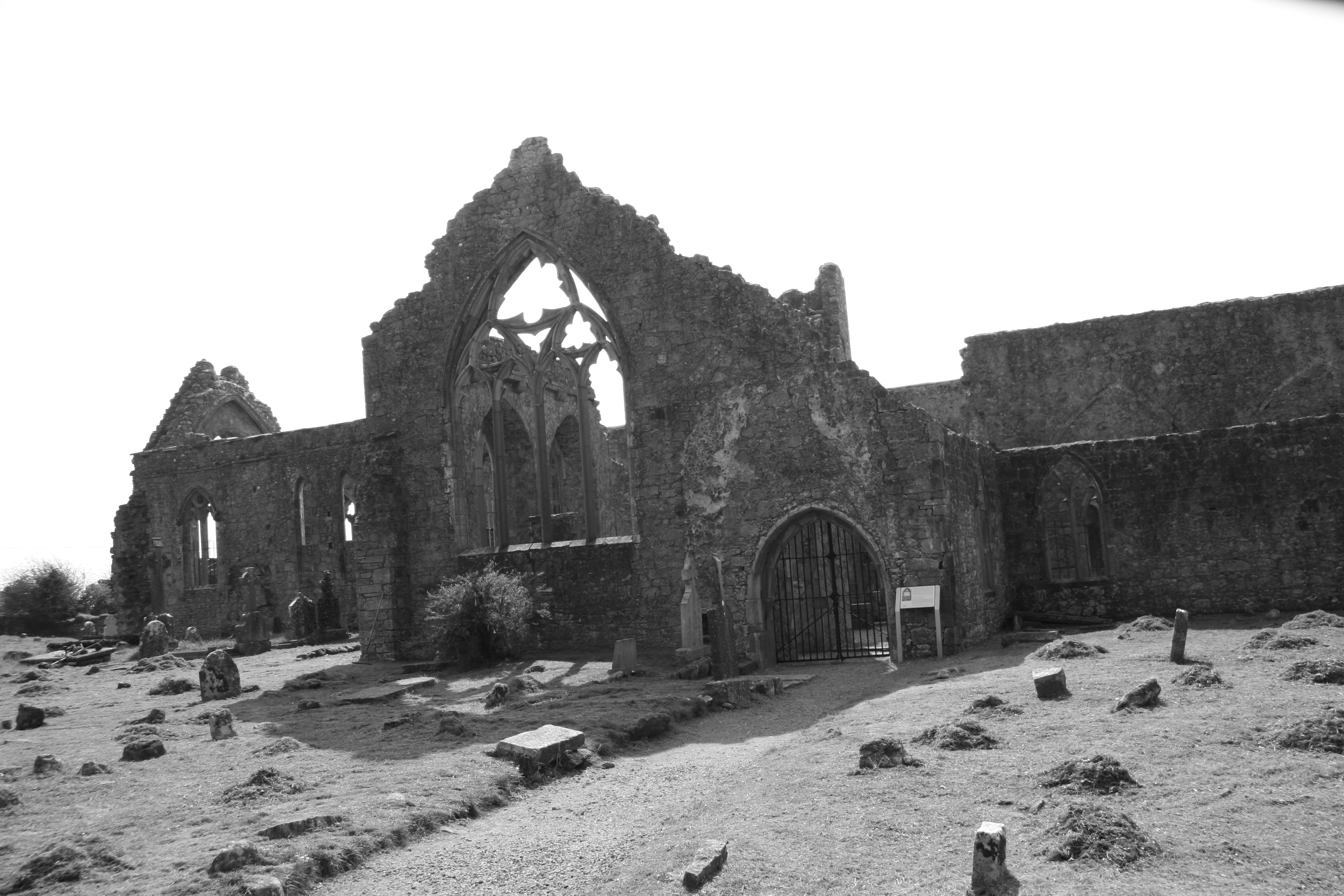
by Professor Etienne Rynne
Source: Connacht Tribune, 12th February 1971

Last week Mr. Etienne Rynne (left), M.A., M.R.I.A., Lecturer in Celtic Archaeology, U.C.G., read a paper entitled “Athenry – a Medieval Town” to the old Galway Society. The name of the town, Mr. Rynne pointed out is an Irish one, Baile Átha an Ríogh, thus indicating that the ford there must have been of importance in pre-Norman times. As no Kings of any note are known to have been connected with the area at any time, the lecturer believes that the name should be translated as ‘River Ford’ rather than as ‘King’s Ford’ being an ancient Indo-European word associated with rivers. The river at Athenry is ‘The Clareen’ which, in turn, gives its name to Clarenbridge where it enters the sea.
Castle
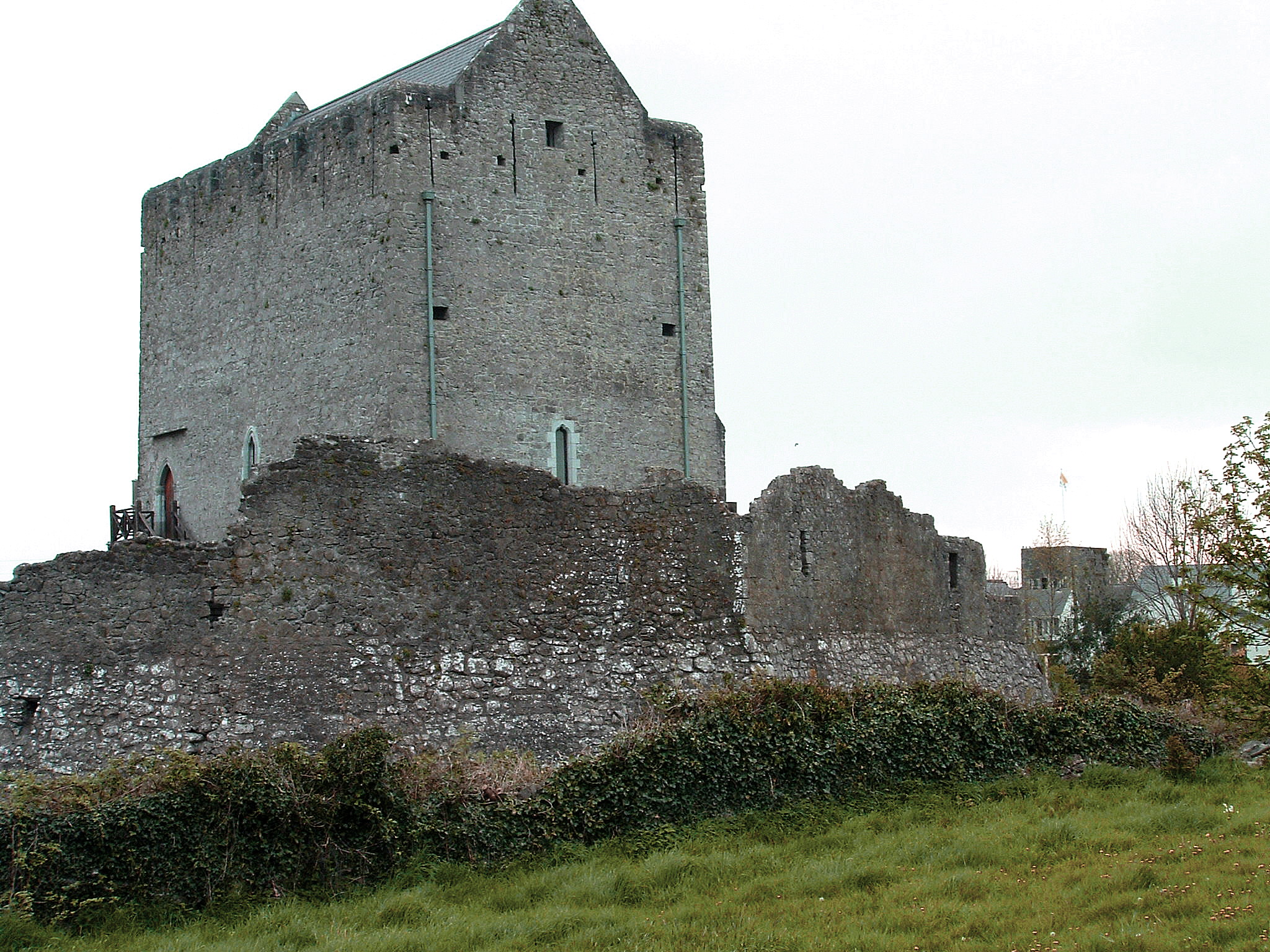 Mr. Rynne traced the history of the town as demonstrated by its monuments, illustrating the lecture with numerous coloured slides. The earliest remaining building in the town is the Castle, built at the ford by Meyler de Birmingham, probably during the 1240s. This castle, one of the finest 13th century castles remaining in Ireland, consists of a three-storied keep surrounded by a strong curtain-wall which had three corner-towers and a strongly fortified gate – the keep not being centrally placed, but overlooking the curtain-wall at the north-east, obviated the necessity of a fourth corner-tower. AthenryCastle has recently been somewhat restored and now serves as the western head-quarters for the National Monuments Branch of the Office of Public Works.
Dominican Priory
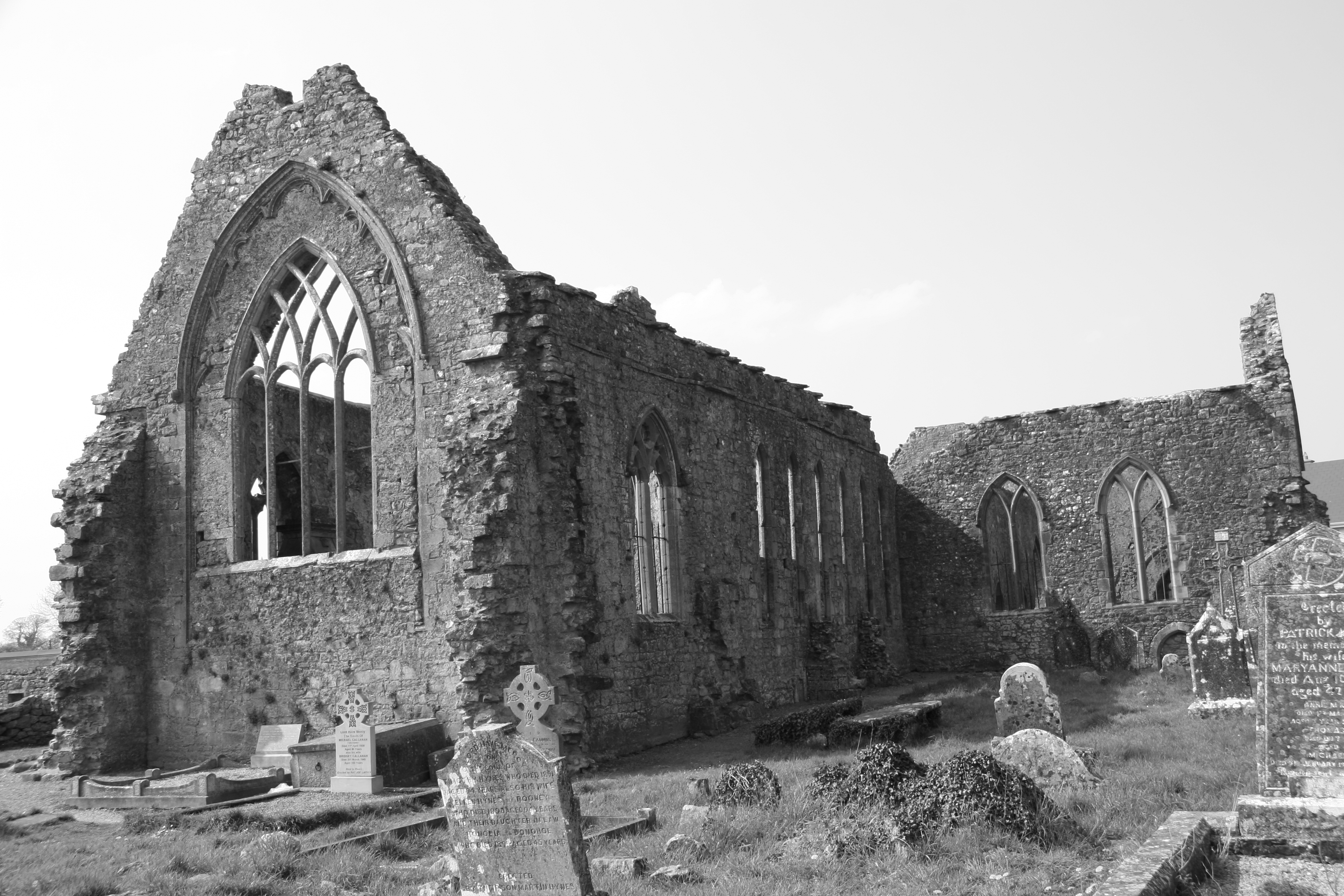 Meyler de Birmingham also caused the Dominican Priory of SS. Peter and Paul to be erected in Athenry, apparently at the request of St. Dominic himself. The Priory was started in 1241 and finished in 1261; Meyler died in 1252 and was buried there. Mr. Rynne outlined the various destructions, burnings, restorations and enlargements which the Priory underwent during its long history, illustrating the various phases with slides showing the different architectural and sculptural styles to be seen in the present ruins. The Priory still contains much of note, particularly important being a fine collection of 17th century graveslabs and wall-plaques. Some of these are particularly interesting, notably the graveslab of John Burke and his wife which bears the date 12th October, 1627, and also fine interlaced work typical of the ‘Celtic Renaissance’. Also worthy of note is a slab dated to 1631 which has not only some interlace carved on it but also an axehead and some other tools. The graveslab dated 1682 commemorating a blacksmith called Tannian and carved with the usual cross, but also with two bellows, a horseshoe, an anvil, a hammers and a pincers, is likewise of interest. Other graveslabs have carvings of ploughs or parts of ploughs, thus indicating the farming status of those commemorated.
Town Walls
The walls of Athenry, easily the finest medieval town-walls remaining in Ireland, came in for detailed discussion. A murage grant being obtained in 1310, it would appear that the town was originally walled in or about that time. History, however, records that the town was walled after the Battle of Athenry on the 10th of August, 1316, when the Anglo-Normans under William de Burgo and Richard de Bermingham defeated Phelim O’Connor, King of Connacht, who was aided by the Princes of Thomond, Meath, Breffny and Conmaicme, the defeat seriously affecting Edward Bruce’s Irish campaign. This record may, however, merely mean that the walls were rebuilt of stone, the earlier walls being most probably of wood.
Town Gates
Only one of the five town-gates now remains, the North Gate, but most of the wall still stands, together with five (and the footings of a sixth) wall-towers. The town-walls of Athenry were not of a good military character being too thin ever to have had ramparts or to have allowed defenders to properly man them, while the wall-towers were equally unsuitable for military use. The lecturer believes that the main defence was a deep and wide moat, traces of which can still be clearly seen outside the walls, and that the walls themselves, and their towers, were built to lend status to the town, though undoubtedly also to provide some added protection.
St. Mary’s Collegiate Church
The remains of St. Mary’s Collegiate Church were also discussed. This large church, the former parish church of Athenry, has often been incorrectly identified as the remains of a Franciscan Friary, due to a 17th century mistranslation of the Latin name for Adare, Co. Limerick. Apparently founded by Archbishop O’Murray of Tuam in 1484, it was destroyed in 1574 by the Earl of Clanricard’s sons. In 1828 a church with a particularly elegant spire was built in its chancel and was in use by the Church of Ireland until very recently.
‘Parson’s Fair Green’
In 1629 permission to hold a regular market and a fair in October was granted to Sir William Parsons, Bart. The market was held each Sunday within the town, at the spot where the remains of a very fine market cross still stand. The fair was held immediately outside the town-walls, close to the gate leading to Galway. The site of this fair is marked on old maps as ‘Parson’s Fair Green’ and can be located by a large stone which has a rectangular socket cut into it, obviously to take a cross at which bargains would be sealed.
Decline
In February, 1597, Red Hugh O’Donnell attacked the town, following which Athenry descended into a continuous decline, briefly halted in 1644 when the Dominican Priory was revived as a University, only to be finally put down by the Cromwellians in 1652. The coming of the railroads in the 19th century, making Athenry an important junction, revived the town, and it has ever since then been slowly finding its way back to its former importance.
Vote of Thanks
Mr. Donal Taheny, Galway, a native of Athenry, proposed the vote of thanks to Mr. Rynne, and it was seconded by the Very Rev. George Quinn, P.P., Moycullen.