APH
APH
Paddy was interviewed by Gerry Ahern
When was the mart established?
The Mart was built in 1960/61. It held its first sale on the 24th of October 1961 and the second one on the 7th of November 1961. At that time all cattle had to be booked in.
Who was involved in its establishment?
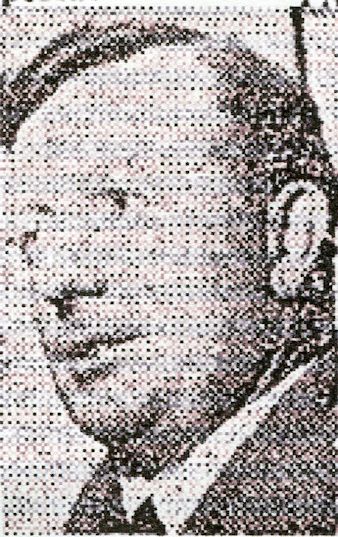
In the 1950s there was a very active branch of the Irish Farmers’ Association in Athenry. Some of the members became interested in building a livestock mart. After a number of meetings the idea took root and a committee was formed under the chairmanship of Padraic Raftery and Secretary Eugene Duggan. In that period there were very few marts in the country and most were privately owned. However, Athenry was to be a co-operative farmers’ mart.This meant a lot of hard work for the committee in collecting share capital. Shares were purchased by the people in multiples on ten, one pound shares.
The mart replaced the Fairs that used to be held on the town’s street!
Yes, it replaced the fairs on the streets and I’m sure the townspeople were delighted. I remember seeing every footpath on both sides from where the Vocational School is now situated all the way to Kenny Park lined with pens of sheep. I even saw ropes tied to door knockers of hall doors trying to hold these make-shift pens in place. But that wasn’t all. The main thoroughfares of the town were filled with bunches of cattle. Weanlings were usually sold in the Market Square while milch cows were offered for sale in Cross Street from the Barracks to Leonard’s Gate. In the evening the big clean-up was done by the County Council workers. It took about 5 to 6 years before the fairs were completely abandoned as some sellers and buyers found it hard to move from tradition. Both parties liked the haggle and the slapping of hands to divide the last few ‘bob’ to clinch the deal.

Who built it?
When finances were in order Stewart Building Contractors, Galway, secured the job. The building consisted of a roofless concrete yard with penning to hold 600 to 700 cattle, weighing scales, sales ring, some offices, a canteen and bar.
What did your job involve?
My job was to see to the smooth running of the Yard to ensure that:
The yard and sales ring were clean and the scales in order.
To provide staff and have enough of them for the intake of stock and the efficient running of the sale.
Make sure cattle were checked in (ear tags read and correct cards taken from the seller) and that the animals were penned correctly according to their back numbers.
To have straw and fodder for the animals left for collection next day as buyers purchasing large numbers could not get transport to shift all his purchased animals on sale day.
On the day of big sales it was hard trying to arrange times for dinner for the workers but I will say that the lads were very agreeable with each other.
For a number of years I was responsible for the loading of stock. For example, lorry drivers were asking me to unlock the gates in order to get their stock loaded. All the northern drivers quickly learned where I lived. For a number of years a share of the cattle sold were moved by rail. When a buyer’s stock was penned, 4 or 5 of the mart workers would have to herd the cattle through the streets to the railway station and load them on wagons.
When did you begin work there?
I started on the 7th of January 1968. That was the year of an outbreak of ‘foot and mouth’ disease. This occurrence was bad for farmers because all cattle had to be sold and could not return to farms due to the strict regulations in force to stop the spread of the disease. At that stage extra yard pens had been built with penning for approximately 2000 sheep. Sheep were sold in the pens in lots to suit the buyer. During the early years sheep were not weighed. It was big business then with 500 to 600 animals sold each week. By this time two extra sales rings and yards were built and also a large extension to the sheep yard. The cattle and sheep pen areas were roofed.
Who was the manager at that time?
Martin Donnellan (R.I.P.) was the manager and at that stage. three more marts had been built in County Galway: Ballinasloe, Tuam and Gort and Martin was the manager of all four.
Who were the other workers at that time?
Mary Murphy, Kevin Dooley, Joe Pollard, PJ Brennan and Padraic McCormick worked in the office. Padraic was a trainee auctioneer at the time. Gerry O’Donnell (R.I.P.) and Willie Coady were the permanent yard staff. On cattle sales day there would be extra workers taken on. As all the cattle entered for sale had to be entered a few days prior to sales day and by the numbers on the list we knew how many staff were required and they got notice to attend on the day.
Tell me about the stages of selling a beast!
As all cattle entering Marts have to have a back number i.e. usually a paper disc with a reinforced backing stuck to the animal’s back with adhesive. Say a farmer has ten cattle of different sizes-breeds or weights-he will enter them in matching lots. Lots means the way he wants them sold in either one, two or threes. Assuming his entry is for pen 20 and he wants to sell three in his first lot he puts disc 20 on each of these three animals’ backs-(Lot 2-3 cattle)- 20A on their backs-(Lot 3-2 cattle)-20B on their backs-(Lot 4-20C). The workers in the sorting yard know from the list from the entry point the numbers in each lot. When pen 20 arrives in the sorting pen they see the Lot is 3 animals. So when they put the first of the three animals in they know the other will be very similar and this is Lot 3 (20). The 3 animals are got by the sorter, herded into the ring and weighed. At last I’ve got as far as answering your question but I always say when trying to explain how things work it’s always best to put the horse before the cart. On the rostrum you have the auctioneer, the weights’ clerk and the auctioneer’s clerk. The weights’ clerk having weighed the lot displays the Lot number and number of animals and notes the individual weights.
Now it’s the auctioneer’s turn. He starts looking for bids for more than the animals are worth but he has to keep dropping his asking price until some bidder gives him a nod, wink or a little movement of the head. This means that he is offering the price the auctioneer is now asking. Then another bidder gives his signal indicating his willingness to give another pound or fiver greater than the first bidder. The bidding goes on like this and the price goes up to a certain level at which time the auctioneer will ask the seller if he wants to put them on the market-meaning he is prepared to sell at that price if he gets no further bid. If the bidding goes fast the seller would usually put the Lot on the market and nearly always get a few more bids. The last bid would be the final price and the auctioneer would wrap his gavel and the lot was then declared sold. The auctioneer’s clerk would record the Lot number, the number of animals, price and the buyer’s name.
When the auctioneer’s clerk has a page of the auctioneer’s book full this page was handed into the office for staff to write up all sales to the different buyers. In the case of a seller not willing to put his animals on the market the auctioneer would usually try again for another bid or two. If he failed in that the Lot would leave the ring unsold and the seller would take his animals home. To help big buyers there were 10 pens adjacent to the ring. When one of these buyers bought a lot, as the lot was leaving the ring a switch would light the number of his pen and the workmen would put that Lot in that pen.
What animals were sold there?
I suppose cattle must be to the fore having the greatest turn over in terms of cash. Next would be cows, calves, bulls, bullocks and weanlings with lots of special sales of pedigree stock of all the different breeds. Sheep were by far the biggest as regards numbers. I remember we had harvest sales for a good few years and seeing the three cattle yards (big bullocks, small bullocks and heifer) packed to capacity with breeding ewes, the sheep yard packed with lambs and being refilled as pens became vacant as buyers loaded their trucks with their purchases. This meant hard work and long hours for the yard staff as all the cattle yards had to be cleared of dividing pens and washed spick and span for cattle sales the following morning. Pedigree sheep sales were another big take in my 40 years. The Galway Sheep Breeders’s sale was the real big one. Suffolk were next. Then later different new breeds started to catch on. Horse sales were few with only two in the year and they really didn’t catch on and it was deemed a good sale if 25% were sold. Now marts usually charge the seller a small fee for thr use of the yard as they do their own sale.
Also pigs were been sold using a much different system. Each animal was weighed in and tattooed as certain types got what the factories called a ‘bonus’, that is, a few pounds extra in price for the right quality. The farmer was paid a flat rate of so much per hundredweight. When returns came back the mart staff had to check the tattoo number and any seller due a ‘bonus’ received extra money.
Turkeys were a very different product as they could become airborne, so they had to have their legs tied. Usually this was done at home when being loaded for the trip to the mart. Birds were weighed singly and their weight and Lot number put on their tag and this was attached to their wing. They are then auctioned like livestock with the only difference being priced per lb. Sometimes if a customer wanted a number of birds he would offer the same price for the flock to that person. If turkeys were scarce auctions were a good way of selling but if they were plentiful it was a different story. I think turkey auctions were being abandoned in most marts. A far as I know marts now just supply the weighing facility to the vendors.
What days of the week were given to selling different breeds of animals?
Sheep sales are always held on Monday.
Cattle sales-heavy bullocks, store bullocks, heifers and dry cows-are held on Tuesday.
Weanlings-bullocks and heifers usually aged six months to a year-sales are held on Thursday.
Milch cows, in-calf cows and suck calves are also sold on Thursday.
Tell me about the Auctioneers!
Colm Hillard was a Co. Meath man. Padraic McCormack was from Reenagh, Co. Longford. Jimmy Delaney came from Ballymahon, also in Co. Longford. ??? was from Co. Sligo. Phelim Kearns was a native of Cloughan, Co. Offaly. ? Neehan was from Co. Roscommon. Noel Treacy is a native of Gurteen, Ballinasloe and Seamus Lynch is an Athenry man.. Michael Mannion was from Tuam and P.J. Callinane came from Athenry and finally Terry Cooke was from Monivea.
Auctioneering seems like a stepping stone to Dail Eireann as a quarter of those I’ve mentioned became TDs, namely: Colm Hillard, Padraic McCormack and Noel Treacy.
On days of a good sale an auctioneer was deemed a good salesman but when prices were down it was a different story. These men do their best but like any business prices are governed by supply and demand.
Down the years what were the big changes that you saw in the Mart?
Lots of changes. First was the construction of a second sales ring and scales and the extensions to yards and penning. This was done that heifers could be penned and sold separately from the bullocks. Next big change was the building of a third sales ring and penning for store bullocks, that is bullocks that were seven hundredweight and under. Another big change was the roofing of both the sheep and cattle yards.
When all that was completed the original intake of cattle was too small and too slow, so that after much consideration it was decided to build new chutes at the upper end of the cattle yards and holding pens. This would give a chance to the hauliers to drop the cattle in themselves and go for second or third loads. This was really a blessing for the workers as work was really tough when rain and snow was coming down and for stock too.
What about competitions for best animals?
Two shows and sales were held every year, one in the spring and the second at harvest. There were lots of classes and prizes. Usually bullock classes were in lots of four of different weights and breeds. There was also champion bullock and reserve champion. The same system was operated with the heifers except there were only two animals in each entry. Also there was champion and reserve champion.
Who were the big buyers around the ring?
Tony Murphy, Athenry for years was one of the most consistent buyers of both sheep and cattle. Other big cattle buyers were Seamus Purcell, Seamus Kearney from Meath, the Troy brothers also from Meath, Johnson brothers from Cavan, Seamus Doyle from Northern Ireland, Don McParland also from Northern Ireland, Hugh Treacy from Tullamore, Willie Bonner , Ennis, Jackie O’Dea, Clare, Mick ?, Northern Ireland, Paddy Brady and Sean Duffy from Gort.
The sheep buyers were Tim Stapleton, Nenagh, Halal, Castlebar, Paddy Conroy, Shrule, Joe Concannon, Tuam, Sean Glynn, Ahascragh.
All the Athenry butchers bought sheep and cattle.