APH
APH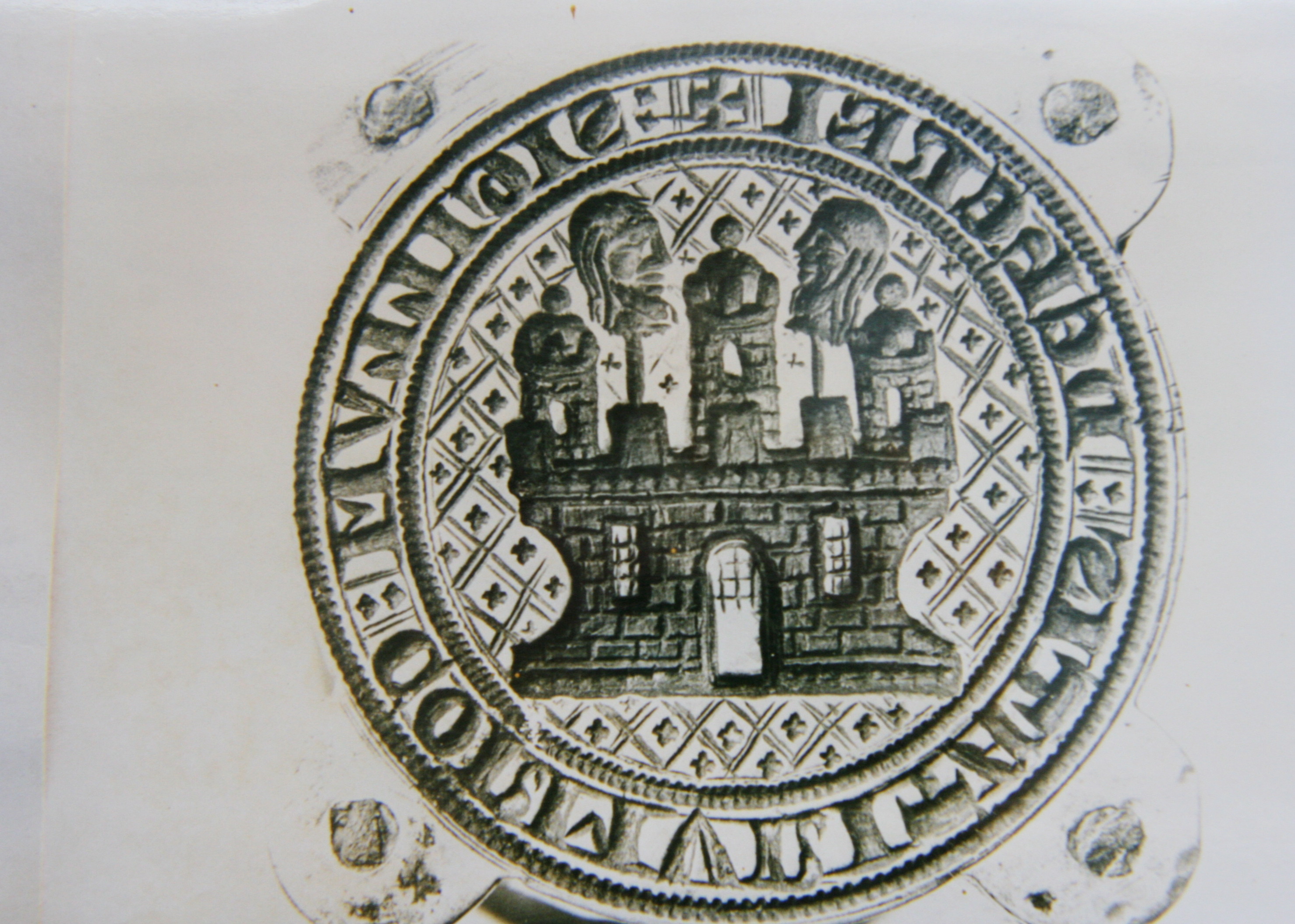
by Peadar O’Dowd
Source: Connacht Tribune, 23rd July 1999
(Two Photos have been added to the article)
Saturday is then a most important day in the history of Athenry, when, thanks to the Blishens, Rynnes and Berminghams, the town will be equal, in one way at least, with its upstart neighbour we now call Galway City. For – after 160 years – its Corporate Insignia, the 14th century Mace and Seal, will be returned to the town at a ceremony in the Square at 8.30pm. Historian Peadar O’Dowd traces the fascinating history of the objects, and their comparisons with the story of the Galway Civic Sword and Mace.
While the crown sits regally on the royal head, the mayor of the town or city must look elsewhere for his own particular sign of power. In Galway’s case, according to Professor Eitienne Rynne in his informative booklet, Tourist Trail of Old Galway, a Charter granted by James I in 1610 saw a beautiful silver Civic Sword commissioned, which henceforth would be carried ‘before the mayor’ to underline his authority and importance.
In 1712, a comparable silver Great Mace was made in Dublin and presented to Mayor Edward Eyre. Henceforth, both insignia would be used on ceremonial occasions especially during important functions involving the mayor. The sheer size of Galway’s sword and mace underlined the importance of the city in the post-medieval period, despite the terrible consequences and uncertainties resulting from the various sieges of the 17th century.
Worse was to follow when, according to Philip O’Gorman writing in Vol. 1, No. 4 of the Galway Reader, P. 42,:
“It is conceded that the most distinguished citizen of Galway City in the early years of the 19th century was the Rev. Peter Daly. Father Daly moved by the poverty of the city and mismanagement of its civic affairs roused public opinion, a sum of money was subscribed, as a result a Parliamentary enquiry was instituted into the working of the Corporation. The finding of the Commission was that the City Fathers did not administer civic affairs to the best advantage. As a consequence the Corporation was dissolved…..”.
In fact, some sixty others, including that of Athenry, were dissolved also at this time as mismanagement of civic affairs was not solely confined to Galway City. Professor Rynne takes up the story again when he tells us that: “The then mayor, Edmund Blake, was owed a considerable sum of money by the Corporation and was given the Sword and Mace in its stead…..”. This Edmund or Edmond according to the Bearna agus Na Forbacha booklet issued by the Barna/Furbo I.C.A. branch, was one of the Blakes of Furbo (p. 16) and on his death, “they passed to his daughter, Miss Anne Blake of Murrough House”.
What happened to the sword and mace after that makes rather colourful reading for we are told in the booklet that:
“They were lodged in the Bank of Ireland, Eyre Square, but in 1930 Miss Anne sold them to Mr. Louis Wine, Art Dealer, Dublin for £4,000. The Urban District Council (of Galway) at the time did their best to prevent the regalia leaving the country but without any success”.
The booklet goes on to tell us how the sword and mace finally ended up with a client of Wine by the name of Hearst. It continues: “When Hearst the collector died his widow and son presented them back to Galway. Mr. Martin Reddington the then Mayor together with Mr. O’Flynn went to the U.S.A. to receive them on behalf of Galway”.
The Hearst in question was no less a person than William Randolf Hearst or as Professor Rynne tells us, Citizen Kane of Orson Wells fame. “However”, he continues, “in 1960 the Hearst Foundation Inc. generously returned them to the people of Ireland, and a year later they were restored to Galway. The honour of acting as sword-bearers and sergeants-at-mace at present falls to members of the Galway Fire Brigade”.
Today, Galway’s sword and mace are on public view during office hours in the Bank of Ireland at No. 19 Eyre Square together with a massive cut-glass vase, which was presented in 1984 by Galway Crystal to commemorate Galway’s Quincentennial Year, the 500th year of the city’s mayoralty.
While Professor Rynne wrote about the Galway corporate insignia, he was also very much involved in researching, tracing and finally having the Athenry equivalent returned.
Although Athenry was founded by the de Berminghams and deemed to be even larger in size than Galway, or for that matter, Dublin of its day, it never prospered despite its ambitions. It did get off to quite a good start, however, when the Irish, under Phelim O’Connor, King of Connacht, were defeated with great slaughter before its very walls in 1316. In fact, it is said that these same town walls were built even stronger from the sale of the weapons of the defeated Irish. It was not enough, however, because situated as it was where three great Irish kingdoms met, the medieval town of Athenry was never free from attack.
It never attracted the sheer numbers needed to populate a town of its size, and, as one can easily see in the magnificent scale model of the town now on display in the new Heritage Centre there, its buildings were mostly huddled in the northern section of the town beside its great Norman Castle. That it had ambitions, however, can be clearly seen in its ancient Corporation Insignia consisting of a mace and seal.
Professor Rynne supplies the following details of the objects:
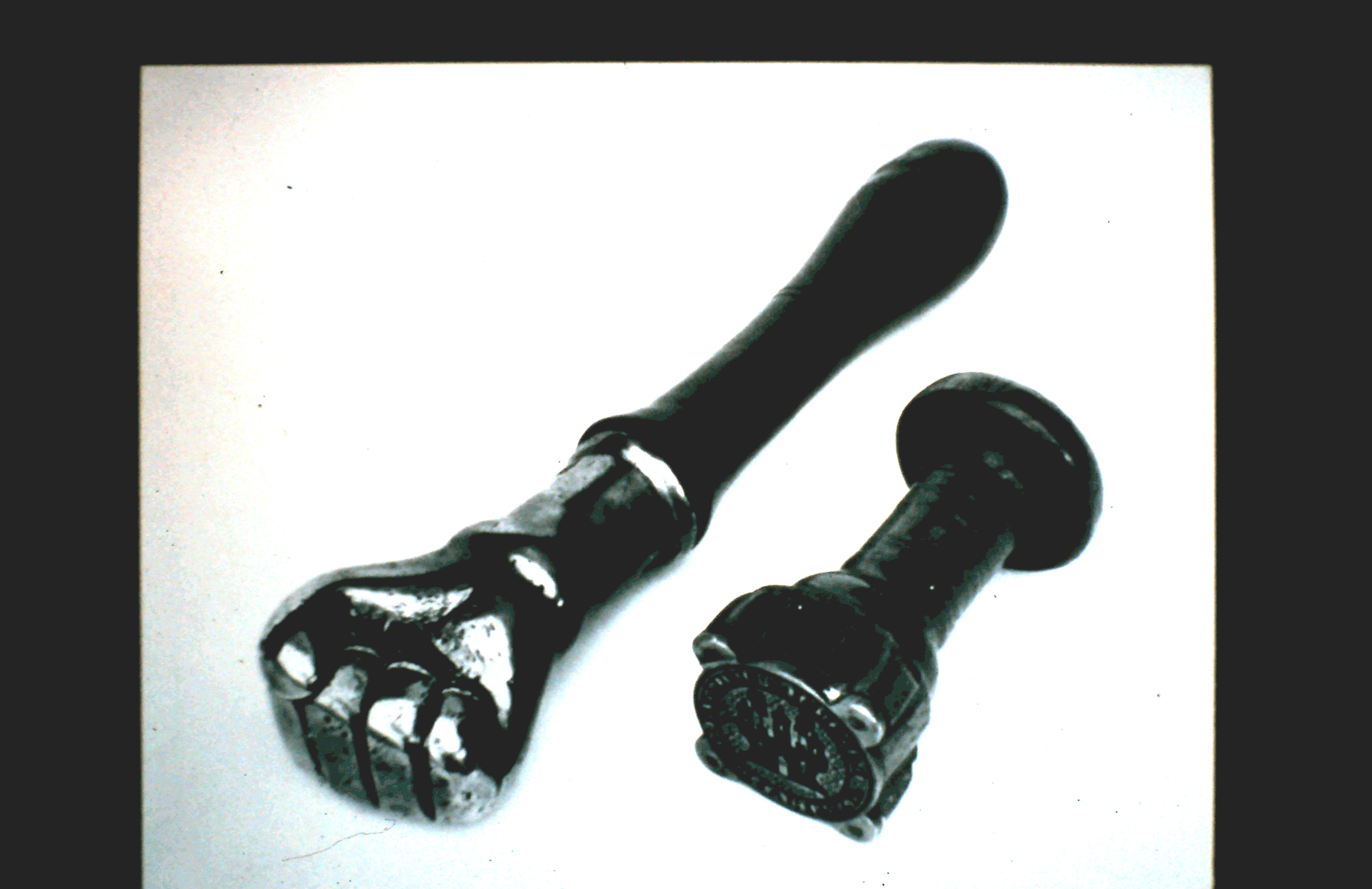
“The mace is in the form of a clenched fist with short forearm, mounted on a long, polished wooden handle (relatively modern). It measures about 11 inches in total length and weighs 1lb 14 ozs. Gavel-line, as Wakeman points out, ‘it was not intended to be used as a toy, or to grace a civic procession. It was a weapon which, when need required, might prove highly persuasive in the hand of a ‘pretty’ man who preferred action to verbal argument’.
The seal is circular in outline, attached to a (relatively modern) wooden handle by four rivets through four semi-circular perforated projections evenly spaced around it. It bears an engraved design of a castle or town-gate surmounted by turrets and two bearded human heads fixed on spikes, thought perhaps to represent those of Phelim O’Connor, King of Connacht, and Teige O’Kelly, King of Uí Máine, both of whom, along with many other Irish chieftains, were slain at the Battle of Athenry in 1316. It is inscribed +SIGILLUM:CONMUNITATIS:DEHENRI and it measures 4.25 inches in total length, the brass seal being 1.75 inches in diameter and a third of an inch in thickness.
A 14th century date is generally accepted for both objects, making the mace the oldest in these islands”.
Although small in comparison with the much later Galway insignia, their very early date underlines the aforementioned ambitions of the medieval town of Athenry. It was not to be, however, and for the reasons given above, Athenry never enjoyed the prosperity of its neighbour, the medieval town of Galway, which gained in importance thanks to its water based defences, seaport, and consequently thriving home and international market facilities.
In fact, Athenry subsequently became one of the most attacked towns in Ireland and not surprisingly, its gavel-like brass mace and heavy brass seal dropped out of sight. They next came to light, it seems, according to Professor Rynne, when they were exhibited at the Royal Society of Antiquaries in 1875 by Rev. James Graves, the noted antiquary.
At that time, we are told that they were:
“in the keeping of John Blakeney, Esq., of Abbert, Co. Galway, whose family were formerly the patrons of the borough (of Athenry) and were lent for display through the good offices of Mr. W. F. Wakeman, the well-known artist and antiquary, and the Rev. Mark Perrin, Rector of Athenry, Wakeman’s father-in-law. Other objects were briefly described in the Society’s Journal for that year, and the seal was illustrated”.
Again in 1899 Wakeman described and illustrated the mace in the same society’s journal before our story moves on in time to June, 1963, when a rather young Assistant-Keeper in the Irish Antiquities Division of the National Museum of Ireland gingerly unwrapped a parcel containing the insignia. Then owned by a Mr. H.C.A. Blishen, M.B.E., living appropriately enough in a house called ‘Athenry’ on the Isle of Wight, the insignia were offered for sale to the museum, which, unfortunately was not in a position to purchase them.
However, they were recorded, photographed and never forgotten by that young Assistant-Keeper, who some years later was appointed Lecturer in Celtic Archaeology in University College Galway. In time he became Professor of Celtic Archaeology there and when he, Professor Eitenne Rynne, came to live in Athenry itself: there could be only one outcome. As well as taking a huge interest in the medieval remains of Athenry, the professor was pressed upon to try and recover the town’s corporate insignia, but hesitated to do so until a secure, suitable place in which to exhibit them was made available in the town.
The opening of Athenry Castle in 1993, after O.P.W restoration, offered one such place. By then, however, the trail had gone cold. When Professor Rynne sent a letter to Mr. Blishen ‘recounting Athenry’s interest and hopes’ it was returned unopened – Mr. Blishen was no longer resident, if alive, at the Isle of Wight address, and not otherwise traceable. The local historical society’s journal and the town’s Annual Festival now enter our story. When Professor Rynne’s letter to Blishen was published in The Athenry Journal in 1996, an English visitor to the Annual Festival, a Mr. Tom Bermingham, read it and promised to try and trace the Blishens and the now ‘lost’ mace and seal on his return to England.
Although his investigations revealed that Captain Henry Charles Adolphus Blishen, who was made an MBE in 1944, had died in 1980, further research in the usual official record offices revealed a blank as regards his relations or the whereabouts of the mace and seal. However, even in England, Blishen is a rather strange name, and when Tom checked the phone directory, he eventually contacted a Mr. Anthony O. Blishen, a resident in London, who had the missing objects.
Seemingly, when Athenry Corporation was dissolved in 1840, like its Galway City counterpart, the mace and seal passed through the Blakeney family to Joan Cecile Blakeney who married H.C.A. Blishen, and then to the present owner. Fortunately, according to Professor Rynne, who with his good wife Aideen visited the Blishens last year, the present owners consider themselves more as ‘heretidary keepers’, in the old Irish traditions of sacred reliquaries, rather than ‘owners’ of the Athenry Insignia, and are more than willing to return the treasures to the town. This they will do next Saturday at a public ceremony at 8.30pm in Athenry Square. Afterwards, both mace and seal will be placed on exhibit in the adjacent and more suitable Heritage Centre, where both native and visitor alike can view Athenry’s long lost corporate insignia. Saturday is then a most important day in the history of Athenry, when thanks to the Blishens, Rynnes and Berminghams, the town will be equal, in one way at least, with its upstart neighbour we now call Galway City.
A Final Note. The magnificent Athenry Heritage Centre is now housed in the former Church of Ireland church where William Frederick Wakeman and Frances Alice Perrin were married. Yet another connection with the past will be forged.