APH
APH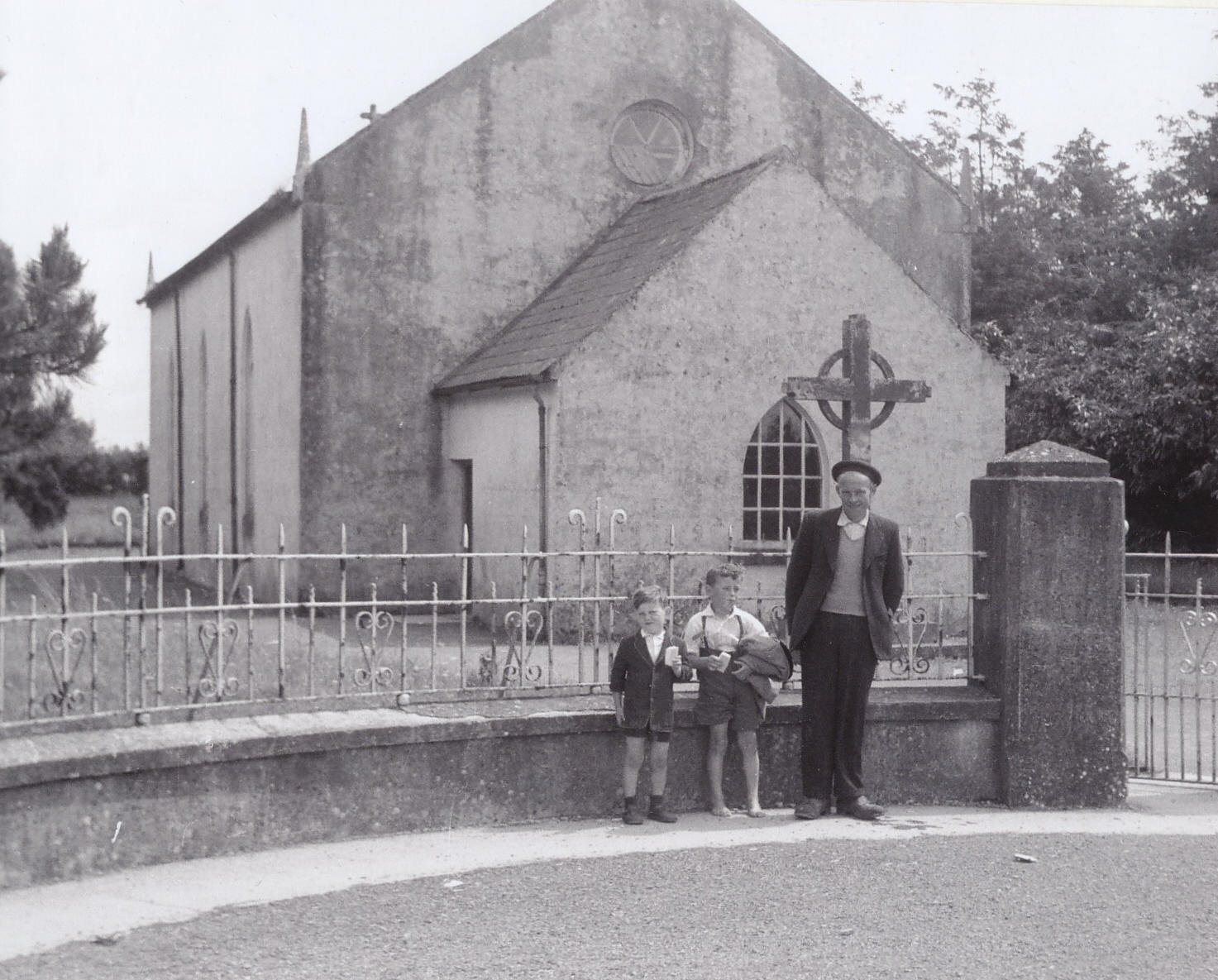
By Canon Tony King
(Parish Priest of Athenry 1993-2013)
The boundaries of the dioceses of Ireland were delineated in the Synod of Rathbrazil in the year 1111. Four decades later, at the Synod of Kells in 1152, the effective boundaries of the diocese were agreed and sanctioned.
It was well into the thirteenth century before parish boundaries were agreed. The Christian community in different areas were served by the monasteries and various houses of religious. Situated in East Galway, the present parish of Athenry borders parishes in the two neighbouring dioceses of Clonfert to the east and south, and Galway to the south and west. The parish in area stretches 14 miles from the townlands of Cuddoo-Cormacoo in the east to Mountain West on the Galway/Loughrea road and from Coshla in the north to Coldwood in the south, 6 miles (approx) covering an area of over 70 square miles.
St. Mary’s Collegiate Church

The remains of St. Mary’s Collegiate Church, the former parish church of Athenry, dates from the mid-13th century. Apparently, founded about 1240, it became Collegiate by order of Archbishop O’Murray in 1484. A Collegiate church is served by a chapter of canons. It was destroyed in 1574 by the Earl of Clanricard’s sons. In 1828, a church with a particularly elegant spire was built in its chancel and was in use by the Church of Ireland up to 1968 and ended with death of the Rector Canon North Bomford. Today, it serves as the Athenry Heritage Centre.
Tysaxon Monastic Settlement
The Athenry region also features prominently in the early Christian history of Tysaxon – the house of Saxon – monastic settlement founded by Balan who came to Ireland with St. Coleman after the Synod of Whitby 664 – having direct links with the monastic settlements in Iona, Lindisfarne, Inishbofin, Mayo Abbey and Tullylease. The remnants of this settlement are to be seen in Templemoyle cemetery. However, it is only with the coming of Anglo Normans in the late 12th century that medieval Athenry really began to exist as a town. In 1178 the title Baron of Athenry was created for Piers de Bermingham making it the primary Barony of Ireland well before 1235 when Richard de Burgo of Connacht granted a charter to Meiler de Berminghan 2nd Baron of Athenry who founded the actual town of Athenry. Meiler de Bermingham built the castle overlooking the ford, a fine town with a market square, a parish church and a few years later the Dominican Priory of SS. Peter and Paul.
Dominican Priory

There were three Dominican houses – Athenry, Tombeola and Burrishoole, the best known was Athenry. In 1241, Meiler de Bermingham, founder of the town bought a site for 100 Marks and presented it to the Dominican friars to build an abbey and he generously endowed their efforts. The Abbey was dedicated to Saints Peter and Paul. A provincial chapter was held there in 1242. The abbey was extended and prospered until it was accidentally burnt down in 1423.
It was rebuilt and enlarged and escaped the suppression of Henry V111 but did not avoid the wrath of Queen Elizabeth 1. The friars returned in 1638 during the reign of Charles I. and in 1644 the priory of Athenry was instituted as a University for the Dominican Order. Disaster befell the monastery in 1652 when the Cromwellian soldiers wrecked the buildings.
In mid-18th century the cloister buildings were demolished and a barracks for English soldiers built there. An illustration of 1793 shows the church roofless: the tower fell in 1845. The Dominican Priory is today a national monument in the care of the state.
Athenry Parish
Situated in East Galway, the present parish of Athenry borders parishes in the two neighbouring dioceses of Clonfert to the east and south and Galway to the south and west. The parish in area stretches 14 miles from the townlands of Cuddoo-Cormacoo in the east to Mountain West on the Galway/Loughrea road and from Coshla in the north to Coldwood in the south, 6 miles (approx) covering an area of over 70 square miles.
There are two churches – Church of the Assumption in Athenry and the Church of the Immaculate Conception – serving the Newcastle area. There are seven Primary Schools and three Secondary Schools and Mellows Agricultural Centre.
Church of the Assumption
The present parish Church in Athenry is the third parish church on this site. It was built at a cost of £90,000 while Fr. Conor Heaney was Parish Priest and dedicated by Archbishop Walsh on 14th May 1968. A model of this church, which was made by Bobby Gardner, Clarke St., still survives. It became a great resource for funding for the new church.
 It replaced a church started in 1852 by Fr. Peter Curran P.P and completed by Fr. Austin O’Dwyer, (afterwards Canon O’Dwyer P.P. Dunmore). It was dedicated on August 15th 1853 by Archbishop John McHale. Rev. Daniel Cullinane, the immediate predecessor of Rev. Peter Curran, had left a bequest of £100 towards the building of the Church. The Archbishop and priests of surrounding parishes contributed as well towards it and a contribution of £50 was also made by Rev. Peter Curran. Fr. Austin O’ Dwyer took a very active part in the construction of the church and worked himself on the building. This church in turn replaced a chapel built on this site in 1760 and the stones were used in constructing this church. (Prior to 1760, local tradition holds that there was a church on the site of the present Athenry Pharmacy in Old Church St.
Fr. John O’Grady came as parish priest on July 19th 1857 and he took on the furnishing of the church. He erected a very imposing High Altar of Caen Stone; ceiled the roof with timber; completed the Tower and erected a large bell. This bell got cracked after many years and it was replaced by another which was consecrated by Archbishop John Healy on November 29, 1903
A gallery was erected in the South Transept in 1907 at a cost of £75 and in 1911-12 the North Transcept was enlarged and a choir installed adjacent to the Sanctuary to accommodate the Presentation Sisters. In 1922 – 23, further extensions were carried out by Canon Farragher at a cost of £3,400.
A site was bought in Coshla across the road from the entrance to McDonagh home for the building of a Church in the mid- 1940’s. Fr. Ned Lavelle was P.P. Bernie Morrissey recalls digging sand and gravel in Paddy Egan’s land with a meitheal – Michael Morrissey, Eddie McDonagh, Tom Raftery, and Sonny Egan and Mickey Ruane was providing transport. The parish priest was in poor health and died. Micheal Higgins recalls a visit to Athenry in the pony and trap and he remembers a heated discussion between his father and Fr. Eddie O’Malley C.C about the proposed Church. However, the site for the church was never dug. The land was owned by William Higgins, father of Micheal and Mattie.
The present parish church was built at a cost of £90,000 when Fr. Conor Heaney was P.P and dedicated by Archbishop Walsh on 14th May 1968. Thompsons of Limerick were the architects and it was built in modern style and shape in line with the liturgical changes. Within a few years the roof began to leak and efforts at repairing it met with modest success. He took a great interest in the farming community and due to his leadership and encouragement Athenry Mart was set-up and the Creamery in Clarke St. This proved to be an enormous boost to the people of the parish and the surrounding areas. He was appointed P.P. of Castlebar in 1971.
Fr. Jimmy Gibbons, formerly P.P. of Menlough succeeded him as parish priest. (1971-1981). Despite his poor health, he worked at amalgamating the Tiaquin with Newcastle National Schools and this took a lot of diplomacy. A keen sportsman in his young days, he became involved in the development of the Athenry Golf Club in Moonbawn.
Msgr. Michael Mooney became Parish Priest in 1982. A former president of St. Jarlath’s College, he had been parish priest in Clifden and Abbeyknockmoy. Most of his life, he had been involved in education. He was involved in building the new Athenry Boys N.S. The old school at Swangate was sold to the Somers family who set it up as a local business. Following a successful fund-raising programme for the primary schools of the parish, substantial renovations and extensions were carried out in Carnaun, Lisheenkyle and Coldwood and Newcastle. He reorganised the Sanctuary of the AthenryChurch and put in new floor covering and new seating was installed in 1990. He negotiated a new organ for the Church, which was first used for the Papal Mass in Drogheda in 1979. He took a keen interest in restructuring Lady’s Well and installed the statue of Our Lady, which he managed to get from Msgr. James Horan P.P. Knock. He retired in July 1993. He died in May 1994 at his residence opposite the Athenry Boys’ National School.
He was succeeded by Rev. Anthony King, Adm. Westport on July 19th 1993.
The old Bell was giving constant trouble and breaking down. The present Electronic System was purchased from Ocatronics Ltd, Dublin. It was used for the first time on the arrival of Msgr. Michael Mooney’s funeral to the Church on May 15th 1994.
The heating system, which had been breaking down and making a lot of noise for some time, had to be replaced and this work was carried out in 1995. There was concern about the gun-barrel piping but it was not necessary to replace it for the new system. Bobby Gardiner made a new Cross and donated it to the Church and he erected it on the front wall.
The Church Amplification System was very unsatisfactory and a new system was put in place in 1995. The main difficulty seemed to be the design of the Church and how to get an ‘even spread’ of sound. This effort proved less than satisfactory. A completely new system replaced it in 1999 and has met with general approval.
The Fire of 1997
The Annual Novena, which is run annually with the Esker Novena by the Redemptorists, takes place in mid-June each year was disrupted by a fire in the Church in June 1997. Candles burning beside a timber shrine of Mother of Perpetual Succour created a blaze beside the main altar.
I arrived at the Church shortly after it started having been alerted by Mrs Ellen Ward, Ballygurrane. With help of Margaret Mitchell, the Sacristan, the neighbours and the Fire Brigade the blaze was brought under control. Severe smoke damage to walls and roof, cracking of a section of the altar, burning of carpets and general damage put the Church out of action for the Novena that night. We were lucky that the fire was got in time because it would shortly have spread to the seats and the main aisle and it is quite possible that the whole church would have gone up in flames. A massive clean-up enabled us to continue the services the following evening.
The help of Sean Cleary, Ballygurrane, Insurance Brokers, in estimating the damages and taking up our claim with Church and General Insurances expedited repairs etc. Professional services were received from Vicki Crowley, Barna, on a co-ordinated colour scheme and carpet for the Sanctuary. Timber risers on the Sanctuary steps were also put in place for the new carpet. She also designed the painting for the back-wall and a pedestal for the new tabernacle in the Chapel on the Presentation Convent side of the Church. The new stone section that had to be replaced on Sacristy side of the main altar and the stone pedestal for the tabernacle were supplied by Feelystone, Boyle*.
(This rearrangement involved moving the Baptismal Font from its former position (where the pedestal and new tabernacle is at present) to its new location beside the large window.) The old tabernacle was located on the altar at the present Lady Chapel beside the Sacristy Door. It was felt that the present position would make the tabernacle more visible to a larger section of the Church and also in a location where there would be less traffic.
Lisheen Memorial
The Lisheen Memorial was put in place in 1999 in the ChurchCemetery to all the children who died (pre and post-natal deaths) and people who were buried in these plots during Famine times. It is carved from the section of the Main Altar that was damaged by the Fire during the Novena in 1997.(On the last Friday of November each year, beginning in 1995, there is a special liturgy for parents, families and friends for all who died pre-and post natal deaths).
Dedication Plaque
The dedication plaque on the front of the Church was erected in 2000. The present Jubilee Room was also put in place and this area of the Church was cordoned off to accommodate parents and small children who wished to avail of some secluded space during Mass.
New Church Roof
The roof had to be replaced on this Church during the summer of 2003 at a cost of approx. 500,000. In 2000 a new amplification system was installed. Four large stained glass windows were also installed on the themes of Baptism, Eucharist, Pilgrim People and the Assumption of Our Lady. The artist was Vicki Crowley Barna and the work was carried out by Oriel Glass. A family room – Jubilee Room was also created at the back of the church to accommodate parents with children.
Other Refurbishments
The church was repainted in 2013 by Higgins Painting Contractors, Derrydonnell at a cost of E15,000 and the Sanctuary and aisles of the church were newly carpeted E30,000 A new amplification system, costing E 21,300, was installed by Joe O’Neill, Glenamaddy. New kneelers for the seats of the church were provided by Gavin Duignan at a cost of E15,000 The design and sculpture of The Ambry for the Holy Oils, the Baptistry and Sanctuary seat was carried out by Colin Grehan, Tiaquin in collaboration with Daniel Gill, Willow Woodworks, Carnakelly, Kiltulla at a cost of E11,000.
St. Mary’s Pastoral Centre Opening on the 2nd March, 2013

(Front); Archbishop Michael Neary.
Back (l-r): Canon Tony King P.P., Peadar Monaghan, Tommie Quinn, Noel O’Sullivan, Martin King, Malachy Madden. (Photo: Gerry Ahern)
The Blessing and Official Opening of St. Mary’s Pastoral Centre took place after Confirmation in Athenry on Saturday, the 2nd March 2013.
Tommie Quinn’s welcome
Tommie Quinn, Chairman of the Finance Committee, welcomed the design team and a representative gathering of people involved in various ministries, the school principals, teachers involved with the Confirmation programme and the co-ordinators, Eithne Moran and Breda Fox.
With the expansion of the parish in recent years, Tommy stressed the need for this Centre to cater for the growing numbers of people involved in the parish and the development of pastoral services into the future. He thanked the Archbishop for the interest and encouragement he gave to this project and for his gracious and effective leadership he gave to our diocese.
He said it is very fitting that this event is taking place on Confirmation Day. After the Rehearsal for Confirmation on Wednesday – all the young people visited the Centre. They were reminded that this place was due to the generosity of their parents – and their trust in them as the new generation – to cherish the gift of their faith and bear witness as young adults.
The Pastoral Centre is a parish investment in their future and the services that this setting will provide to help them to reflect on their experience; a place where they will have opportunities to develop their knowledge and appreciation of their Christian heritage as they carry “the flame” into a new century.
Archbishop Neary congratulates all involved in the work
Archbishop Neary congratulated the Parish Finance Committee and the Pastoral Council and the priests of the parish for all the work that went into this Centre- beautiful building linked to the Church in an ideal location. It must be the envy of many a parish in the country. He thanked all involved in the various ministries and the people of the parish for their generosity.
Noel O’Sullivan expressed his personal thanks
Noel O’Sullivan, former Chairman of the Pastoral Council, expressed his personal thanks and that of the Pastoral Councils present and past to the design team and all involved in this project: A. J. Wejchert, Architects – Paddy Fletcher and Brian Glacolm; McNamara Contractors – Luke McNamara and James Mannion and their team – for an excellent job of work done and a huge credit to your commitment and skills; We are glad that local contractors from this parish had a significant in-put into this building – the work carried out by – Zip Construction – Micheal Quinn and John Moylan ; Mechanical Services – Damien Howard; Electrical Services – Philip McGregor; Arch Consultants – Martin and Fiona Fitzpatrick; foundation works – David Monaghan; Derek Caulfield of Athenry Driveways; Johnny Higgins of Higgins Painting; Susan Quirke Colour Consultant, Carpeting, M. J. Burke, Jim and T.J. Jordan; Kitchen, Michael J. Lee; and many others who have been part of this venture. He thanked them for a major team-work effort and a job well done.
Fr. King’s expression of thanks Fr. Tony King expressed his thanks with Fr. Benny McHale to the people of the parish for their faith and goodness, their generosity and support. His appreciation of the members of the Pastoral Council – present and former members for their input and ideas, their interest and commitment to this development; for the work of the Parish Finance Committee for all their wisdom and dedication to see this project through to this day.
He expressed his gratitude to all the various ministries and to the representatives present today for their services to people, and their commitment to building up the Christian community. This Centre will offer a more comfortable setting for you to continue your ministry in the future.
He reminded the gathering that on the ground where we stand today, the first church was built in 1760 – a Pre-Famine church. Needless to say it was thatched with mud-floor and a few forms to seat the elderly. In 1854 a new church was built around the old using the stones in the building – there are people here to-day who were baptised in that church – and the present church was built and dedicated in 1968; These three churches were built because people looked to the future.
They looked to the future with trust in God as they gathered to worship and pray and cherished the “treasure” of the faith they carried in their hearts; they faced the future because they were confident that people around them would be there for them; that their faith, and their hospitality in muitearas and meitheal would see them through whatever they had to cope with and face it.
Today, I believe that this Pastoral Centre carries a vision which looks to the future with confidence. That it will be a nurturing place for reflection and hospitality. That it will continue to gather together and draw on the energy and spirit of the people who walked and prayed on this ground before us.
We are confident that it will be a place to reflect on the Christian message and continue to enable people to give an account of what they believe in as they reflect on their experience. As a parish, we all drink from the deep wells of our Christian tradition, faith and culture. At present, we are now called to refresh our convictions and travel with joyful hope in challenging times. That is the call to witness and the opportunity that this parish now faces as we move into this century.
The provision of this Pastoral Centre has been in the making since 2004. The old primary school which had been out of use for years was investigated and was graciously made available to the parish by the Presentation Sisters but the Department of Education refused to release it for parish use. A plan was then drawn up by Tobins Engineering Galway for a building in the garden beside the Old Presbytery but this was turned down on heritage grounds and being close to the Town Wall; the same fate fell on a further plan which incorporated the Old Presbytery and the garage on Church St. The idea of linking the Centre to the Church involved a further plan but this also failed because it infringed on the moat around the Wall. After archaeological digs and research by Arch Consultants, Athenry, the plan for the present building was presented for planning and was finally passed. It was a long and patient journey and thanks to all who stayed with it.
Thanks to: Tommie Quinn, Chairman of Finance Committee and all the members; Noel O’Sullivan – Chairman of the out-going Pastoral Council and all the members of the New Pastoral Council; Gearoid Leen, our Chairperson, could not be with us today. Could I say a special word of appreciation to all members of previous Pastoral Councils; to Peadair Monaghan, Project Manager for all your help in this project.
It is thanks to you all for a huge team effort in making this day possible. So go neiri an bother linn – le cúnamh Dé agus Muire ár Máthair.
Church of the Immaculate Conception, Newcastle.
The monastic foundation at Templemoyle was founded by a disciple of St. Coleman called St. Balan. Coleman, Abbot of Lindisfarne, returned to Ireland via Iona to Inishbofin with a group of loyal Saxon monks following the overthrow of the Celtic tradition in favour of the Roman at the Synod of Whitby in 663 A.D. The Synod was presided over by the Abbess Hilda, who had episcopal power in the Celtic church.
Tysaxon and Templemoyle
The annals record the existence of a monastery at Ti Sacsain, (Tysaxon) which is today the name of an adjoining townland. Templemoyle is in the townland of Tysaxon.. The name “Teampuil Maol” is locally taken to mean a “roofless church” which may mean an abandoned church. Sections of the walls of an early 13th century church are still extant within the present graveyard in Templemoyle. The Templemoyle Bell, now on display in the NationalMuseum, was found in a sand-pit close to the graveyard by Gerry Rabbitte, Tysaxon, then a pupil of Newcastle school in 1979. It belongs to the period 600 – 900 A.D.
Newcastle joins Athenry Parish
The Newcastle district was formerly in the parish of Monivea. Newcastle was joined to the parish of Athenry around 1829 and Ryehill was joined to the parish of Abbeyknockmoy. This arrangement most likely took place prior to 1830 because John Wall, who was born and lived all his life in Woodvillage, Tiaquin, was baptised in Monivea in 1829.
Prior to 1838, there was a chapel about a half mile east of the present church on Botharin an tSeipeil and there is a local tradition that it was in use since 1750. On the completion of the new church it was used as a schoolhouse until around 1856. A school was built in the new Church grounds by Fr. Austin O’Dwyer. In January 1906, another school was built at a cost of £811. 6. 0 The Board of Works gave a grant of £504. 4. 11. During this period a residence was also built for the male Principal Teacher.
Prior to the present church, a church was built on the site of another church, which was constructed in 1838-39. It is recorded that some parishioners living in 1913 remember that portion of the unfinished gable was damaged on the “night of the big wind”, January, 6th 1839. The Gallery was completed in 1907 at a cost of £108. 15. 4.
The present church in Newcastle was built by Stewarts of Galway when Conor Heaney was Parish Priest and it was dedicated by Archbishop Joseph Walsh on the 28th March 1965.

Refurbishments
An Electronic Bells system was put into Newcastle Church in 1994; storm glazing of the Church Windows was carried out in 1998 by Tom Hoban, Castlebar; replacement of Amplification system and speakers in the Church in 2001; dedication plaque was also put in place in 2001.
The present Sanctuary area was redesigned by Ken Thompson, a sculptor, Ballycotton, CountyCork. He also designed the altar, ambo, chair and tabernacle stand. The sanctuary furnishings were made from Croation Oak by Dave Pritchett, Navan. The Book Stand, Candle stands, table and stools were made by Joe and Claire Gurley, Boyhill. This is the fourth church in Ireland with furnishings of this design – St. Mary’s Chapel, Maynooth, St. Augustine’s Church, Galway, and the parish church in Slane, Co Meath.
A new heating system was installed and a family room at the entrance to the Church was put in place to accommodate parents with young children and for church meetings. The work was supervised by Peadair Monaghan, Tysaxon. The total cost was £75,000. All was completed for the celebration of Mass on the first Sunday of Advent 2008. New kneelers were put on the seats in March 2013 at a cost of E4,100.